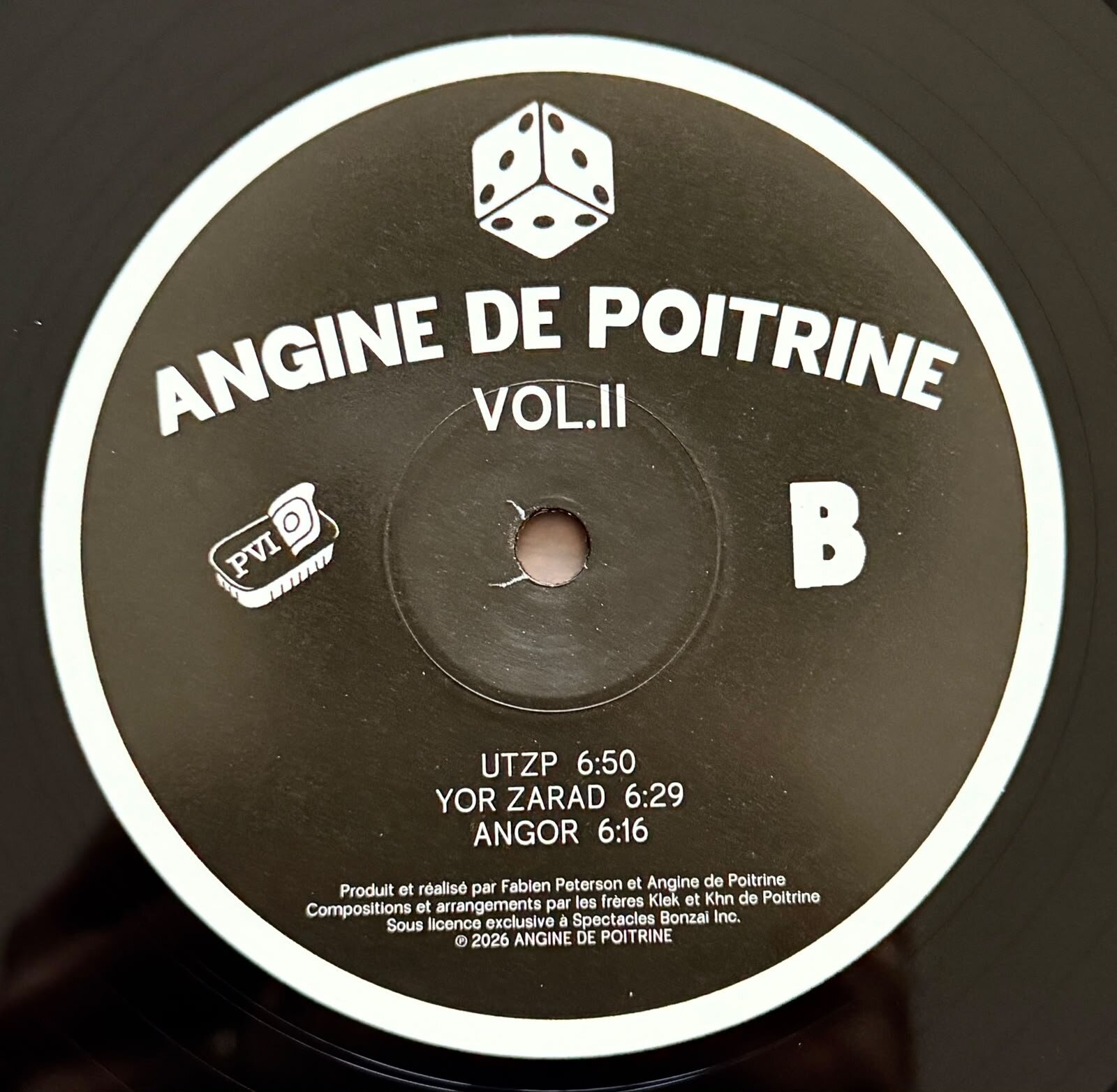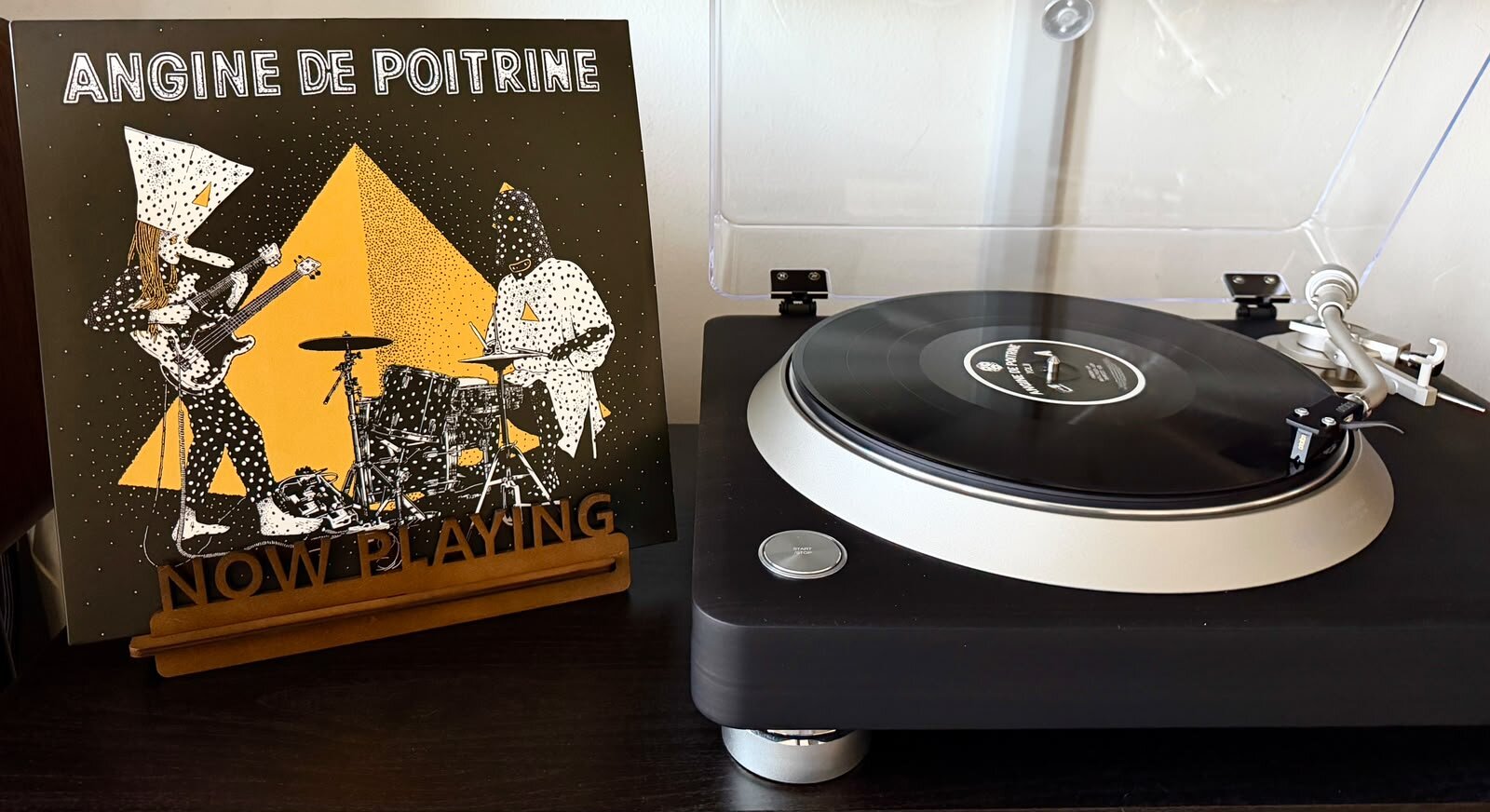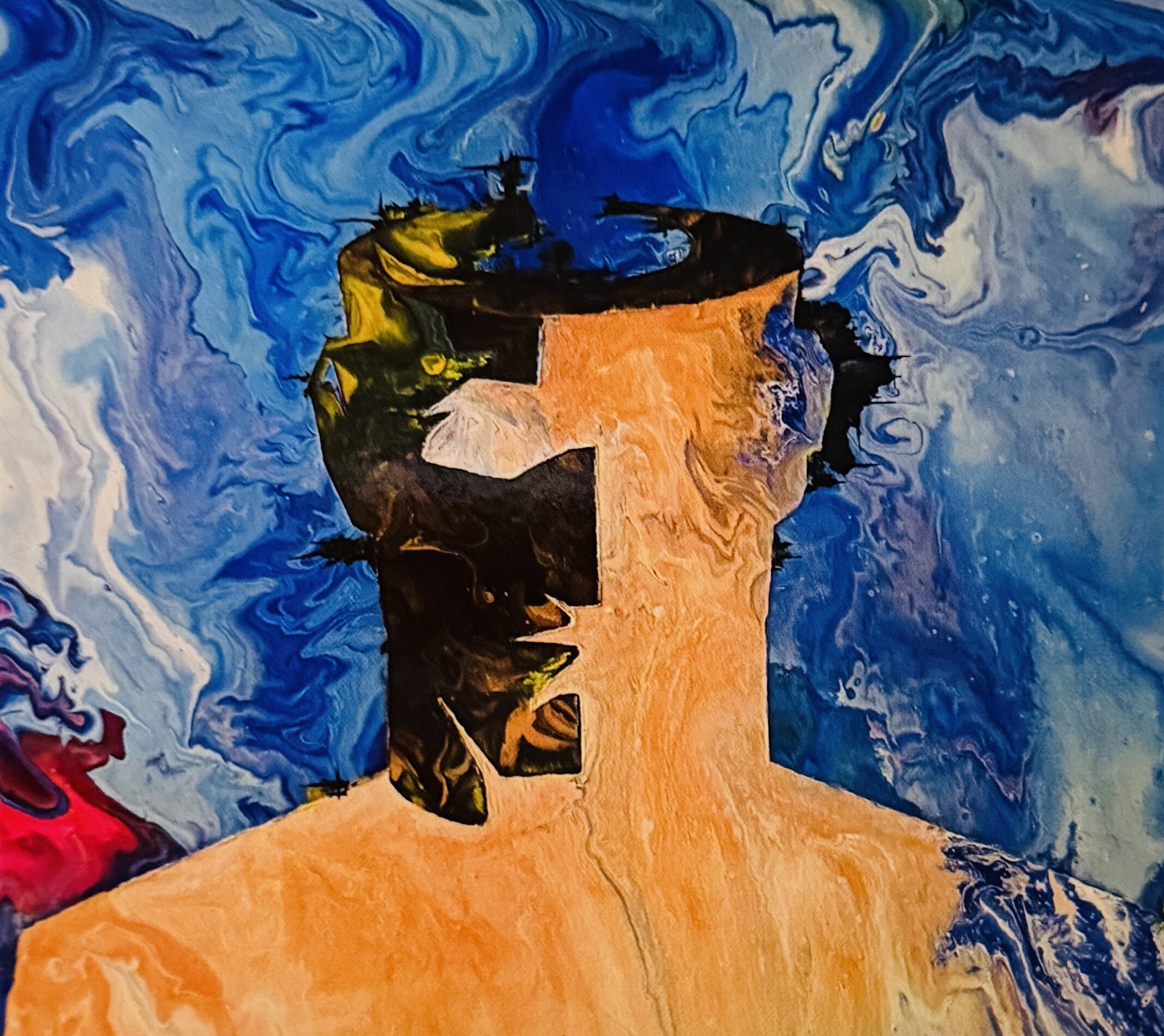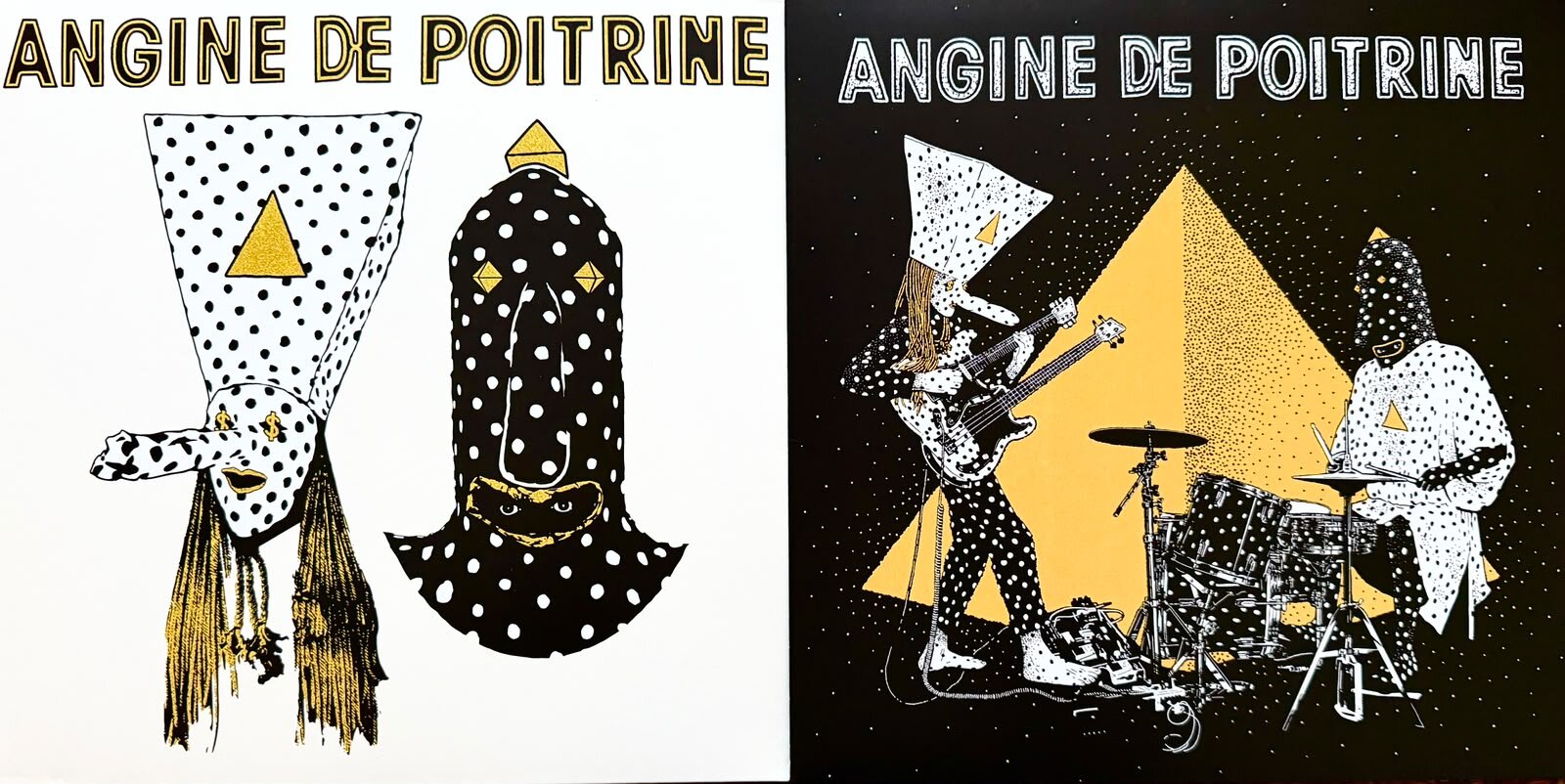
Vol.1 (2024) and Vol.2 (2026) by Angine de Poitrine.
It took me a while to decide to listen to them, but as I did with other bands, I set aside the criticism and prejudice I’d read and my own preconceptions.
I got and listened to their records after reading up on them, but without having heard full tracks before—only snippets and online videos, where the look stood out more than the music. In hindsight I have to say I was wrong not to listen to them earlier.
From the very first track I started to understand that the disguises are something absolutely irrelevant, a TV and media gimmick that has nothing to do with the substance of their music.
I really like a line that, in my view, defines them perfectly and defines their genre, taken from the inside cover of the album Vol.1:
Which translates to: "For a live dose of frenetic, Dada-Pythagorean-Cubist, microtonal rock mantras, contact Fabien Peterson, impresario."
This is an ironic promotional text printed on the packaging, intended to invite fans or promoters to book the Canadian duo for their high-energy live shows.
“Microtonal Mantra Rock” is the most fitting definition of what this duo does, but with a very wide range of nuances that I’ll describe below.
Let’s see who they are.
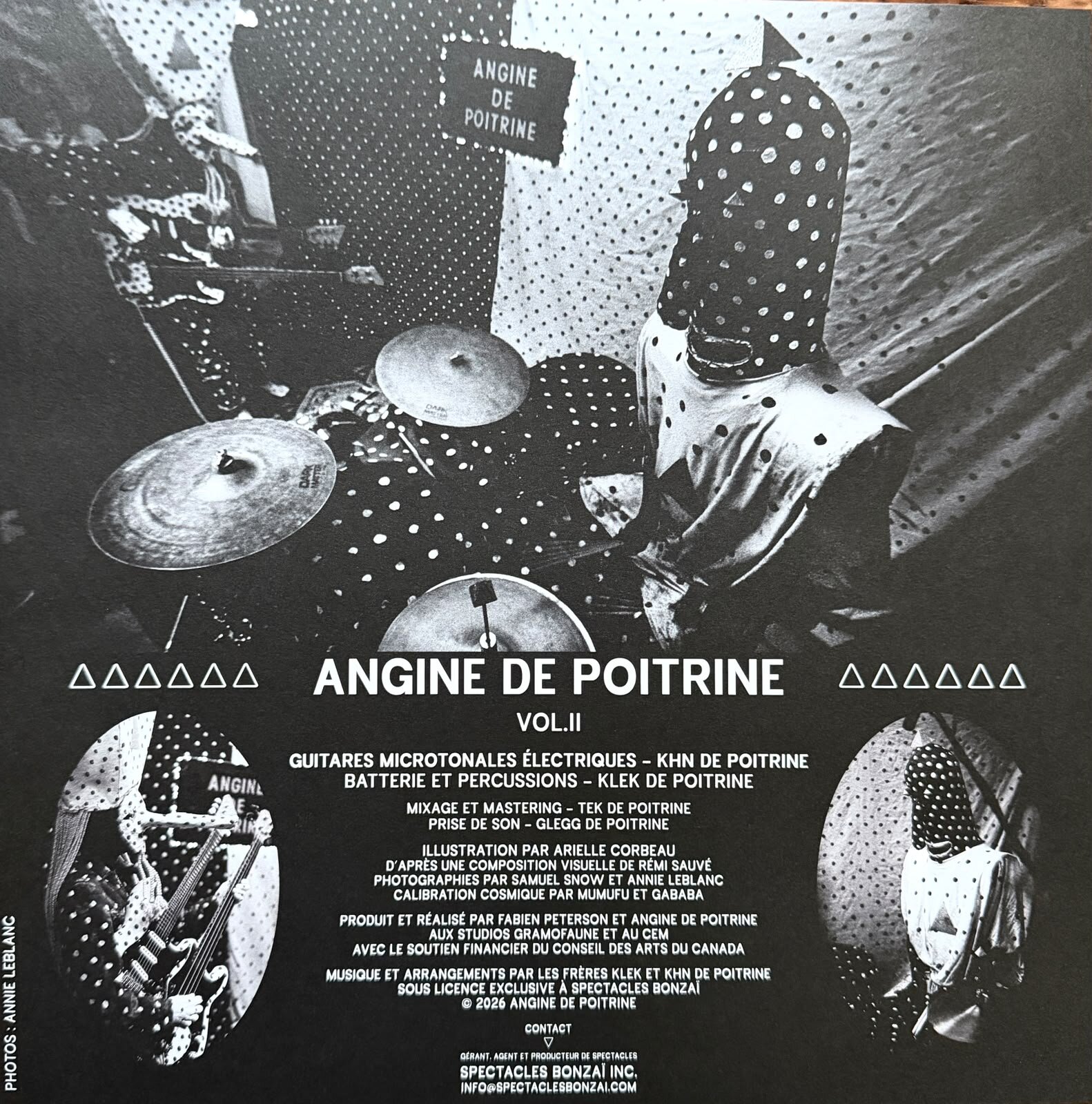
Angine de Poitrine are a unique, surreal Canadian duo from Québec, made up of brothers Khn and Klek de Poitrine. They’re marked by a strong visual identity: they always perform in costumes and black-and-white polka-dot masks. Their music is a mix of math-rock, progressive rock, psychedelia and electronic elements, which makes them stand out in today’s music scene.
The band’s name, which in French means “Angina Pectoris” (chest pain), is an ironic pun that mirrors the frantic, rhythmically complex energy of their songs. On stage, their setup is simple but powerful: Khn plays a double-neck microtonal guitar hooked up to a chain of effects and a loop station, creating layered sounds and polyrhythmic riffs. Klek, meanwhile, sits at the drums, laying down odd meters and intricate math-rock structures.
There’s also a legend going around about them: it’s said the two brothers communicate only through music and their polka-dot visual codes, avoiding classic interviews and letting their hypnotic live performances tell their story.
The Angine de Poitrine journey—breaking out of anonymity, going from an underground Québec phenomenon to a worldwide one in 2026—is an almost unique story in contemporary music. This duo managed to turn niche genres like microtonal math-rock and Progressive Rock into a global commercial and viral success.
Even though the band already had a solid underground following thanks to “Vol. I”, the worldwide breakthrough came on Saturday, February 7, 2026. The historic Seattle radio station KEXP recorded a live session of theirs during the Trans Musicales festival in Rennes, France. The video of their papier-mâché masks, polka-dot costumes, and super-energetic polyrhythmic performance became a true viral phenomenon on TikTok, Instagram and YouTube, quickly topping 10 million views
In 2026, in a music world where algorithmic pop and Artificial Intelligence throw their weight around, Angine de Poitrine became a real phenomenon, hailed by audiences and critics as an example of pure human, analog creativity. Their tracks, with unbelievably complex riffs and an irresistible groove, won over the masses. Even big names in world rock—like Jack White, Lars Ulrich of Metallica, Dave Grohl of Foo Fighters and Geddy Lee of Rush—couldn’t resist their charm and publicly declared their passion for the band.
Angine de Poitrine shattered every record for an instrumental, avant-garde band, both commercially and in the media. At the 2026 Montréal International Jazz Festival, they played in front of a crowd of 100,000 people, setting a new attendance record that had stood since the legendary Stevie Wonder concert in 2009. An epic sea of people.
In September 2026, they then made their U.S. TV debut on NBC, performing the unreleased track “Zugzegk” on The Tonight Show Starring Jimmy Fallon. A hugely important milestone, coming after their earlier European appearance on the BBC’s Later… with Jools Holland. In short, Angine de Poitrine, like them or not, are a band that’s making history.
On September 23, 2026, the band reached an incredible milestone by winning the prestigious Polaris Music Prize. They took home both the award for Canadian Album of the Year with their second album, “Vol. II”, and the award for Best Song with the single “Fabienk”. A huge result: they were the first artists ever to win both awards in the same year.
Their black-and-white aesthetic has become so iconic that it’s influencing costume trends for festivals and fall fashion shows across North America.
Let’s look at the albums.
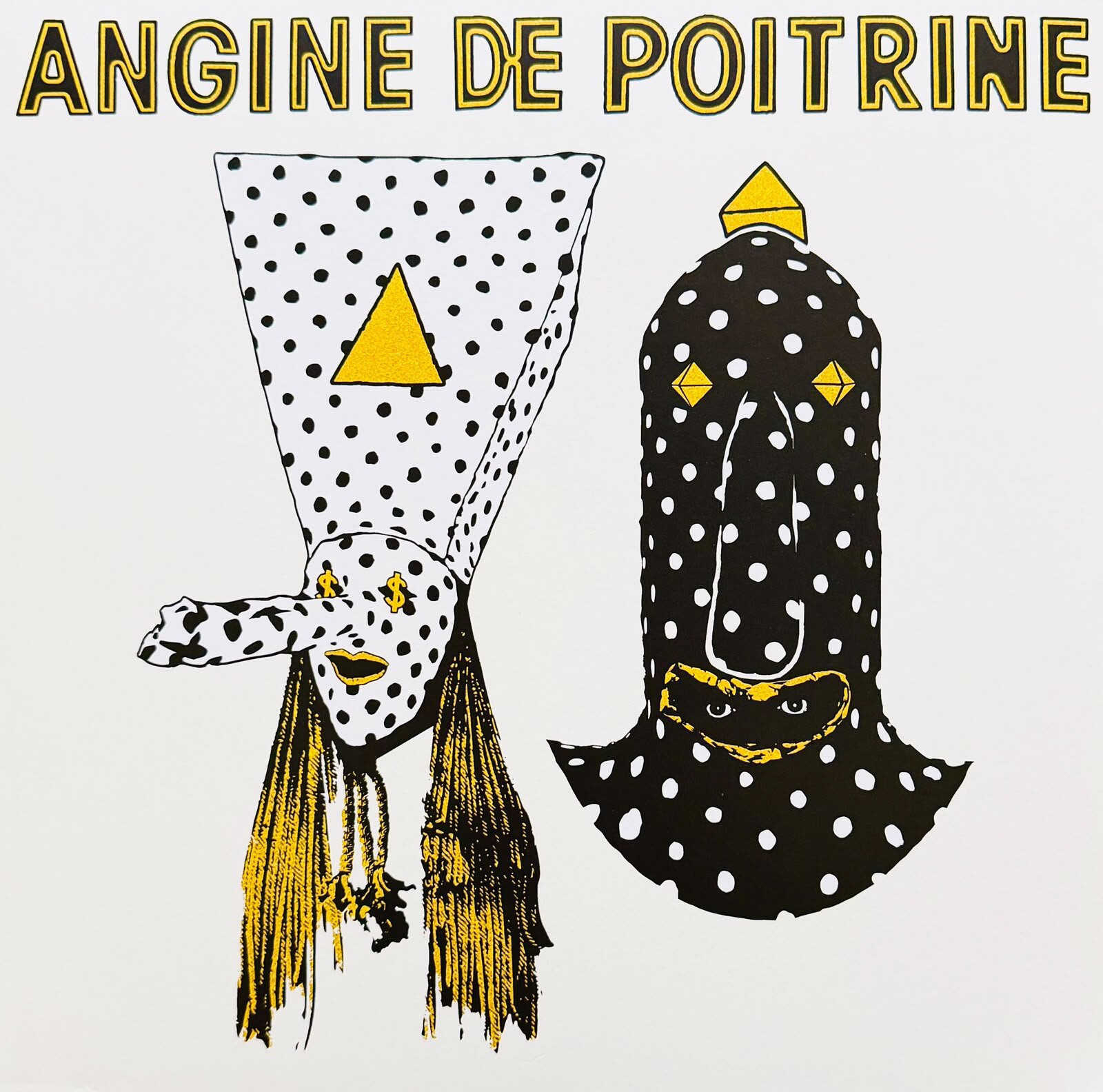
Vol.1 of 2024.
In 2024, the underground duo made its debut on the music scene with the self-produced release of “Vol. 1”.
This six-track album, with enigmatic titles, stands out for the near-total absence of vocals, replaced by tight dialogues between a microtonal guitar, a pounding drum kit, and rare vocalizations.
The album’s core is the use of Khn de Poitrine’s double‑neck microtonal guitar. By dividing the octave into 24 notes instead of the classic 12, the album creates an alien, hypnotic and disorienting atmosphere, supported by Klek’s odd and geometric drum patterns.
Here are the highlights of “Vol. 1”, the cult album that sparked the Angine de Poitrine myth:
The album opens with “Sherpa”, a track introduced by a circular, magnetic rhythm that grabs you immediately. Here, the percussion keeps an inflexible, rigorous pace, while the guitar interweavings introduce geometric, sharp melodies that evoke the beats of a heart in turmoil. This opening track perfectly defines the identity of the whole work, marked by a sonic stubbornness built on digital overlays that, despite their repetitiveness, never feel trivial. The sound is unique, yet at times Zeuhl incursions appear, or prestigious influences such as King Crimson from the Discipline era.
The mood turns more tormented and jagged with “Tohogd”. In this piece, the string instruments seem to lose their traditional bearings, moving through unusual tunings and constant time distortions. A strong tension is felt, amplified by a continuous play of musical phrases that appear and disappear in an ongoing flow.
With "Tamebsz" we face the most imposing and structured episode on the tracklist. The piece unfolds like a true instrumental tale in dark hues, where echoes of progressive rock blend with exotic, Eastern suggestions filtered through a fragmented musical scale. The dynamics grow gradually and in a controlled way, giving up classic commercial openings to hold attention through imperceptible yet constant shifts of the main theme. What I heard, the guitar phrasing, is incredible.
The next track, “Ababa Hotel”, instead focuses on a rotating, enveloping motion. The percussion takes on almost tribal and funk shades in its essentiality, while the layered melodic textures give rise to well-defined geometric forms. The result is a surprising track, able to turn complex, theoretical sound matter into something accessible and even rhythmic. The groove is insane, almost fusion or even Canterbury. This track is an absolute masterpiece; the microtonal guitar and the guitar skills are outstanding, worthy of the big names on the world scene. The drums are solid and millimetric. Great taste in the improvisations. Splendid progressive crescendos.
“Sahardnieh” comes across as a tighter, more direct episode, built on the contrast between the guitar’s acidic scratches and a dry, relentless drum beat. Rather than following a classic song structure, the piece lives on a progression of nuances and sonic details, recalling the fluid yet unpredictable motion of a gear that keeps jamming and unlocking. The bass here is frightening, set within an impressive overlay of sequences, with impeccable drums weaving into the guitar textures with a creeping gait. This piece is, in my view, the essence of “microtonal mantra rock”, but it’s also irreverent, completely outside the rules, on the borders of RIO, and there’s room for almost metal screams. A disturbing and attractive piece at the same time.
The journey finally ends with "L'Aberek", a closing track that lets you absorb the entire listening experience. The atmosphere becomes slightly less forceful, yet keeps intact a deep underlying unease. The harmonic texture fades little by little in a controlled way, leaving that sense of lucid and fascinating oppression that is the duo’s true stylistic hallmark. There’s more melody and the sound roams in the world of psychedelia, but with a pure rock sensibility and a strong 70s progressive imprint. An absolutely gripping piece.
The musical style of “Vol. 1” is a compact, jagged and purely analog mix. Unlike the electronic and dance contaminations of the second chapter, the first volume is a 100% instrumental rock record, marked by a tense atmosphere and exceptional drive.
The record is based on math rock, with tracks built on odd and unusual meters that keep changing within the same song. Klek’s drumming rarely offers a linear beat, but moves through perfect interlocks, sudden stop-and-go’s, and unpredictable accents.
The album’s sonic signature is Khn’s double‑neck guitar. This produces a sound that to the untrained ear may initially seem out of tune. In the absence of a bassist, Khn uses a loop station in real time to record a bass line or an ostinato riff on one neck, then improvises over it with the other, creating an impressive wall of sound for a duo.
The album inherits a strong component from 70s prog rock (in the style of King Crimson from the “Discipline” era), filtered through the rawness of noise rock and experimental punk. The music is devoid of catchy melodies, with the guitar doing everything thanks to its acidic, hypnotic riffs.
“Pois-punk” is now a neologism that defines them. With this album their iconic black-and-white visual aesthetic is born, initially conceived to hide their identity in small Québec clubs and then becoming a worldwide trademark.
The first volume has a raw, dry sound, recorded with very few studio frills. There are no synths, keyboards or complex digital effects, but only the pure, telepathic interaction between two instruments.
Essential album, a true progressive masterpiece.
Here are the official videos on their YouTube channel
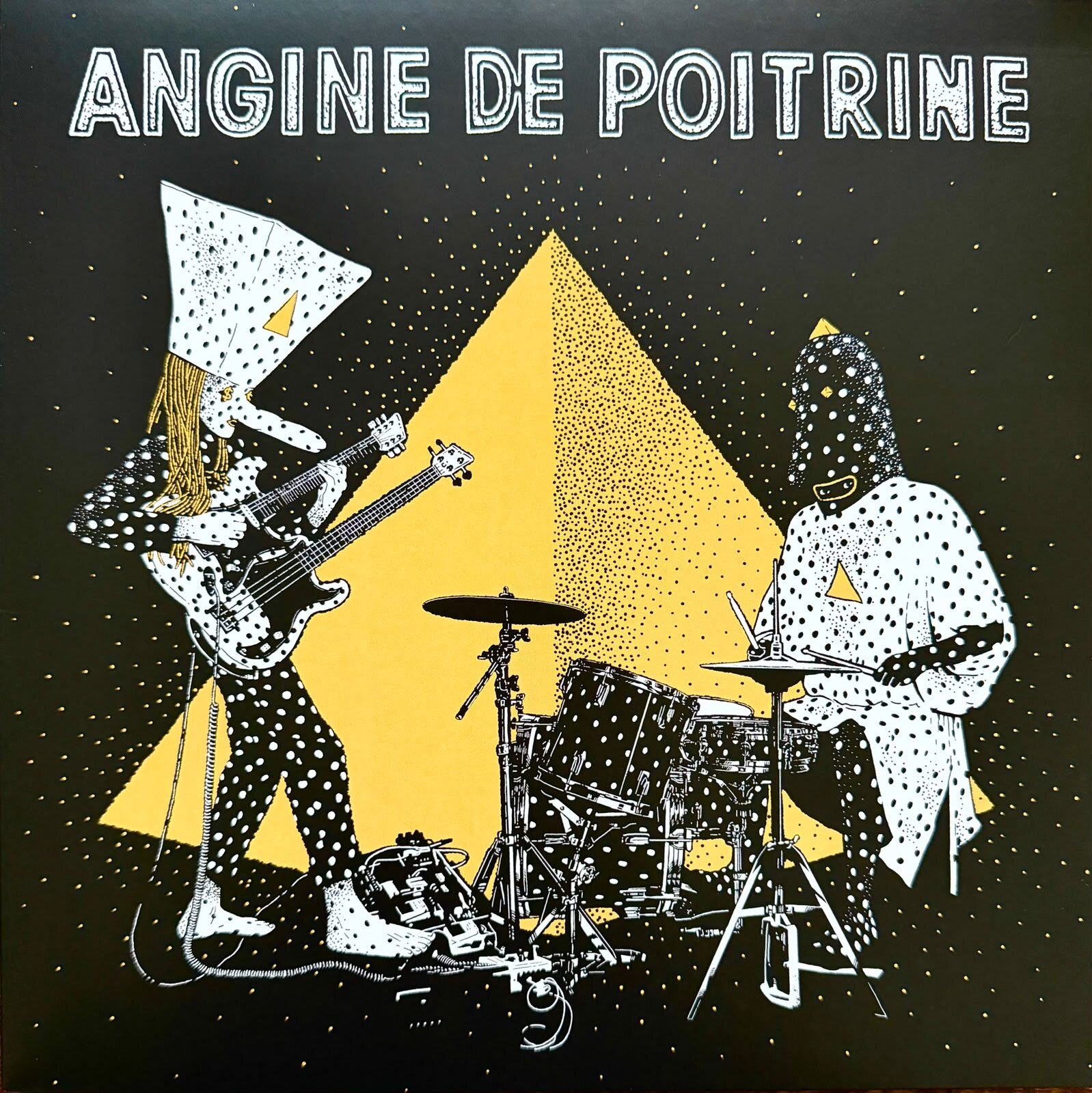
Vol.2 of 2026.
Vol. 2 marks the artistic and production breakthrough.
The second album marks a turning point in their career, transforming them from an underground band into a global phenomenon. This new work broadens their musical horizons, incorporating acid-techno influences, space-disco and psychedelic synths.
The six tracks evolve from an early math-rock into what has rightly been called a “progressive rave”.
If the first album was a dry, mathematical rock record, this second chapter pulls off the feat of blending complex meters with an acid-techno, space-disco and even krautrock rhythmic pulse.
The song structures expand, becoming long suites that use the loop station to layer six tracks at the same time, creating obsessive, psychedelic sound mantras. While remaining an instrumental album, for the first time brief vocal inserts appear—non-lexical vocalizations and deconstructed choirs—which help create an alienating atmosphere.
The album opens with “Fabienk”, a track that acts as a true statement of intent for the whole work. The piece begins with an unusual, pulsing guitar phrasing that evokes Morse-code signals, then quickly evolves into a driving, magnetic 7/8 groove, enriched by a progressive layering of real-time samples. Halfway through, the composition takes a surprising turn, transforming into an overwhelming funk.
The atmosphere becomes decidedly tenser and more instinctive with “Mata Zyklek”. Past a fragmented introduction, the piece takes off thanks to a deep, hard-hitting bass line. Over this solid base, the guitars weave fast melodies that recall warm Middle Eastern sonorities, revealing the duo’s more hypnotic, ritual vein through a rhythmic structure in a constant, sweeping rise in intensity. We’re in a true post-modern mantra on a metal percussive bed. An absolutely incredible track, with Zeuhl popping up a bit everywhere with its incursions of madness.
With “Sarniezz” a bizarre, avant-garde inspiration clearly emerges. Here, the altered keyboards move on microscopic and seemingly impossible musical intervals, while the percussion insists on unusual, broken rhythmic accents. The result is a cross between funk and chaotic yet rigorous metal, suspended between punk attitude and progressive-rock complexity. The bass lines are stratospheric and the drum base is solid. A riot of offbeats and stop-and-go.
The track grows progressively in a very slow, controlled explosion, like the ones that make entire skyscrapers collapse and implode on themselves. The piece makes crystal-clear the manic, absurd work of writing and refining an endless series of rhythmic inlays and alternative solutions to traditional schemes. Monumental track.
"Utzp" is without doubt the most theatrical and unusual moment on the tracklist. In the opening bars, the track evokes a bizarre folk dance with a Mitteleuropean or Balkan flavor, driven by an unstable, curious meter. In the second part, however, the scene changes radically: the piece is swept away by a blast of saturated guitars and very heavy rhythms, turning that initial space-circus vibe into an explosion of pure rock energy. There’s East European folklore, a Balkan haze made of fake joy. The piece is disorienting; at first it seems skippable, but when the drums take the chair it takes on a whole other look and after yet another unexpected stop-and-go it changes flavor, turns psychedelic, the previously sparse textures fill up with guitars and their frantic figures. A deep bass loop appears. The groove gets tense and the atmosphere unsettling. The ending is a long syncopated stretch with the drums sometimes going with it and other times against the beat. Another huge track.
The next one, “Yor Zarad”, is introduced by the sharp sound of a distorted guitar, opening the way to complex, disorienting time interlocks. The particular scales used come very close to European-style experimental jazz-rock, even allowing a particularly aggressive metal passage before folding back into a circular structure that fully captures the listener’s attention. Frenetic and disturbing track. Pure post-rock at times. Great guitar while the drums mark out a repetitive but rich pattern with a crazy groove. After the stop-and-go there’s a complete change of atmosphere and it becomes minimal and synchronized, but it shifts again as successive layers are added at four-bar intervals, then returns to the main motif in a continuous gallop made of variations on the same theme, until the scene is all for the double-neck and the drums gradually rise, ever more intense, up to a hard, raw rhythm that hits harder and harder. Spectacular.
The journey ends with “Angor”, the most mysterious episode on the record. Marked by suggestions that evoke arid spaces and recall the historic sounds of early King Crimson, the piece unfolds on repetitions loaded with dissonances and electric resonances. The musicians venture into almost hinted-at solo interweavings that lead to a deceptive conclusion, before the echo of the last chord gradually fades into the void. A piece dominated by a continuous pattern, that of an eternal intro that stops and starts again. A figure that seems suspended and incomplete, stopping and restarting, completing itself in repetition. Once again, variations on the theme change the atmosphere, from waiting to tension. When the guitar becomes more melodic the piece shifts and takes a direction that makes it more structured. The guitar-and-drum figure in the central part is very beautiful. Then the guitar, with shrill sounds, seems to imitate a bagpipe and with these sounds it delivers a beautiful solo. The atmosphere is psychedelic in the more melodic phases. The piece closes like in the rehearsal room, with a long guitar sustain and a scratch, sealing a decidedly biting record.
Another masterpiece record, even in its difference from Vol. I. Surprising. Essential.
Here are the official videos on their YouTube channel
What the critics say
Angine de Poitrine, with their worldwide success, have split critics and social media. The core of the debate is precisely the contrast between their technical skill and the sometimes over-the-top aesthetic that defines them.
Fans and music critics consider them a breath of fresh air for this decade’s rock.
In an era dominated by pop music made with AI or hyper-produced digitally, the duo is seen as the peak of human talent. Playing complex polyrhythms live, without pre-recorded backing tracks and with a microtonal guitar, in fact requires technical preparation and an almost telepathic coordination.
Their album Vol. II is appreciated for its accessibility. They managed to blend genres that are traditionally tough and cerebral, like math rock and progressive, with the straight kick of acid-techno and space-disco, making mathematical complexity danceable and sexy.
The polka-dot costumes and masks are not seen as a theatrical gimmick, but as an artistic choice that removes the musicians’ ego, focusing on the music and the visual live experience.
On the other side, detractors—often prog purists or social-media skeptics—accuse them of being a hype-inflated phenomenon.
Many argue that without the aesthetic—polka-dot costumes, masks, and the story of the “two mute brothers from Québec”—their music wouldn’t have succeeded beyond small clubs. They call it a viral marketing move designed for TikTok and Instagram.
Some reviewers call it a gymnastic “exercise in style”. The lack of lyrics, vocal melodies, and the use of the microtonal scale make it, in their view, devoid of soul and emotional pull, coming off cold, mechanical, and alienating.
For Vol. II in particular, the repetitive structure of the tracks is criticized. The use of the loop station (the guitar records a riff, loops it, and builds on top) makes the compositional scheme identical for all 36 minutes of the album, despite the time changes.
Avant-garde purists downplay their originality, noting that bands like ’80s King Crimson, The Mars Volta, and King Gizzard & the Lizard Wizard had already mainstreamed polyrhythms and microtonal guitars, with greater stylistic variety.
Criticism in the Prog world doesn’t differ much.
The arrival of Angine de Poitrine has sparked a heated debate even among progressive-rock fans. The genre, traditionally tied to its technical and structural canons, sees the Canadian duo from two opposite perspectives.
On one side, the more open and modern faction, which follows currents like Avant-Prog and avant-garde bands like King Gizzard & The Lizard Wizard, considers Angine de Poitrine the saviors of a genre at risk of fossilizing. The more attentive purists have noticed in the duo’s rhythmic dialogues the same geometric precision of King Crimson in the Discipline era and the structural eccentricity of Gentle Giant. Their radical approach to composition recalls the experiments of Harry Partch and the modernism of The Mercury Tree. The performance aspect is celebrated: knowing that pieces like Yor Zarad or Fabienk are carried by a drummer playing odd meters and by a guitarist coordinating, live and barefoot, a looper pedalboard is considered the apotheosis of analog virtuosity.
On the other side, the nostalgic and traditionalist wing, tied to the ’70s symphonic and melodic structures of Genesis, Yes, or Pink Floyd, expresses strong reservations. The most contested limit is the repetitive nature of the tracks, based on the loop station, which create “endless loops” without a real emotional narrative. Many complain about the coldness of the proposal, calling it “keyboard gymnastics” more than poetic composition, due to the absence of dynamics, melody, structured vocal parts, and atmospheric keyboards. Finally, there’s annoyance at the band’s pop explosion on TikTok, with the accusation that newcomers consider them “revolutionary” only because they ignore the history of avant-rock over the last forty years, and that the duo uses polka-dot costumes and masks to cover up sparse arrangements.
The comparison with Flying Microtonal Banana.
I was the first to make a comparison between their work and the album "Flying Microtonal Banana" (2017) by King Gizzard & The Lizard Wizard, only to discover that Angine de Poitrine themselves openly cite the Australian band’s record as one of their key inspirations.
While sharing a common theoretical base, these two projects clearly differ in practical application and in the atmosphere they create.
Both projects adopt 24-TET tuning. This allows both the famous King Gizzard guitar and Angine de Poitrine’s custom double-neck to have extra frets inserted between the normal ones, making it possible to play “semi-sharps” and “semi-flats”. Also, on first listen, both bands initially convey an “out-of-tune”, exotic or hypnotic feeling typical of microtonal scales, which can feel unusual for those not used to it. Finally, both groups approach musical complexity with a playful, strange, theatrical attitude that has won over a very devoted fanbase. The link between the two is so strong that King Gizzard even invited Angine de Poitrine to play at their Field of Vision 2026 festival in Colorado.
Where do they differ?
Despite the same technical base, the two projects take different paths in terms of musical genre and song structure. King Gizzard draw from psychedelic rock, garage, and Anatolian rock, with a strong influence from traditional Turkish music, in particular the bağlama instrument. Angine de Poitrine, instead, reject ties to traditional folk music to focus on a geometric, Dadaist abstraction that fuses math rock, progressive, noise, and acid-techno.
Composition and the use of voice are different too: the King Gizzard album features songs with a more classic structure, with verses, choruses, and sung lyrics, while Angine de Poitrine’s music is completely instrumental, built on complex polyrhythmic interlocks.
Finally, the lineup and working method are opposite: King Gizzard record and perform their pieces with an extended rock lineup, which at the time could reach up to seven members, with double drums and horns to create a vintage, dusty ’70s sound. Angine de Poitrine, instead, operate as a minimal duo, creating a futuristic, hypnotic, danceable wall of sound with a single drum kit and heavy real-time loop-station use.
In short, King Gizzard use the microtonal guitar to time-travel toward Middle Eastern psychedelic rock, while Angine de Poitrine use it to project math rock into a futuristic, edgy rave.
My opinion.
This band is without doubt as divisive as it is fascinating.
Which side am I on? Well, the idea I’ve developed about these records makes me realize that maybe I’m not the purist, the dinosaur I always thought I was.
Maybe I’m more of a chameleon, able to adapt to the times. And I think this Canadian duo is pushing contemporary music in an unexpected direction. One I like.
Their music draws heavily on the cultured, complex influences of the past, while also absorbing the trends and technologies of the present to create something new and intriguing.
Mantra… psychedelia … Prog, Electronic, music of the past blending with that of the present.
Musically and technically they could be sacred monsters of the seventies in disguise, and this idea they give of themselves elevates them.
They bring extremely complex, cultured music to tens of millions of people and I’m very happy it happens. For many who considered this music archaeology, it now becomes present and future.
I’m curious to see how their music will evolve. And as for the masks, I’d say they nailed it—they managed to attract millions of people.
But musically the masks are totally irrelevant: just listen to the music and forget the masks to understand that Angine de Poitrine are not only a media phenomenon, but two top-level musicians who have made two crazy records.
Essential albums, and I have a slight preference for Vol. I…. the more analog one … and here comes the dinosaur in me again…
My Editions
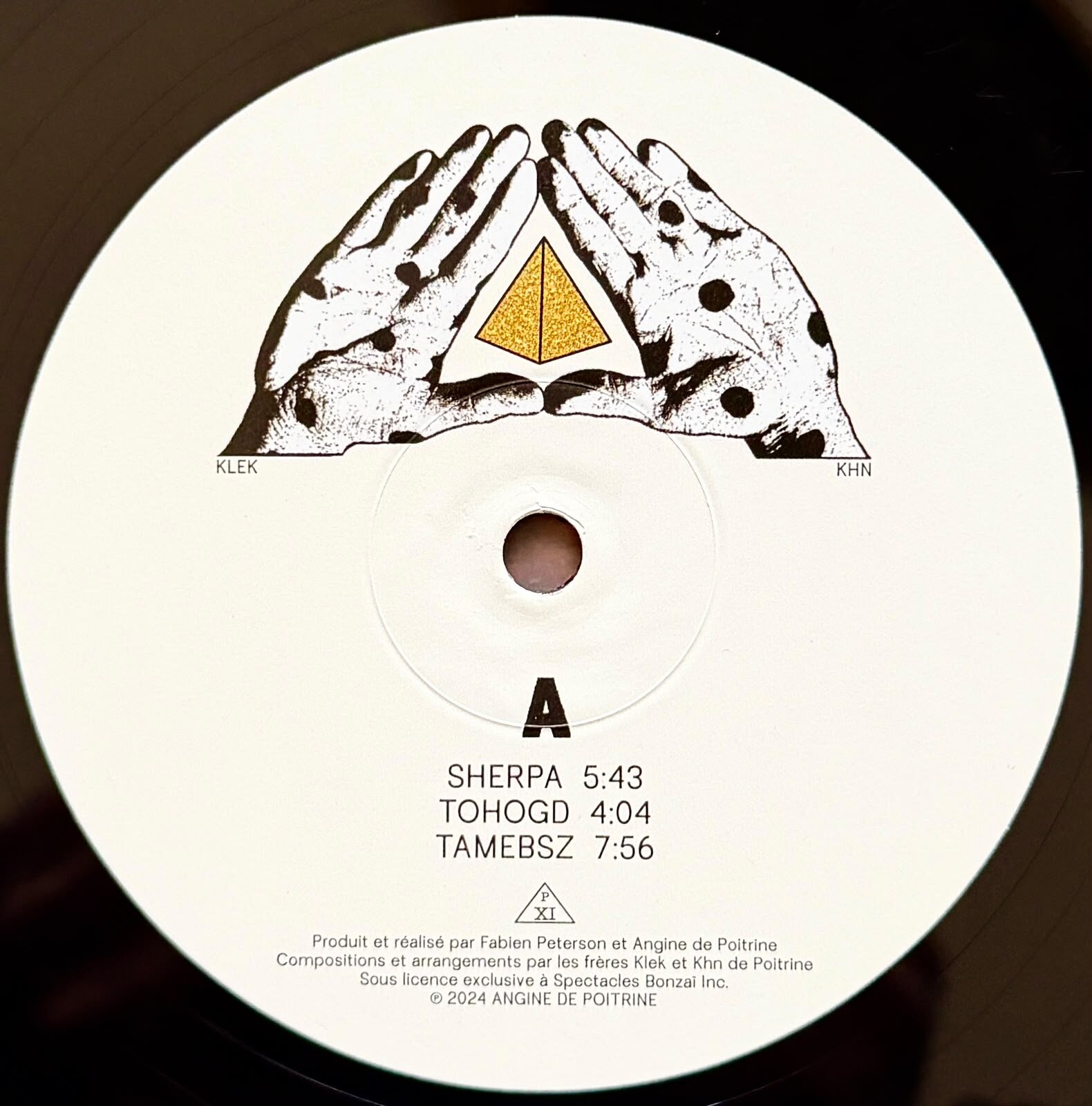
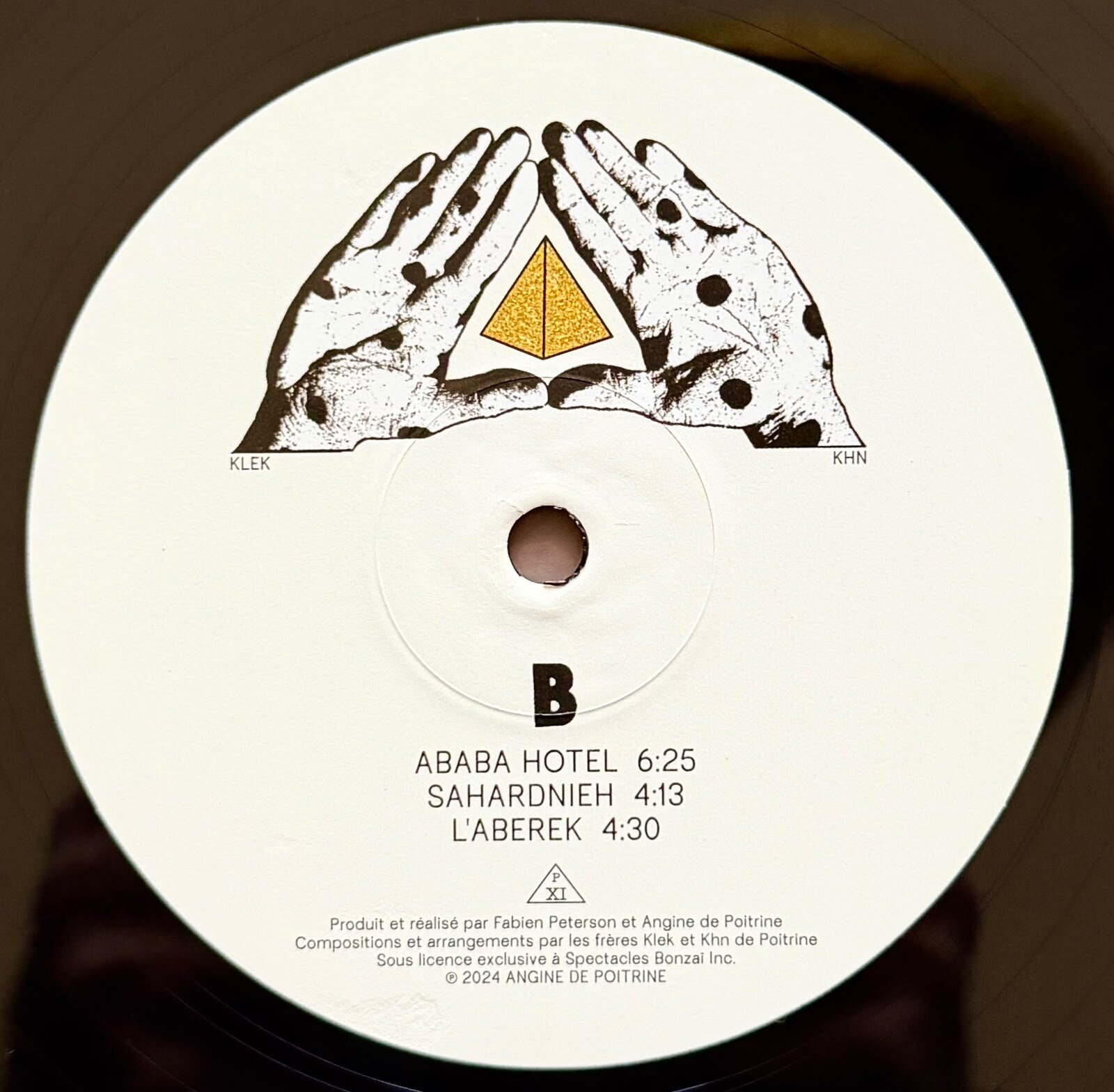
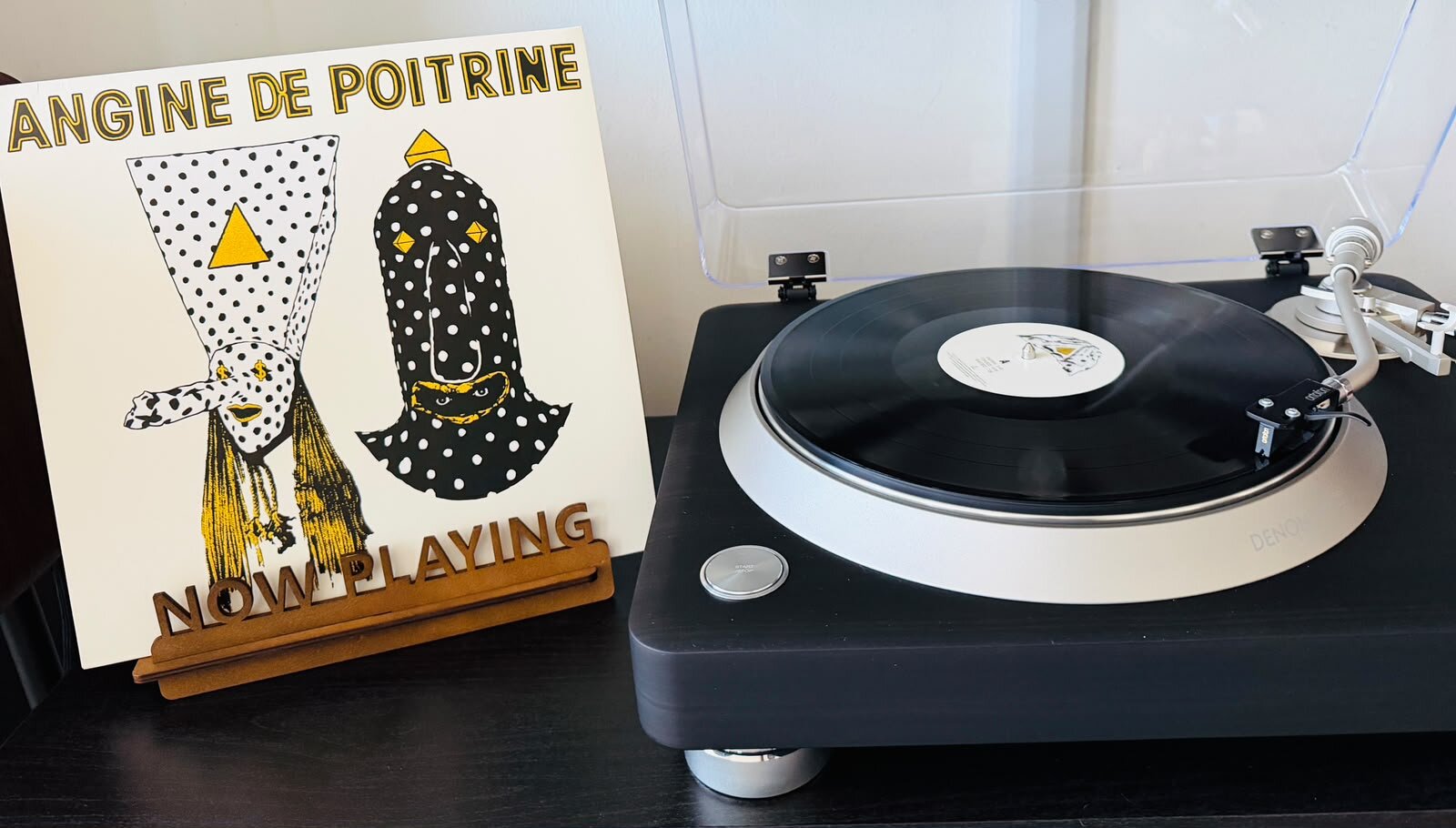
Vol. I
Label: Spectacles Bonzaï – AP-01
Format: Vinyl, LP, Album, Reissue, 180g, 7th Pressing
Country: Canada
Released: 2026
Tracklist
A1 Sherpa
A2 Tohogd
A3 Tamebsz
B1 Ababa Hotel
B2 Sahardnieh
B3 L'Aberek
Lineup
Guitar [Guitares Microtonales], Voice [Voix] – Khn de Poitrine
Percussion [Percussions], Voice [Voix] – Klek de Poitrine

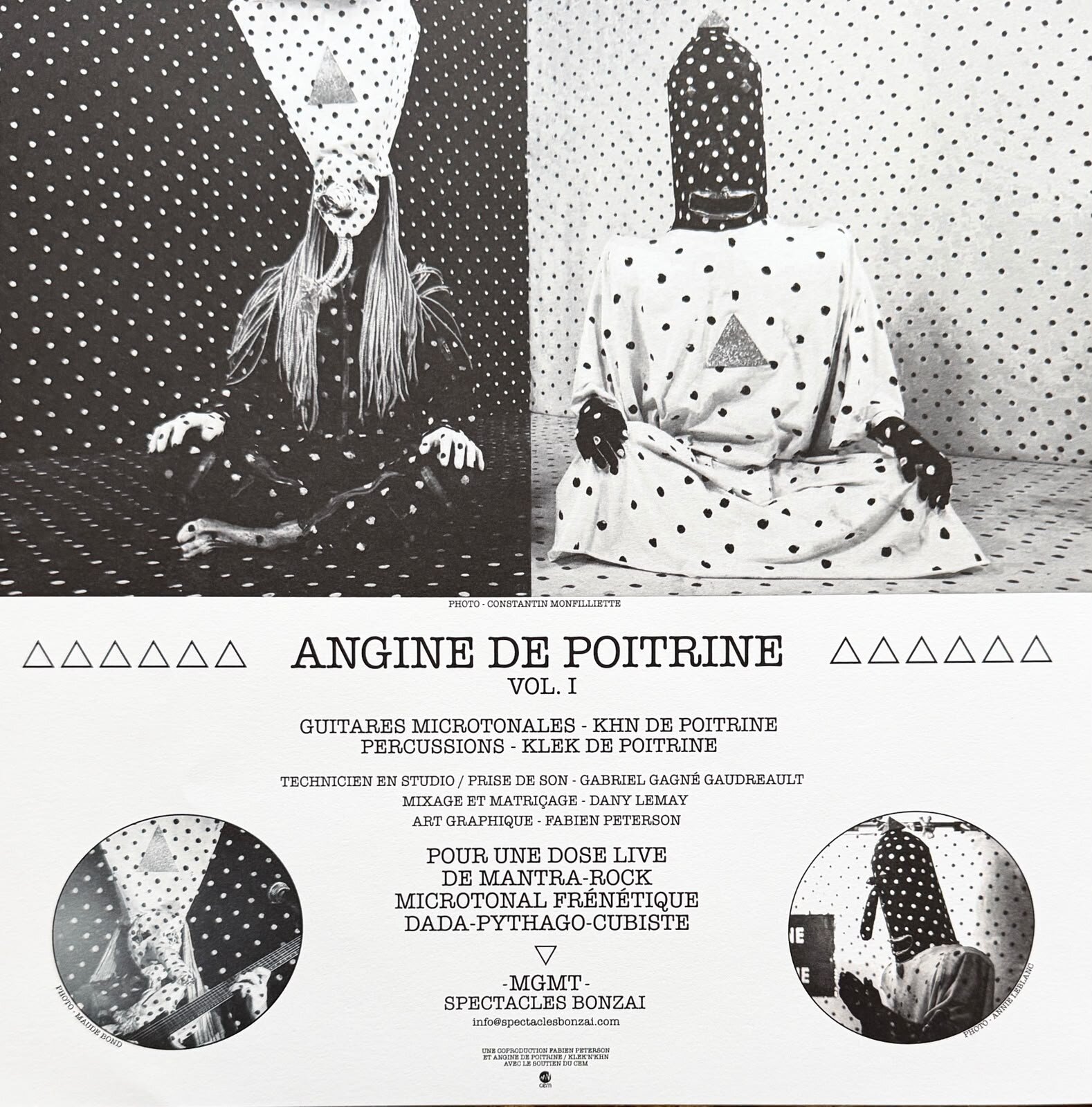
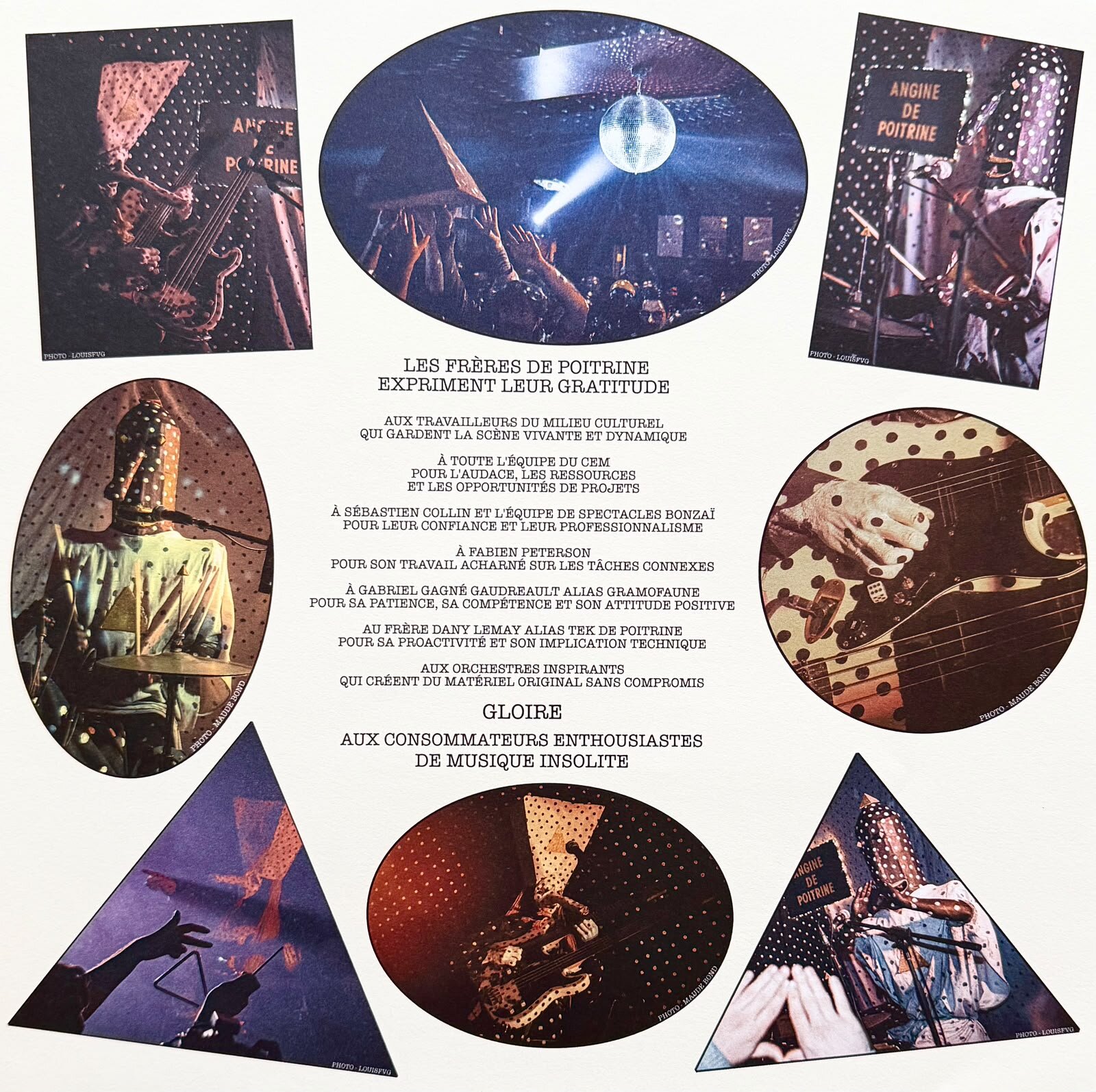
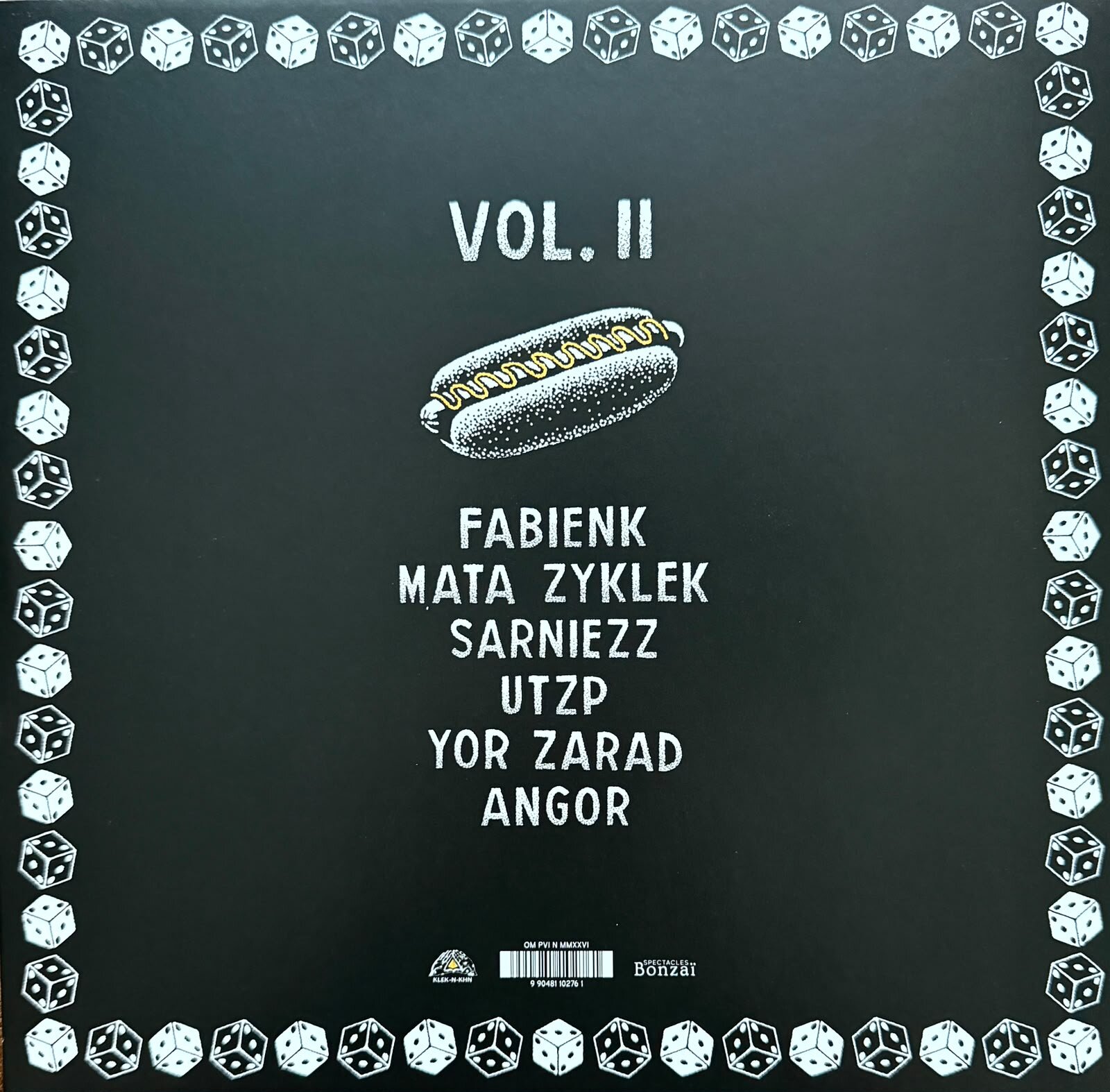
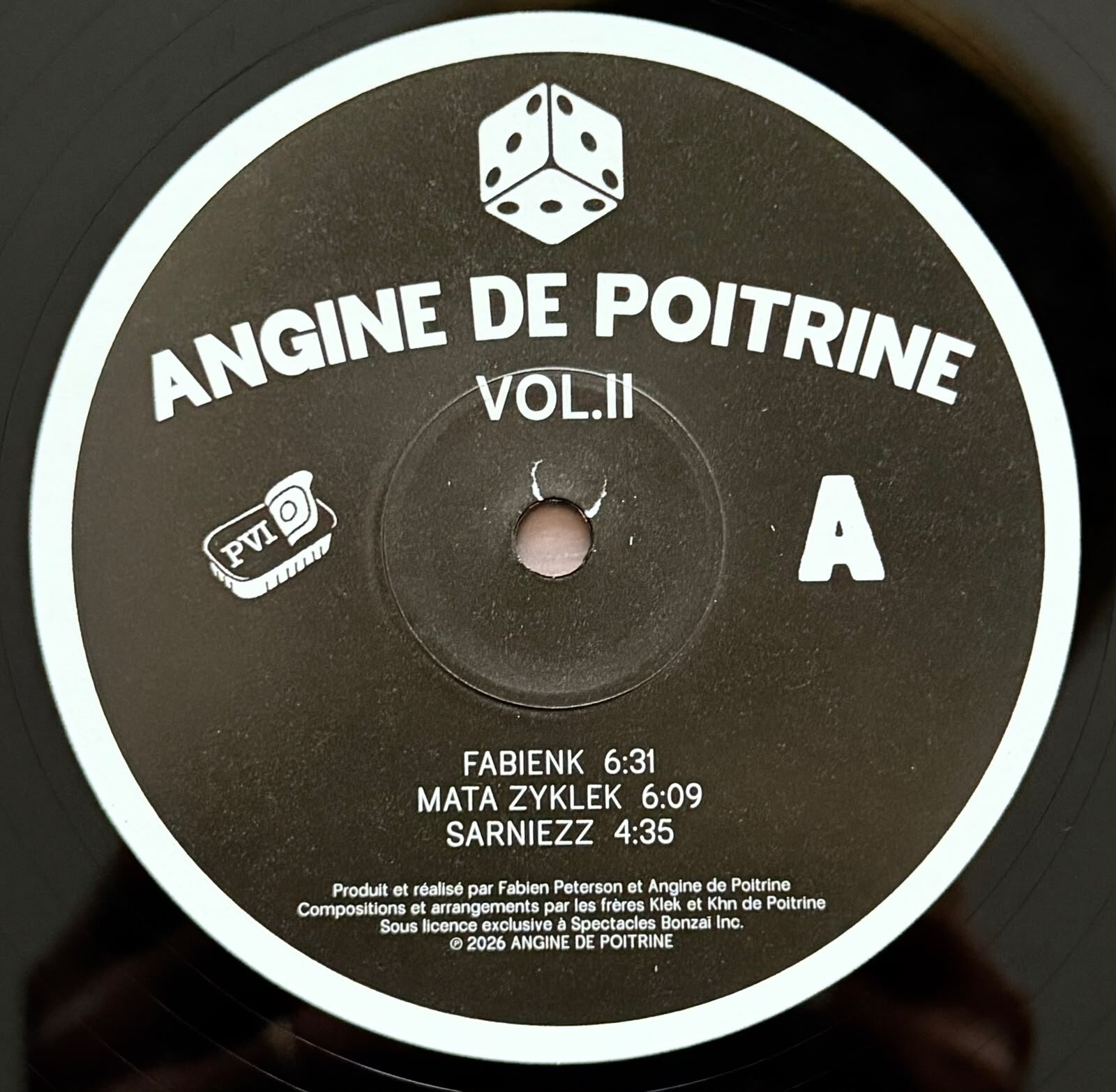
Vol. II
Label: Spectacles Bonzaï – AP-02
Format: Vinyl, LP, Album, Repress, Stereo, Second pressing
Country: Canada
Released: 12 Jun 2026
Tracklist
A1 Fabienk
A2 Mata Zyklek
A3 Sarniezz
B1 Utzp
B2 Yor Zarad
B3 Angor
Lineup
Drums [Drums], Percussion [Percussion] – Klek De Poitrine
Guitar [Electric Microtonal Guitars] – Khn De Poitrine