Cluster & Eno self-titled album, from 1977.
Cluster & Eno, released in 1977, is a collaborative album that marks the epic meeting between the German duo Cluster (Dieter Moebius and Hans-Joachim Roedelius) and the British composer and ambient master Brian Eno.
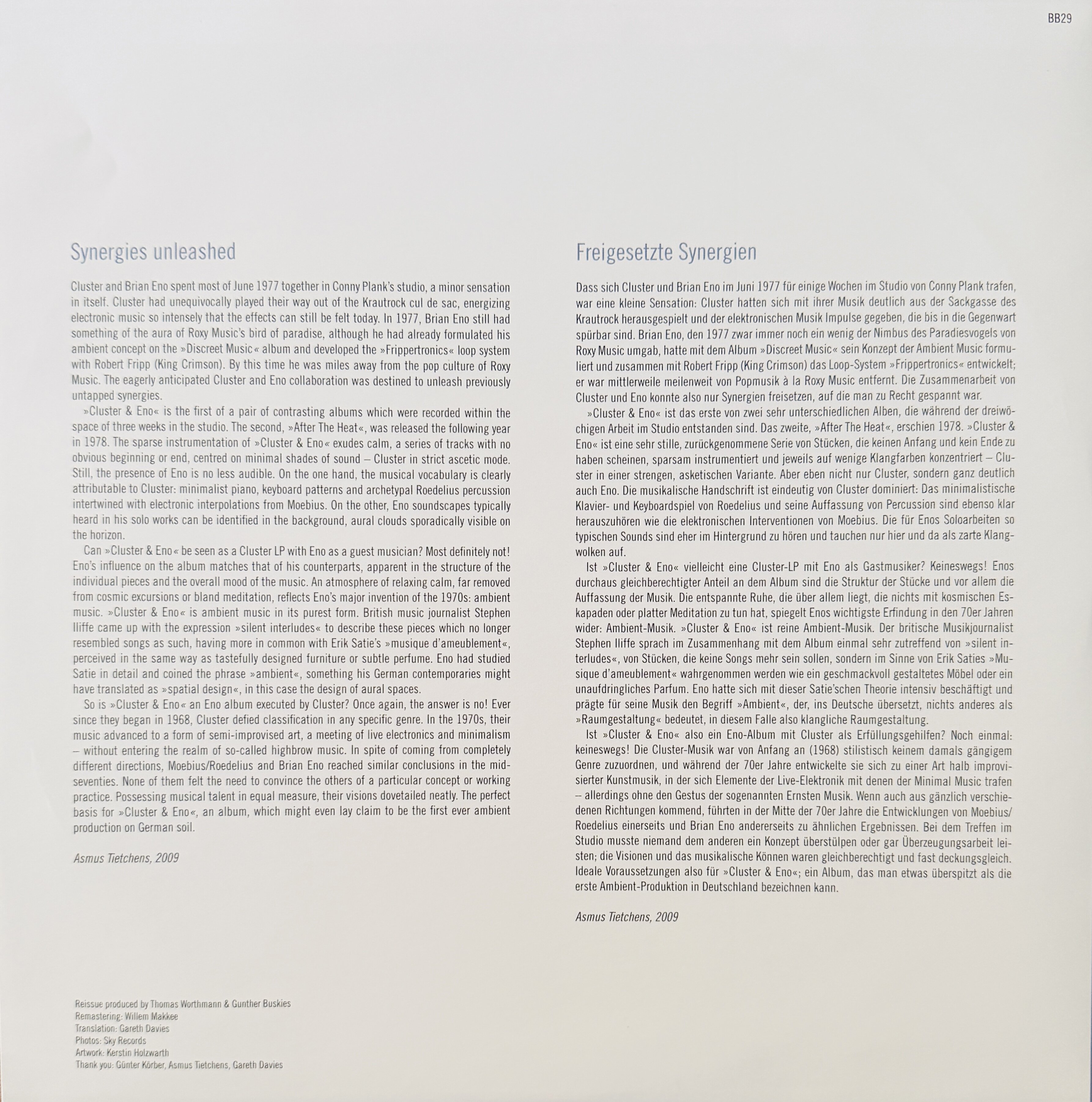
This work represents one of the most important and happiest points of contact between German krautrock/kosmische musik and the emerging Anglo-Saxon ambient music.
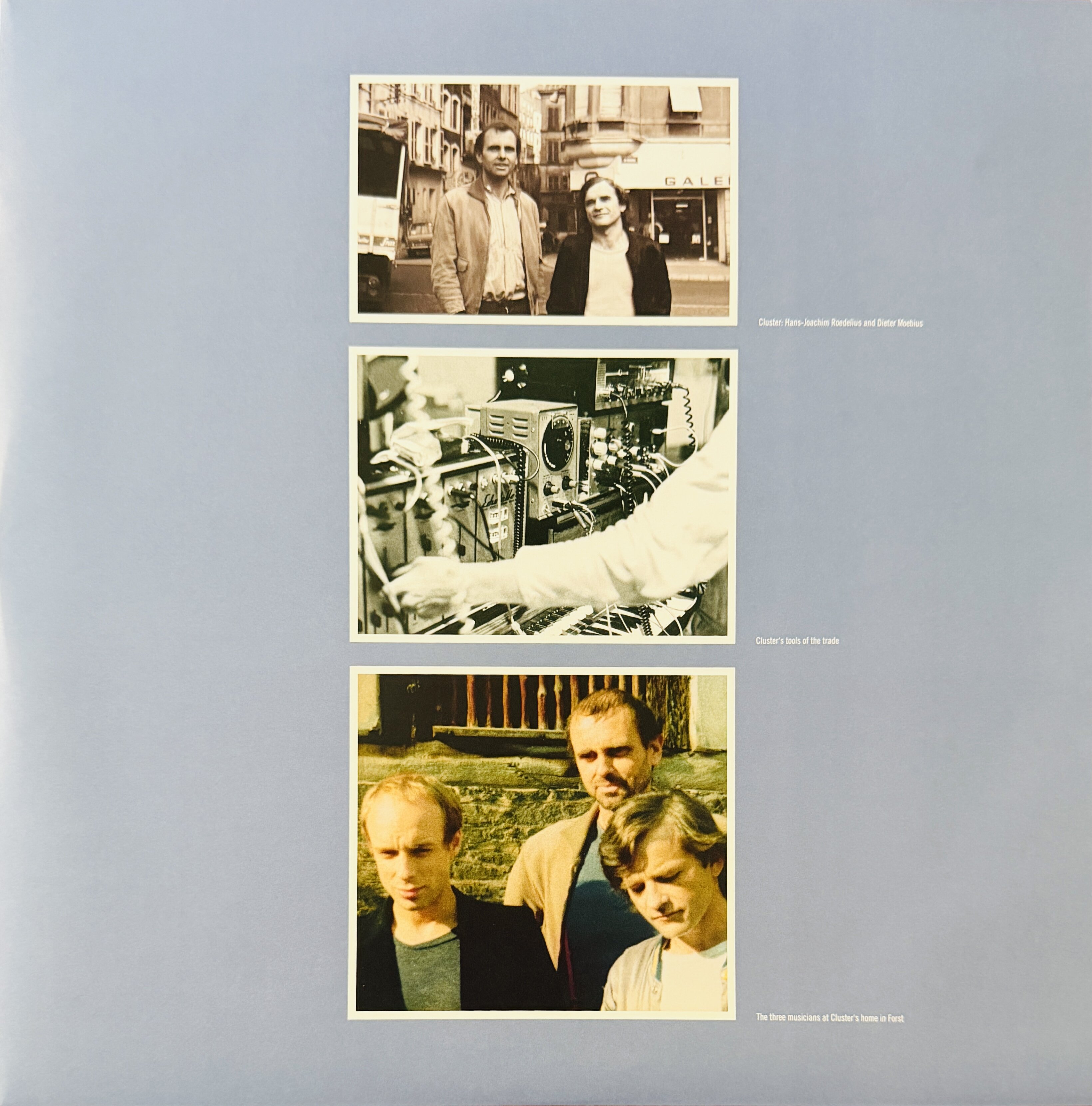
In the mid-’70s, Brian Eno had been dazzled by the German electronic avant-gardes, especially the work of Cluster and Neu! (who together had also formed the supergroup Harmonia). So, in June 1977, Eno decided to leave for Germany to record with Moebius and Roedelius. The sessions took place at Conny Plank’s legendary studio in Forst (Cologne), a true sanctuary of German cosmic music. Plank, besides being the engineer, was also co-producer of the album.
A few special guests from the era’s avant-garde scene also joined the recordings: Holger Czukay, bassist and founding member of the legendary Can, who played bass on the opening track “Ho Renomo”; Asmus Tietchens, composer and electronic pioneer, on synthesizer; and Okko Bekker, on guitar.
This collaboration was a real success in terms of visibility: Brian Eno’s popularity (already internationally known for his time in Roxy Music and for his productions) helped Cluster step out of the underground niche and reach a much wider international audience.
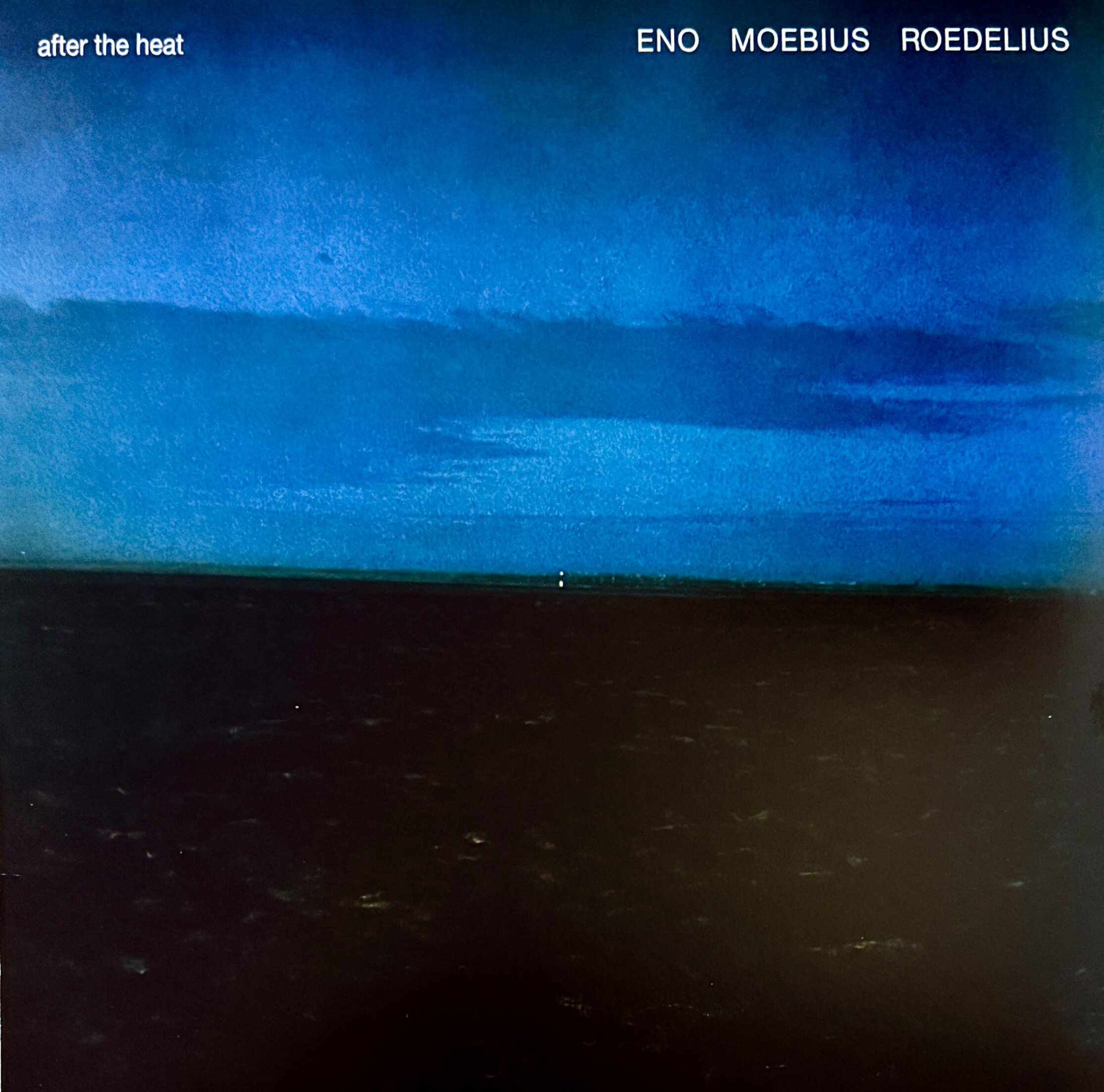
Cluster & Eno (and its follow-up, After the Heat) is a truly unique mix of ambient music, krautrock, and electronic minimalism. The result is a relaxing, ethereal, intimate atmosphere. Unlike the darker, more stretched-out German cosmic music or the static ambient that Brian Eno would later define with “Ambient 1: Music for Airports,” this album is a very special hybrid.
Instead of long improvised suites, the tracks are short and concise, often between 2 and 5 minutes. Each piece is like a small musical watercolor: it starts, introduces an idea or a circular melody, and then gently fades without ever boring. There are acoustic and electric pianos played with a delicate, essential touch, inspired by Erik Satie’s minimalist compositions. But also vintage analog synthesizers of the time (like the Minimoog or the EMS Synthi) used to create soft, floating sound beds, with no harsh or aggressive tones.
Brian Eno brought to the sessions his genius for using the recording studio as a full-fledged musical instrument. The tracks are built on bass lines and minimal rhythms, often almost imperceptible or even absent, but when they are there (like Holger Czukay’s bass in “Ho Renomo”) they are repetitive and hypnotic.
A pioneering use of echo, reverb, and tape delay, handled together with producer Conny Plank, creates a sense of time dilation.
A blend between Cluster’s approach in the days of “Sowiesoso,” with its melodic, almost naive electronics, and Eno’s idea of furniture music, meant to be listened to but also to merge with the environment, creating a relaxing atmosphere.
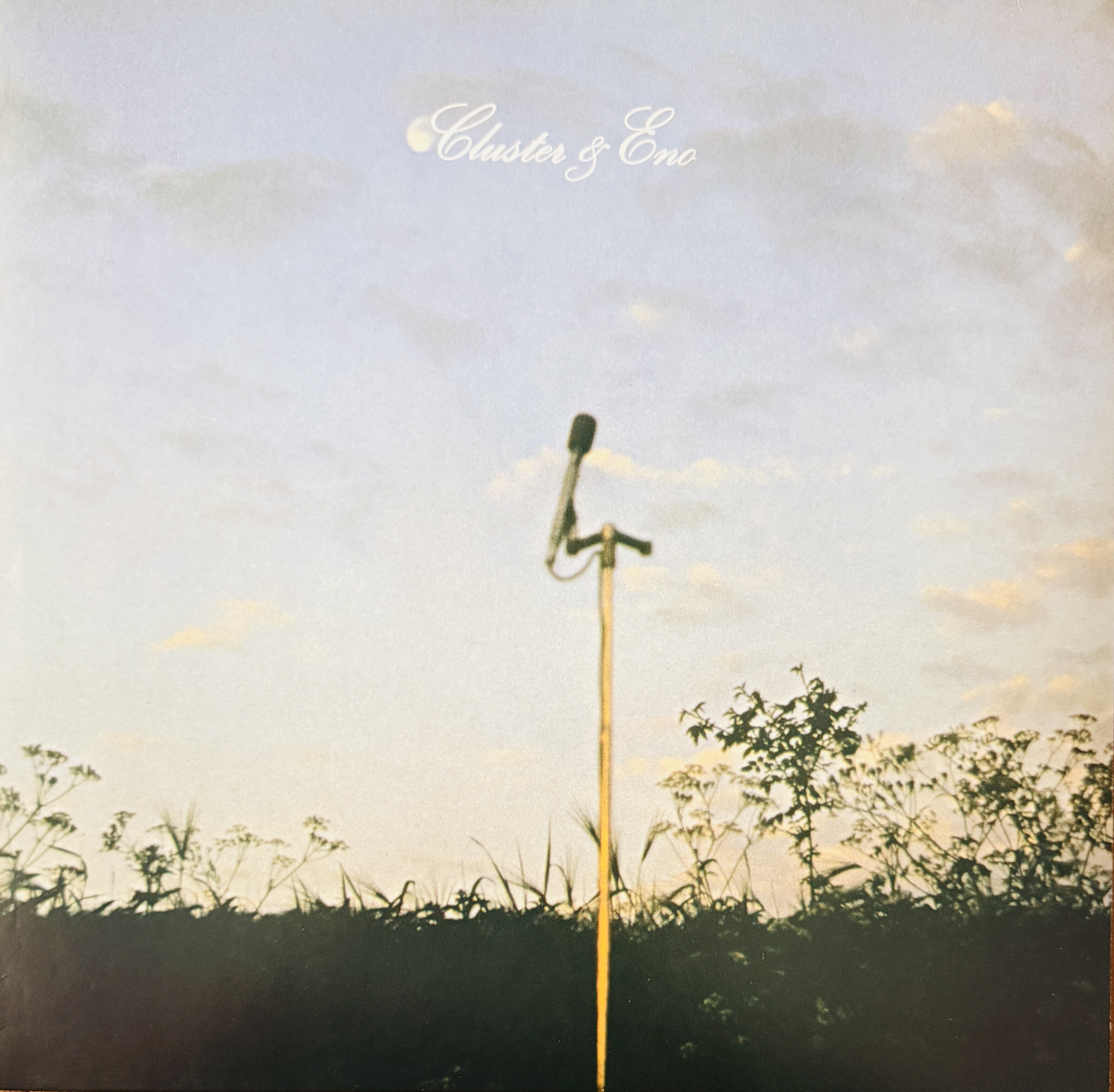
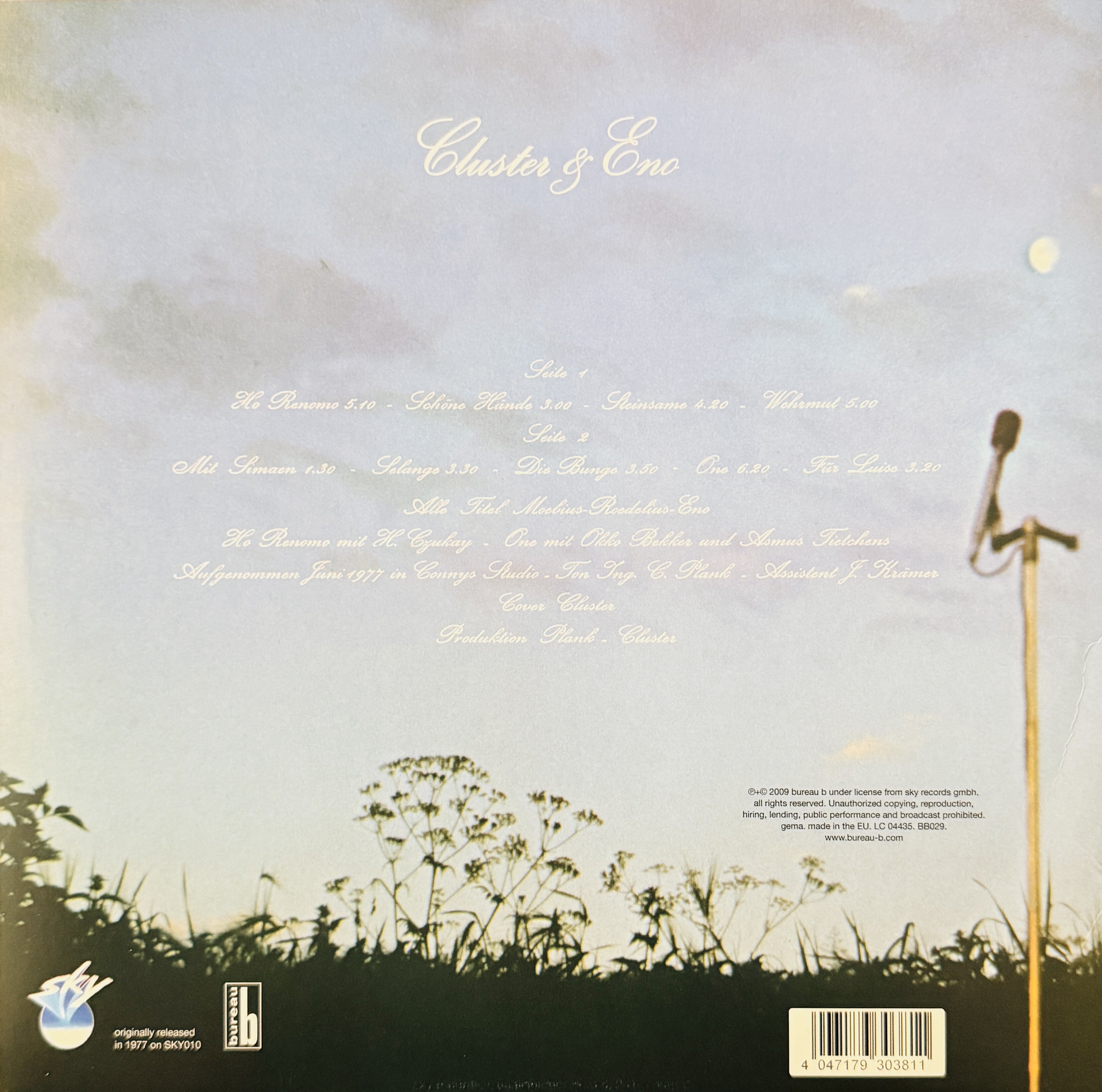
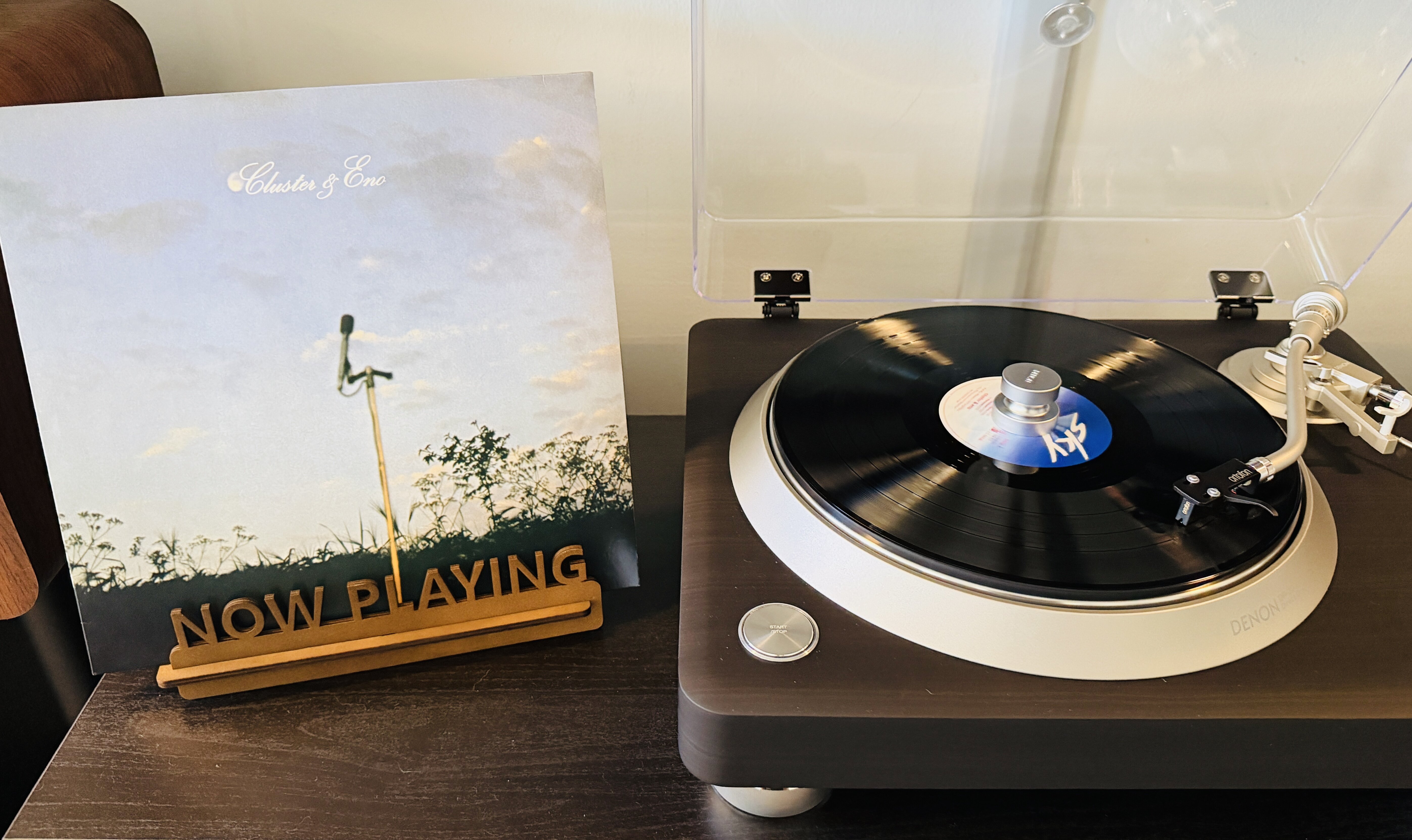
The vinyl’s visual side has remained iconic. Cluster themselves created the cover, which shows a microphone against the background of a flower field. This image became the perfect symbol of the album: the ideal fusion between technological artifice (electronics, the microphone) and pastoral nature (the flowering meadow, the calm of the sounds). Excellent album!
My Version
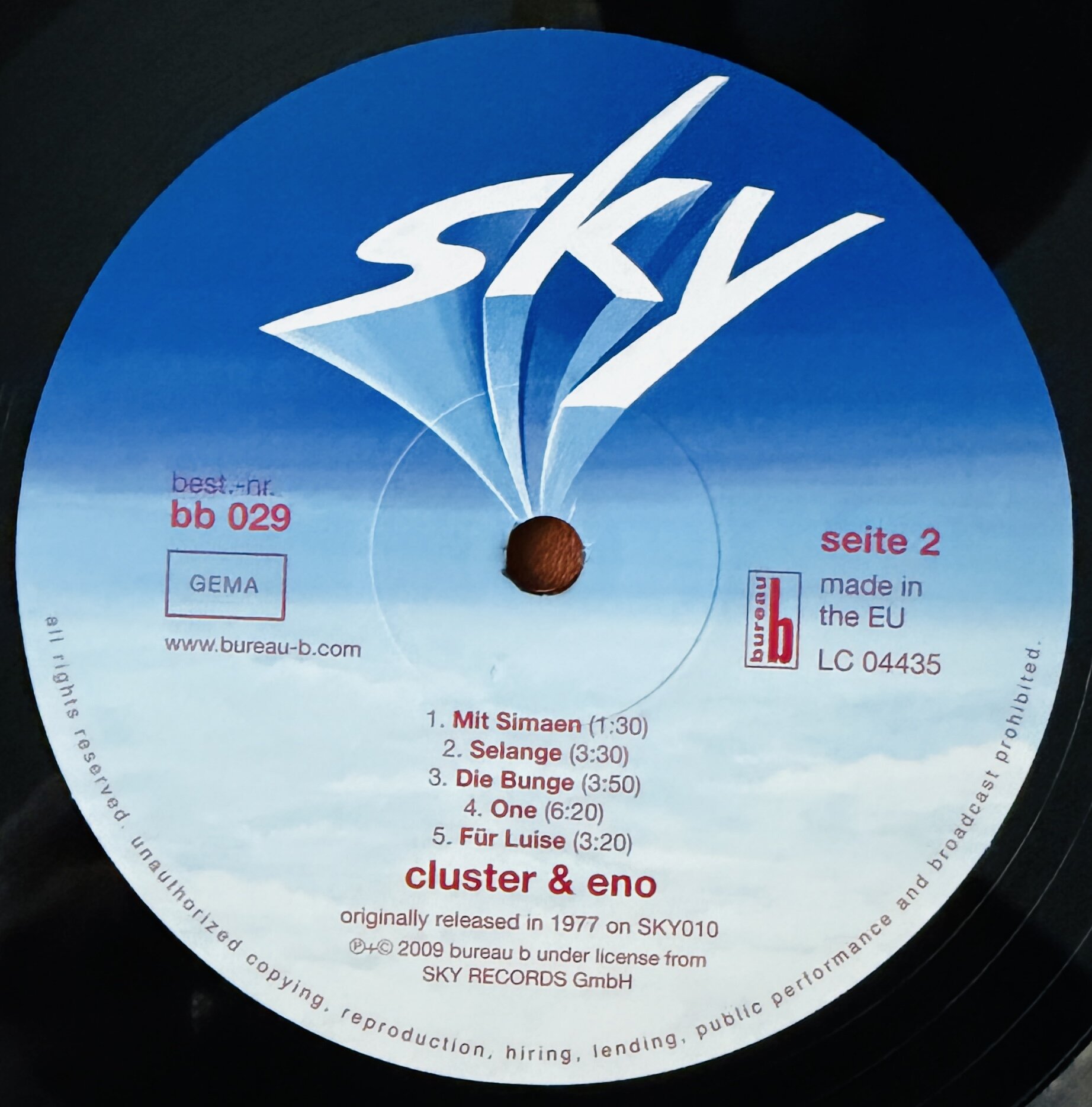
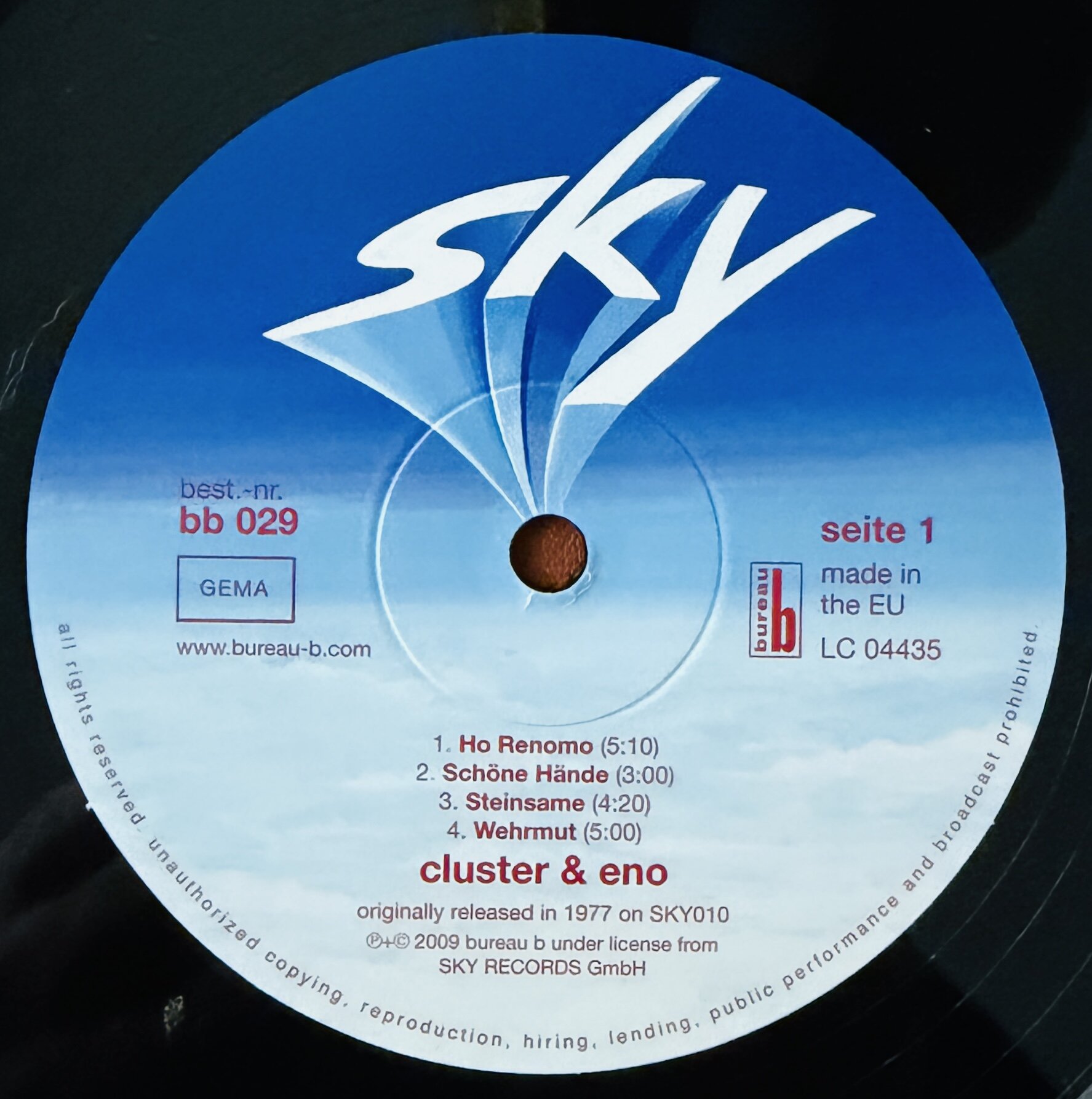
Label: Bureau B – BB029
Format: Vinyl, LP, Album, Reissue, Remastered
Country: Germany
Released: 15 Sep 2009
Tracklist
A1 Ho Renomo 5:10
A2 Schöne Hände 3:00
A3 Steinsame 4:20
A4 Wehrmut 5:00
B1 Mit Simaen 1:30
B2 Selange 3:30
B3 Die Bunge 3:50
B4 One 6:00
B5 Für Luise 3:50
Lineup
Dieter Moebius: Keyboards, synthesizers, guitar, sound treatments
Hans-Joachim Roedelius: Keyboards, piano, synthesizers, sound treatments
Brian Eno: Keyboards, synthesizers, piano, sound treatments
With
Holger Czukay: Bass
Asmus Tietchens: Synthesizer
Okko Bekker: Electric guitar