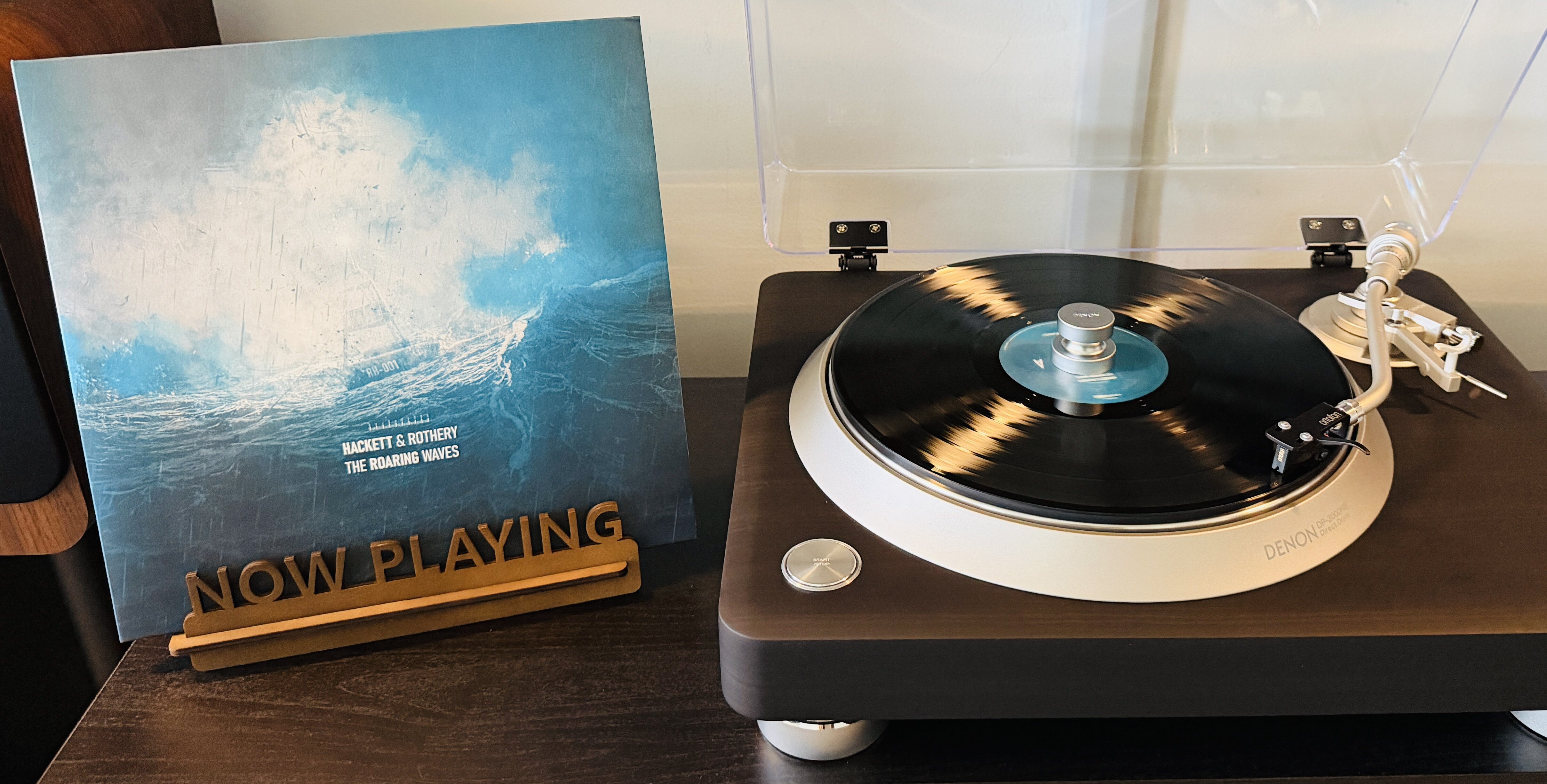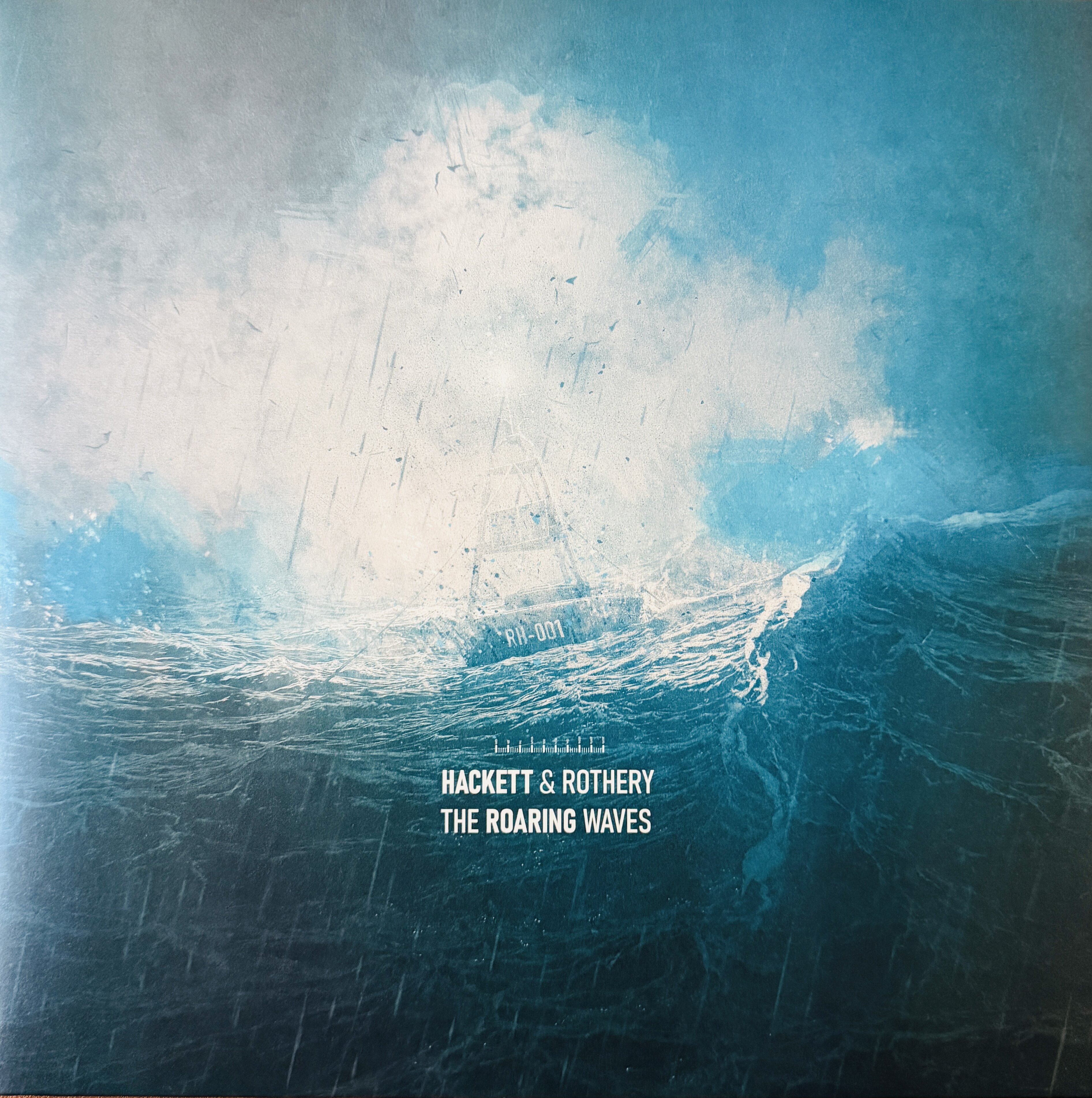
The Roaring Waves by Hackett & Rothery, 2026 album.
The Roaring Waves, the instrumental album born from the collaboration between the two legendary progressive rock guitarists Steve Hackett and Steve Rothery, was released on 28 August 2026, after a rather long and complex journey.
The idea for a project together was born more than ten years ago, with the initial proposal launched about three years before they really got to work. Unfortunately, their commitments with Marillion and Hackett’s solo career made it hard to find the time to focus on the project.
The writing and recording stretched on for almost eight years, between sessions at the Racket Club, the Marillion studio in London, and their respective home studios. Despite the long wait, the two wanted to keep a spontaneous, laid-back approach, like two friends meeting up in a garage to play and chat. Hackett himself described their working method as “old school”.
The album, made up of seven tracks, explores themes such as memory, imagination and the power of the sea.
Let’s look at the full lineup.
The Roaring Waves brings together legends of British progressive rock with talented musicians from the Italian prog scene. The album also features wordless vocalises and choirs, adding an atmospheric touch.
Leading the project are Steve Hackett and Steve Rothery, both world-renowned guitarists. Hackett, known for his work with Genesis during their golden era and for a hugely successful solo career, plays a range of guitars, including electric, acoustic, 12-string, nylon, sitar and harmonica. Rothery, founding member and lead guitarist of Marillion since 1979, contributes electric and acoustic guitar, keyboards and bass.
The rhythm section and keyboards feature Riccardo Romano, who plays keyboards and bass and handles the orchestral arrangements and choirs, as well as mix engineering. Romano is known for his work with RanestRane, an Italian prog rock band, and for his collaboration with The Steve Rothery Band and Riccardo Romano Land. On drums we have Leon Parr, a member of The Steve Rothery Band and a highly in-demand session player on the British prog and rock scene, and Daniele Pomo, also from RanestRane and part of the band that backs Rothery on his European solo tours.
Keeping an intimate feel, the choirs were entrusted to members of the Hackett and Rothery families. Among them are Jo Hackett, Steve Hackett’s wife and often his co-writer, Jo Rothery, Steve Rothery’s wife, Jennifer Rothery, Steve Rothery’s daughter and a singer and musician active in the Sylf project, and Michael Rothery, Steve Rothery’s son.
“The Roaring Waves” is an album that takes you on an evocative sonic journey, a mix of cinematic atmospheres and delicate textures. Rothery gifts us his sustain-rich notes, while Hackett experiments with distortion and acoustic and exotic sounds.
The album isn’t a contest to see who plays fastest, but a sonic exploration ranging from classic progressive rock to ambient and electronic moods, with influences that recall Pink Floyd, Tangerine Dream and Steven Wilson.
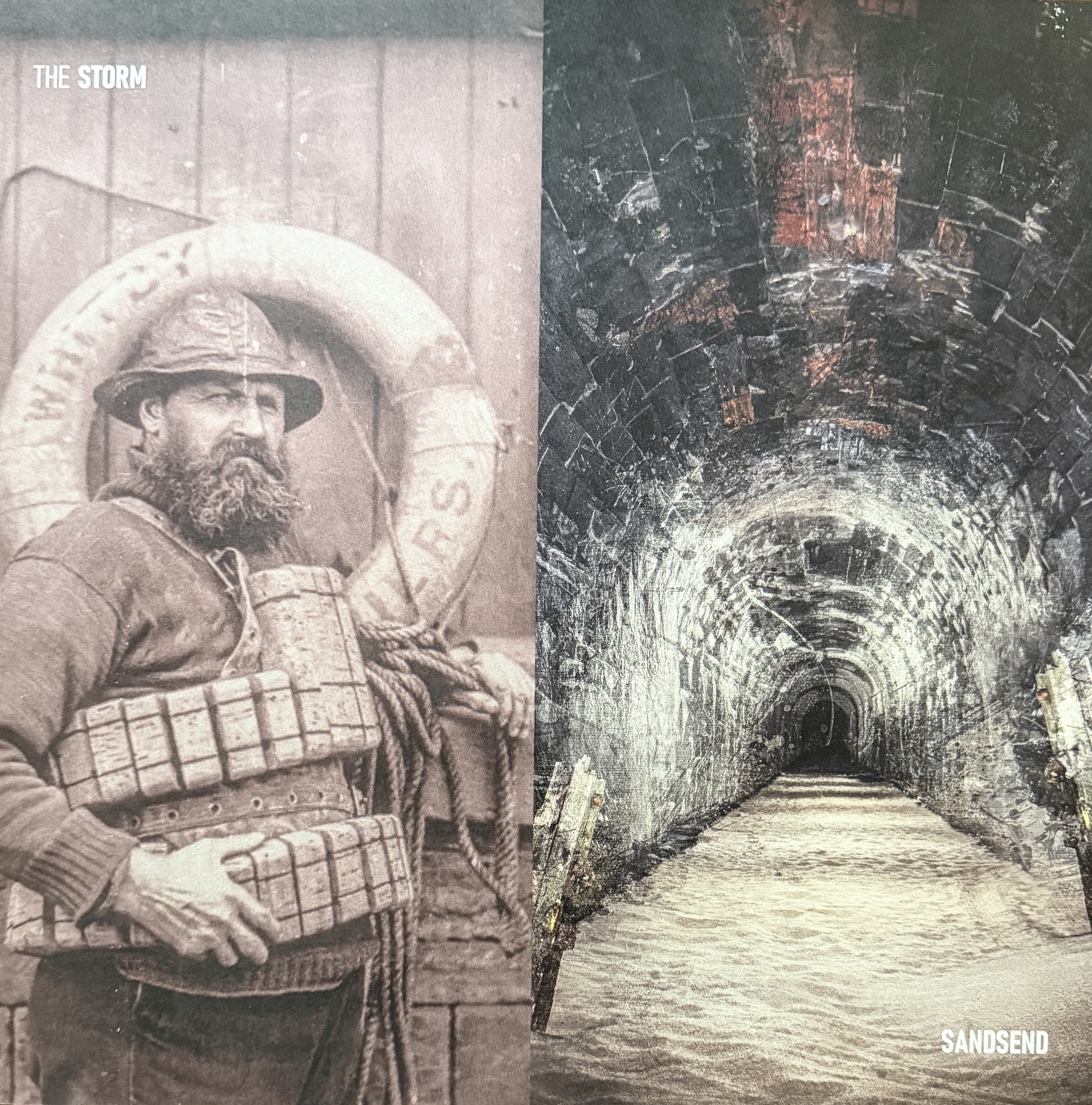
We begin with “The Storm”, the opening track, which immediately introduces the album’s concept. Samples of rain and strong wind carry us into a symphonic crescendo, accompanied by Daniele Pomo’s martial, steady drumming, perfectly evoking the arrival of a storm. And then Hackett’s searing, distorted guitar solo completes the atmosphere, making it all even more intense.
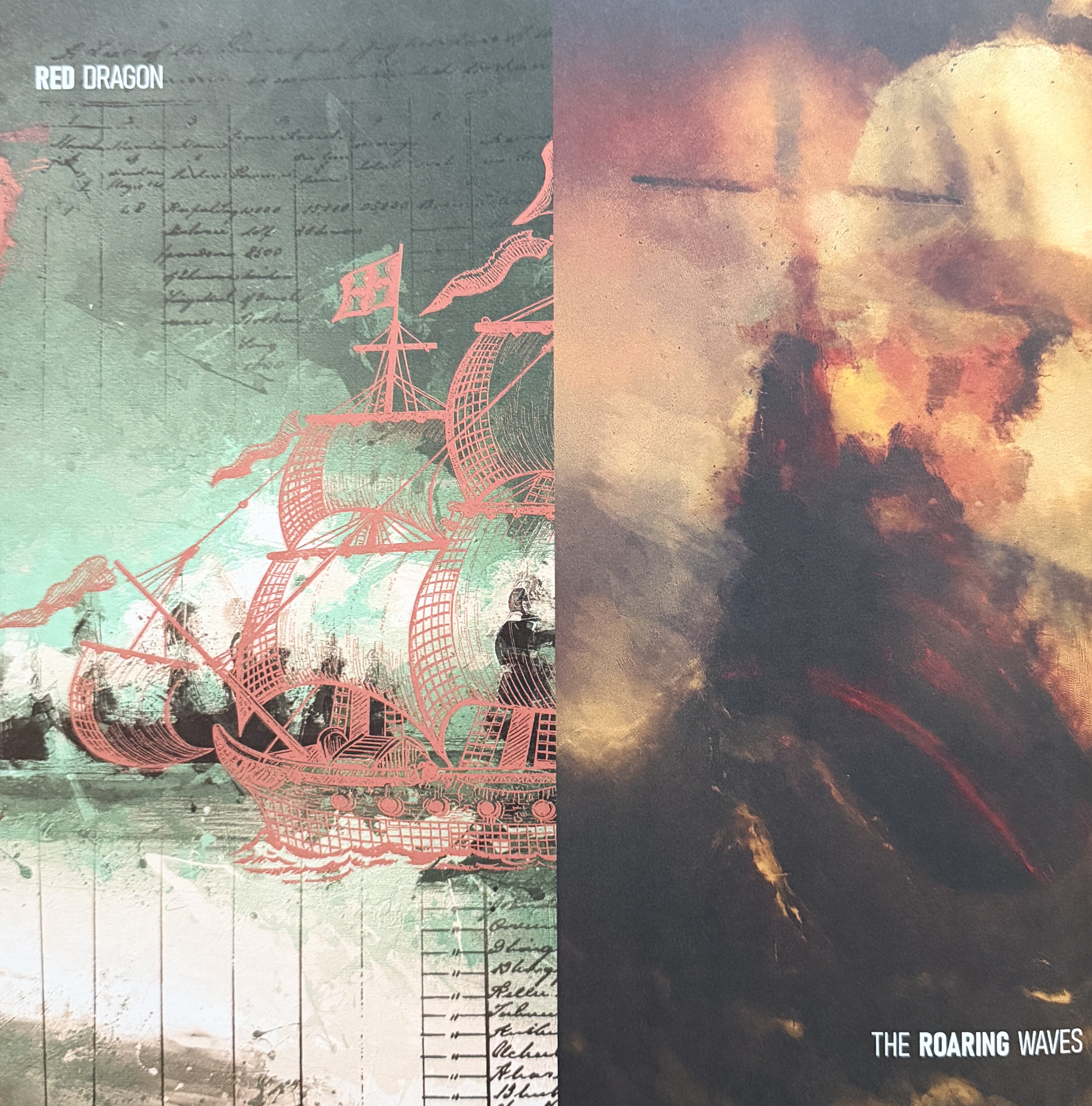
“Red Dragon” is a piece with a folk, evocative soul, opening with the hypnotic, ancient sound of the hurdy-gurdy. Hackett enriches the rhythm section with an electric sitar guitar, and together with Rothery lets loose in splendid interweavings and solos using slide guitar technique, creating a magical, evocative atmosphere.
The title track, “The Roaring Waves”, is the beating heart of the album. It starts with a delicate acoustic guitar introduction that mimics waves breaking on the shore. Then synthetic strings and a powerful electric section come in, where the two guitarists’ long, dreamy notes chase each other, imitating the force of ocean currents. A truly moving sonic experience.
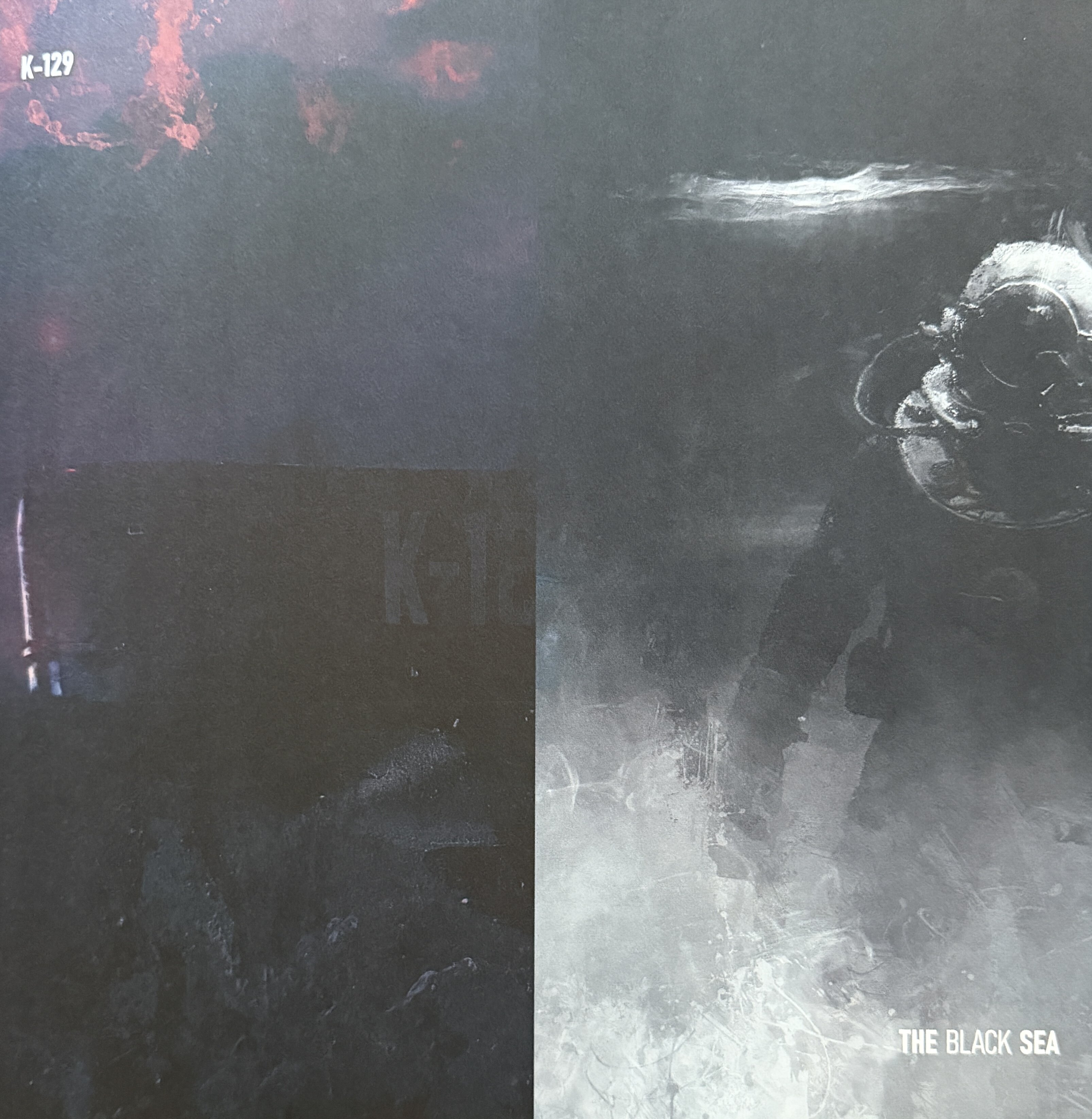
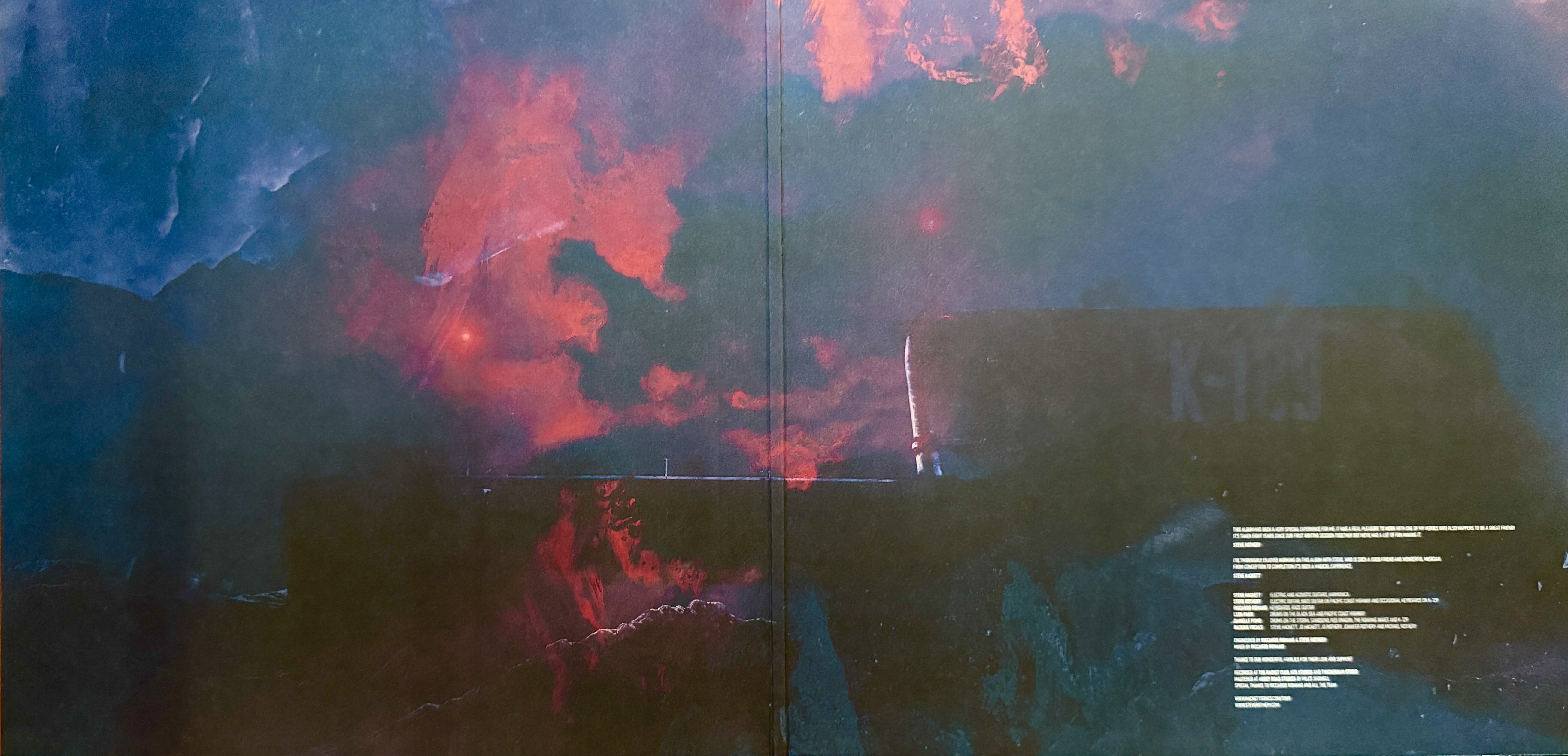
“K-129”, the album’s longest and most intense piece (almost 8 minutes), is a tribute to the tragic sinking of a Soviet submarine in the Pacific during the Cold War. Musically, it ventures into electronics, with sounds reminiscent of Tangerine Dream, and includes sound effects that evoke underwater sonar, alternating moments of strong drama with more ambient spaces.
“The Black Sea”, the first single released, is a perfect example of the fusion between the two styles. The atmospheres are mysterious and melancholic, with whispered melodies.
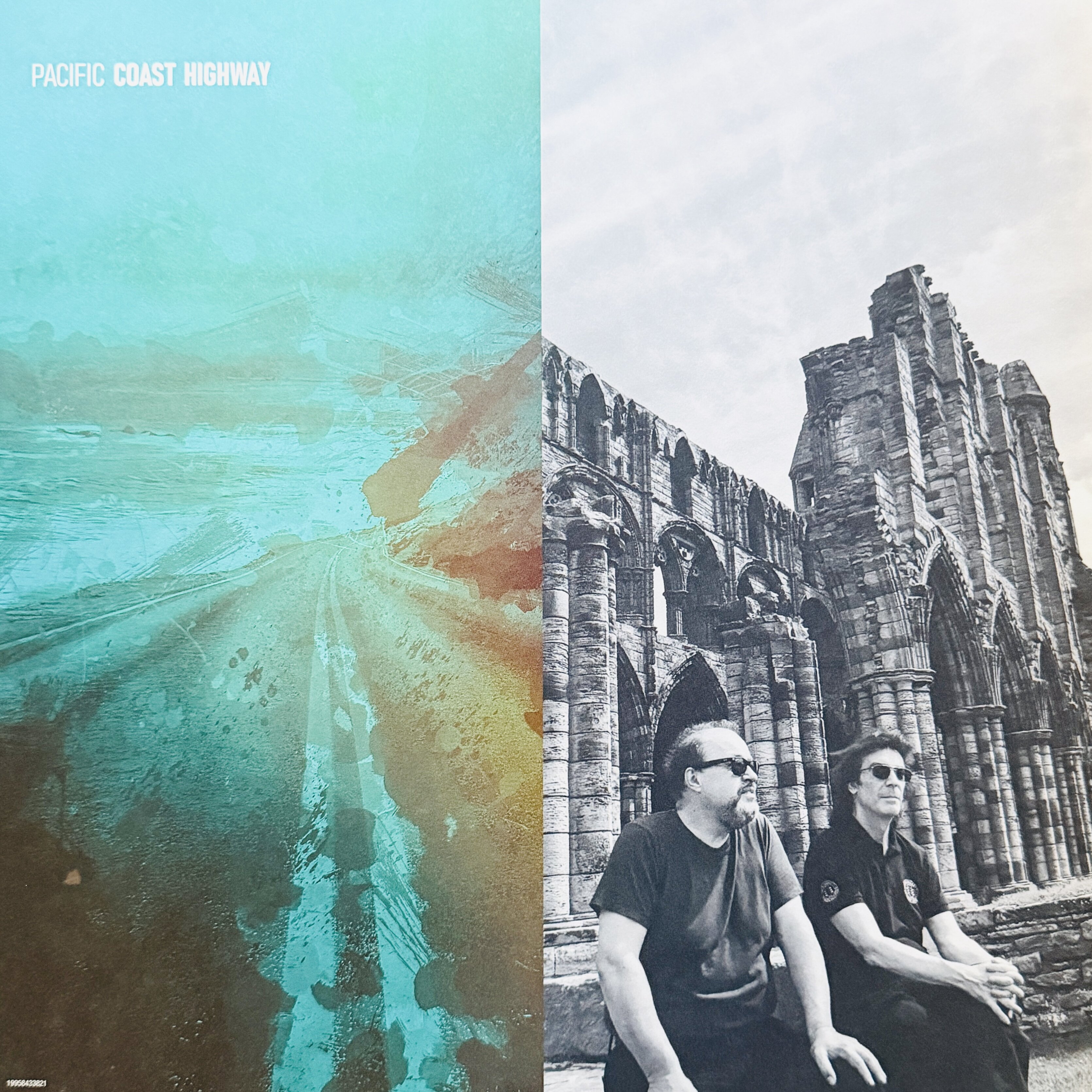
Finally, “Pacific Coast Highway”, the track that closes the album, is a real stylistic surprise that breaks with the melancholic mood of the rest of the record. An energetic, American-style piece, dominated by Hackett’s harmonica (blues harp), backed by a tight drum groove (Leon Parr), a Hammond organ and the ethereal, wordless choirs of members of the two artists’ families.
The Roaring Waves is, in my opinion, one of the best instrumental progressive rock albums of recent times, a work that moves away from commercial logic. I’ve read some reviews that, in my view, are a bit ungenerous, not only given the vast experience of the two main musicians, but also because the album is truly top-level. It’s a real musical dialogue between Rothery and Hackett. Rothery’s lyrical sustain and Hackett’s explosive experimentation blend perfectly, without ever overlapping. Riccardo Romano on keyboards adds a magical touch, creating a sonic atmosphere that perfectly evokes the image of the sea. The album is varied and never boring, alternating the drama of K-129, the folk and exotic influences of Red Dragon, and the final blues/rock surprise of Pacific Coast Highway.
Being a fully instrumental, atmospheric album, it may not be for everyone, especially for those who love classic songs or the vocal structures typical of Genesis and Marillion. Much of the album unfolds at mid-slow tempos to enhance the ambient feel, so it may take a few more listens to fully appreciate it.
What surprised me was the ability to imagine Whitby, the coastal town in North Yorkshire where Rothery grew up, despite never having been there. In winter, the roar of the waves and the storms create a poetic, evocative atmosphere that deeply influenced the album’s sonic imagery.
Rothery explained that living on the coast leaves an indelible mark, and I, having spent many years at sea, understand perfectly what he means. These are his words:
«The sea has many moods. It can be calm and enchanting, with the sun setting on the horizon, or a destructive, fierce force that only wants to drag you to the bottom.»
Apparently, a decisive moment for the album’s sonic direction happened in Whitby, where the two musicians were jolted awake by a violent coastal storm. This impactful event directly inspired the opening track, “The Storm”, and provided the title for the entire album, “The Roaring Waves”.
Beyond being two instrumental virtuosos, they are two friends who watch and listen to the power and sweetness of the sea, translating them into music, which is the very essence of music itself. Listening to this record with that awareness gives it a far deeper meaning.
A beautiful record. Absolutely recommended!
My Version
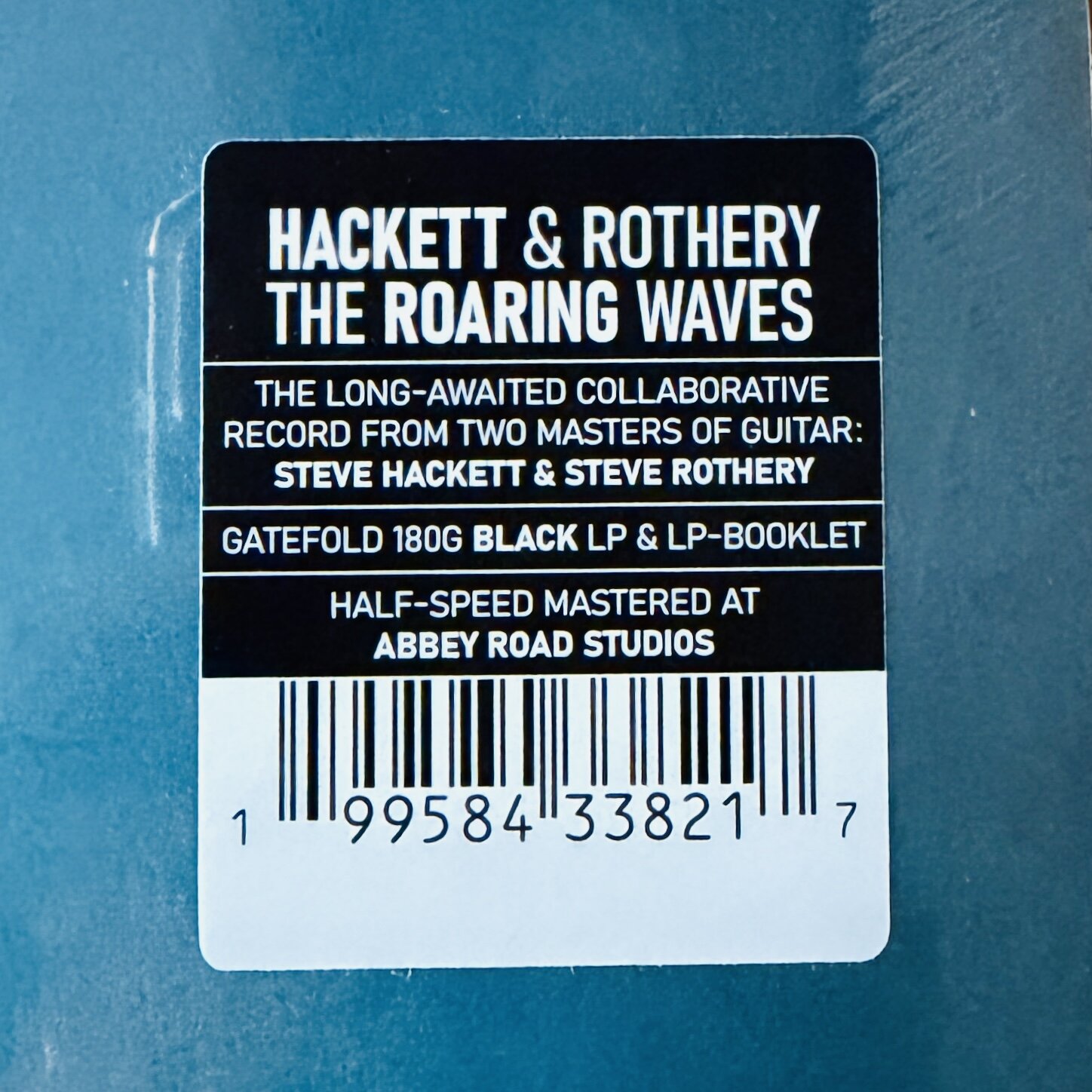
Label: Inside Out Music – IOM771, Sony Music – 19958433821
Format: Vinyl, LP, Album, 180g
Country: Europe
Release: 28 Aug 2026
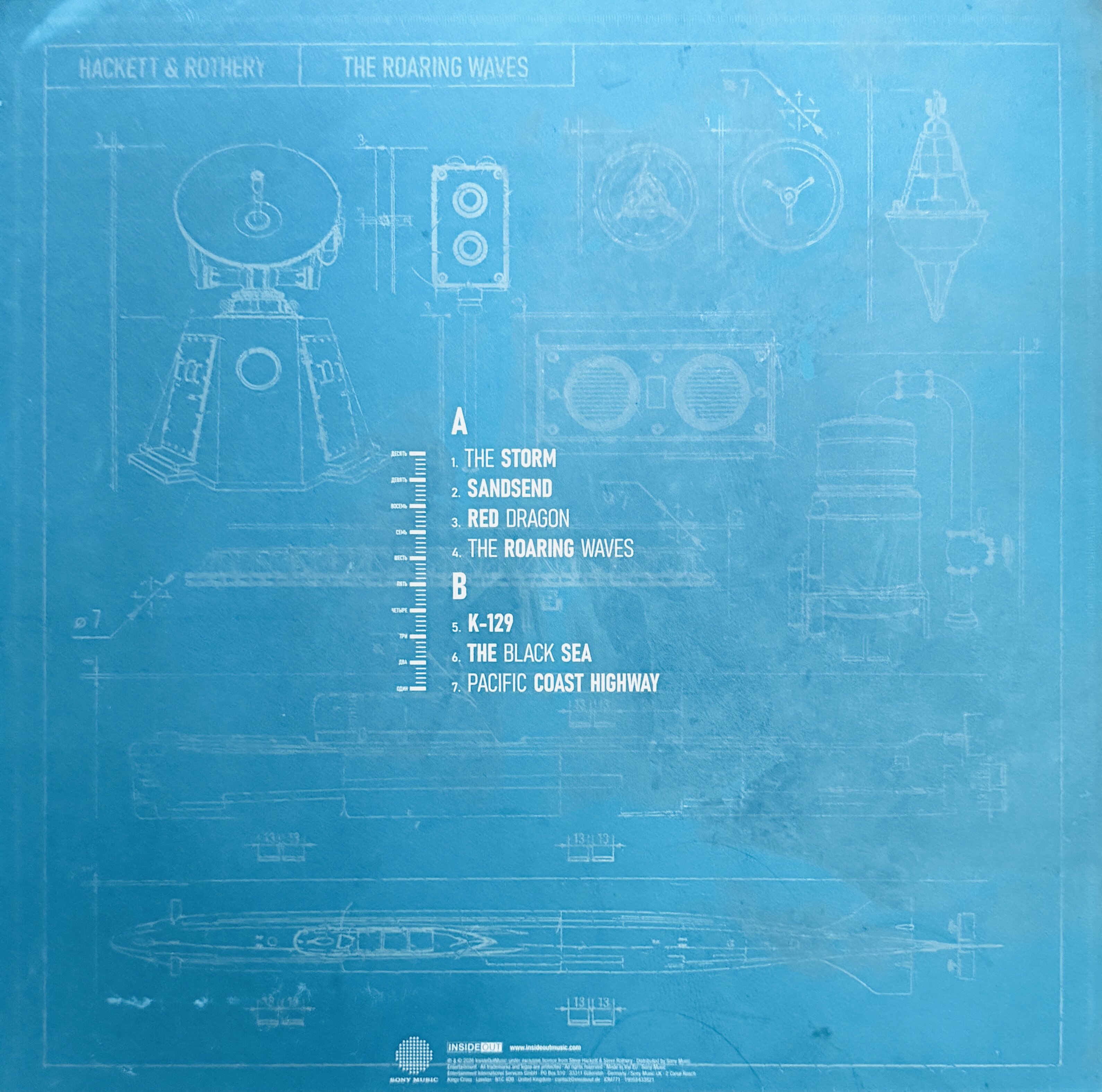
Tracklist
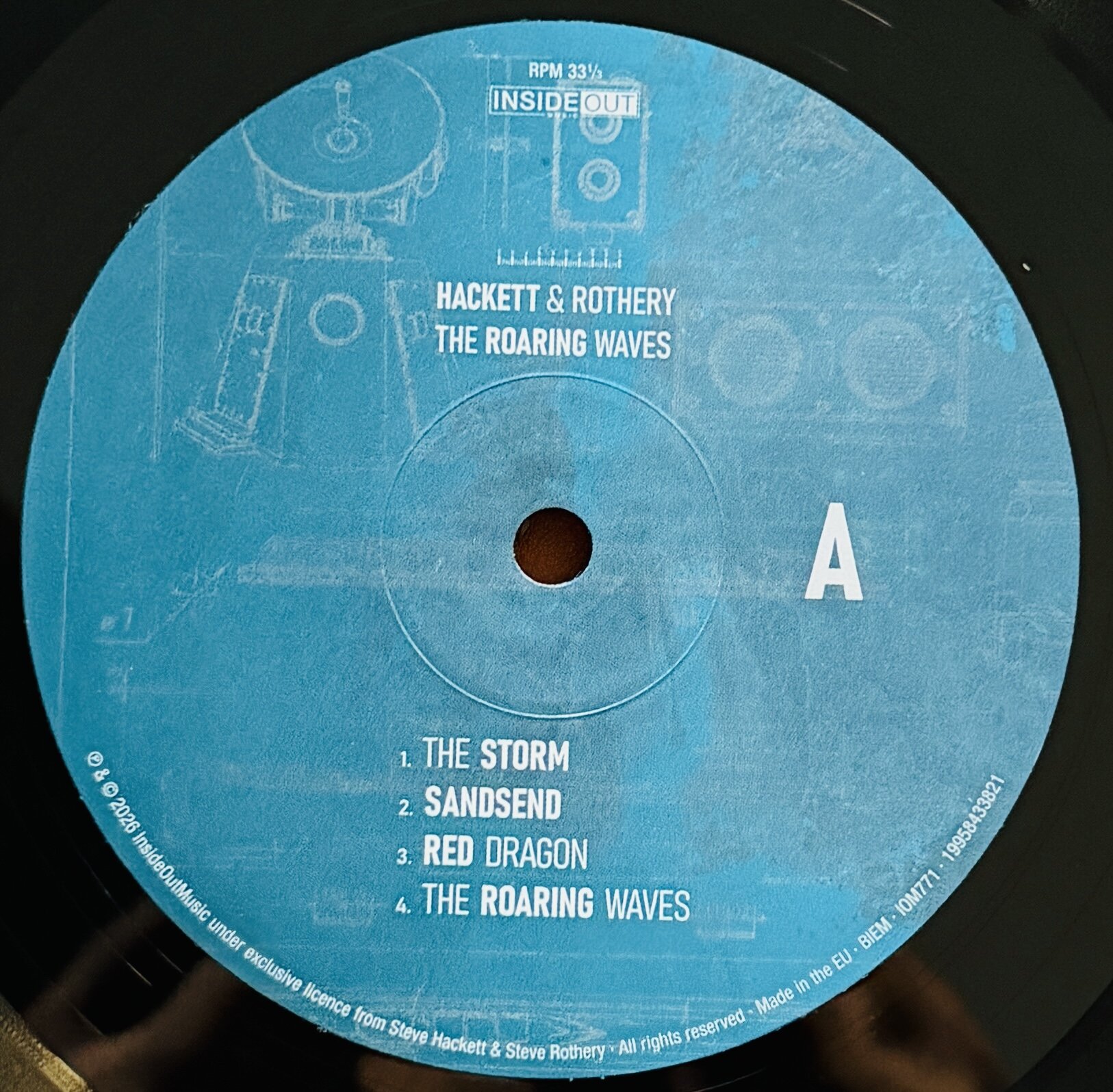
A1 The Storm
A2 Sandsend
A3 Red Dragon
A4 The Roaring Waves
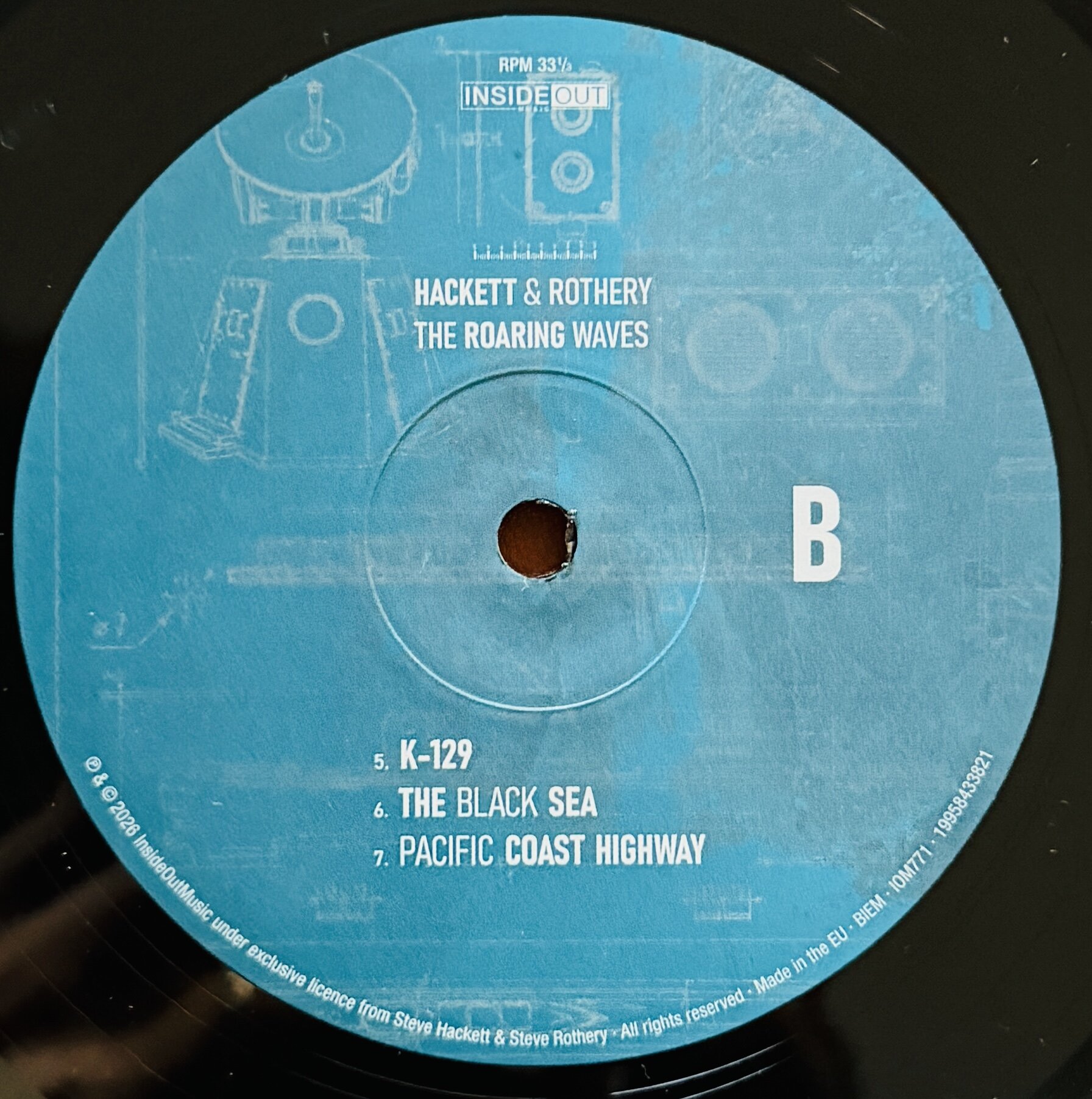
B1 K-129
B2 The Black Sea
B3 Pacific Coast Highway
Lineup
Steve Hackett: Electric guitar, acoustic guitar, 12-string guitar, nylon-string guitar, sitar guitar, harmonica
Steve Rothery: Electric guitar, acoustic guitar, keyboards, bass
Riccardo Romano: Keyboards, bass, orchestral arrangement, choirs
Leon Parr: Drums
Daniele Pomo: Drums
Jo Hackett: Choirs
Jo Rothery: Choirs
Jennifer Rothery: Choirs
Michael Rothery: Choirs