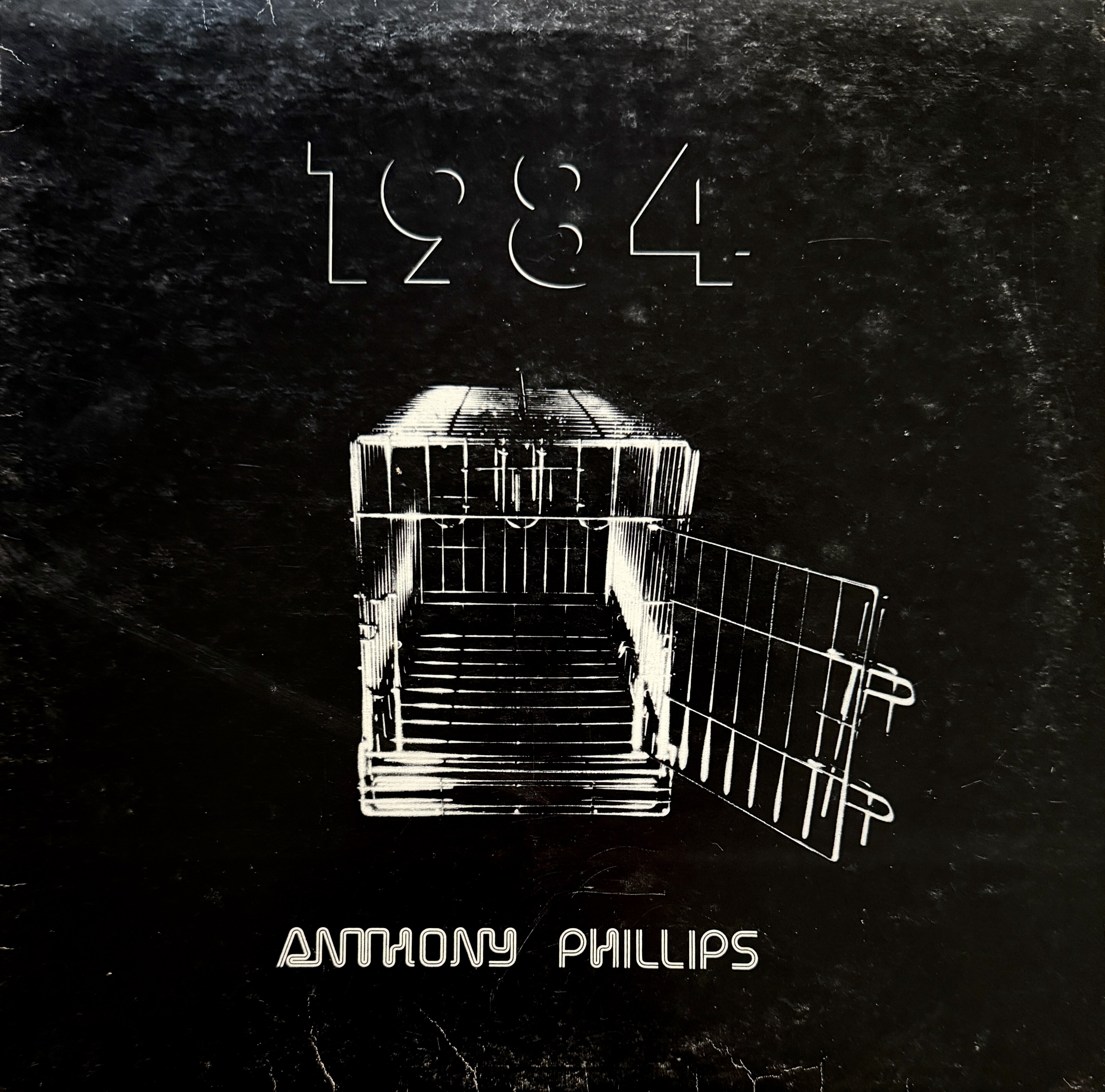
1984 by Anthony Phillips, 1981 album.
“1984” is the sixth studio album by Anthony Phillips, guitarist and one of the founding members of Genesis. It is a fully instrumental record, an exception and a turning point in his musical career.
Although the title is directly inspired by George Orwell’s famous dystopian novel, the link with the book is mainly conceptual and atmospheric in nature.
In the early ’80s, many pop and electronic artists looked to 1984 with a mix of fascination and fear. Phillips decided to turn these impressions into a complex musical suite.
Before “1984”, Anthony Phillips was known mainly for his acoustic style, his mastery of the 12-string guitar and his progressive, pastoral sound, as you can hear on his debut masterpiece, “The Geese & The Ghost”.
With “1984”, however, Phillips made a major change of direction, almost completely abandoning the guitar to focus on keyboards and synthesizers, including the Polymoog, the ARP 2600 and the Sequential Circuits Prophet-5. This move into electronics was also partly influenced by health issues: at the time, Phillips suffered from tendinitis, which made it hard for him to play guitar for long periods.
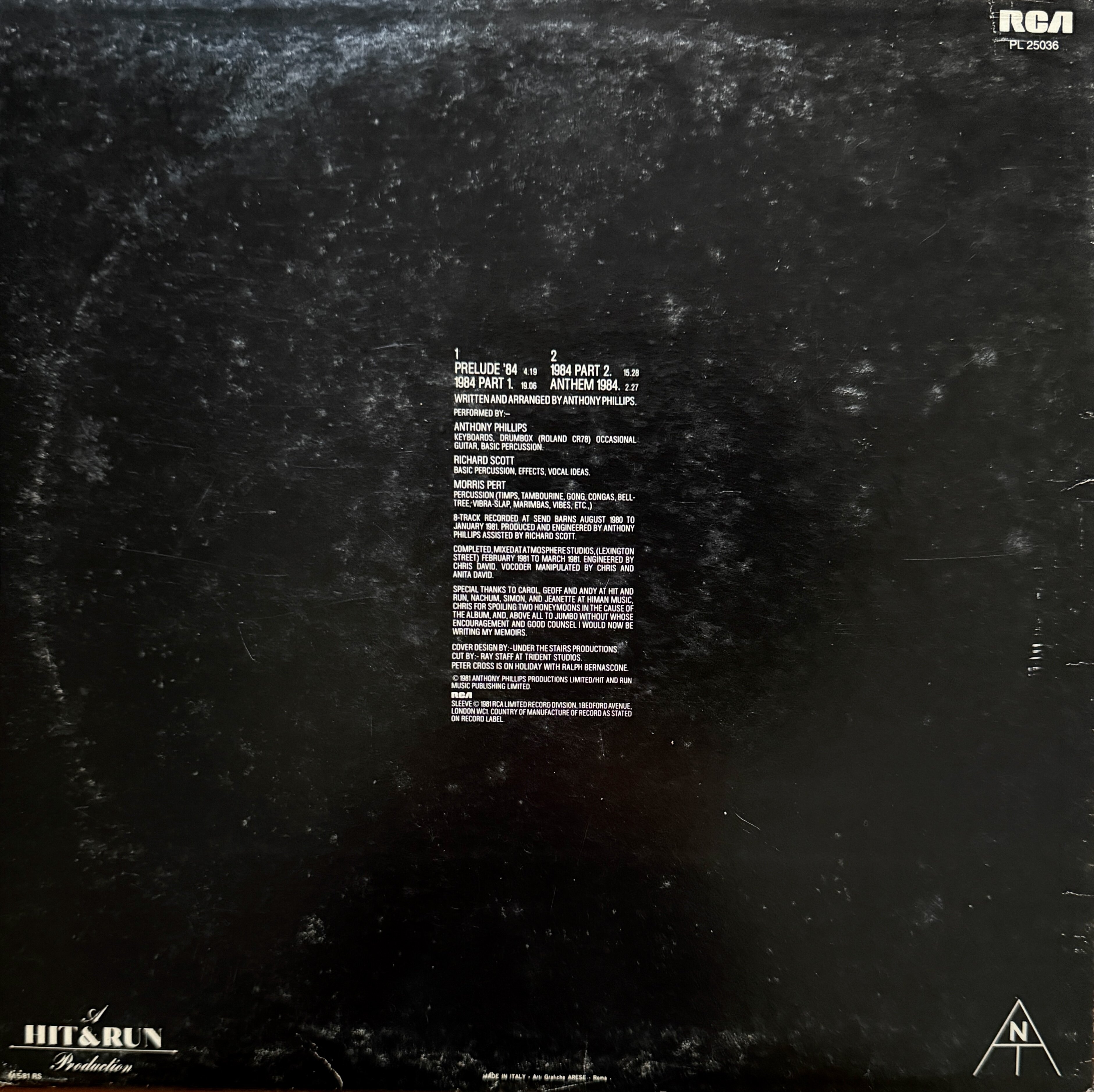
“1984” is an almost entirely solo work. Anthony Phillips composed, arranged and personally played almost all the instruments on the record. The lineup and studio contributions for the album include:
Anthony Phillips: Keyboards, synthesizers (including Prophet-5, ARP 2600, Polymoog), piano, electronic percussion (using a drum machine), guitar (used very sparingly) and sound effects.
To add a bit of dynamism to some parts, Phillips brought three musicians into the studio for specific contributions:
Morris Pert: Percussion. A talented Scottish musician (already a collaborator of Brand X and Phil Collins), his contribution was essential in giving a human, tribal touch to the album’s synthetic rhythms.
Richard Scott: Worked on the basic effects and helped with programming the electronic percussion (Roland CR-78).
Chris Hughes: On versions of the album that list his name, he is credited for technical and logistical support for the programming (Hughes would later become famous as producer and drummer of Tears for Fears).
The album, self-produced, is conceived as a continuous work divided into macro-tracks:
Prelude ’84, an evocative opening that introduces the work’s main themes.
1984 Part One, which takes up the entire first side of the original vinyl, alternating martial, rhythmic moments with orchestral, dreamlike passages created by the synthesizers.
1984 Part Two, which continues the sonic narrative.
Anthem 1984, the solemn and liberating closing track, dominated by a highly evocative melodic theme.
The album sits in a border zone between avant-garde electronic music, instrumental art rock and proto–New Age. The abandonment of guitars is almost total, both acoustic and electric, the ones that had made Phillips’ fortune in Genesis and in his early solo work. The focus instead is on layering keyboards, creating a complex, richly nuanced soundscape.
Despite the use of cutting-edge electronic technology for the time, Phillips’ writing remains deeply rooted in the classical and progressive tradition. The pieces are not simple pop tracks or electronic dance numbers, but unfold like movements of a continuous suite. Themes are introduced in the Prelude, evolve tensely in the two long central sections, and find a choral resolution in the final anthem, “Anthem 1984”.
The album’s style is built on a constant dualism. The use of primitive drum machines, like the Roland CR-78, and sequenced loops creates a rigid, hypnotic, totalitarian atmosphere, perfectly in tune with the Orwellian nightmare. This cold mechanism is then broken by Morris Pert’s acoustic percussion and by Phillips’ piano, which bring in dynamism, warmth and a strong emotional component, making the listening a complex, engaging experience.
On release, the album surprised critics and Genesis fans, used to acoustic and folk-prog sounds. Over the years, however, “1984” has been reappraised as one of Phillips’ boldest and most original works, able to blend the classical sensibility of progressive rock with the new electronic and New Age sounds of the early Eighties.
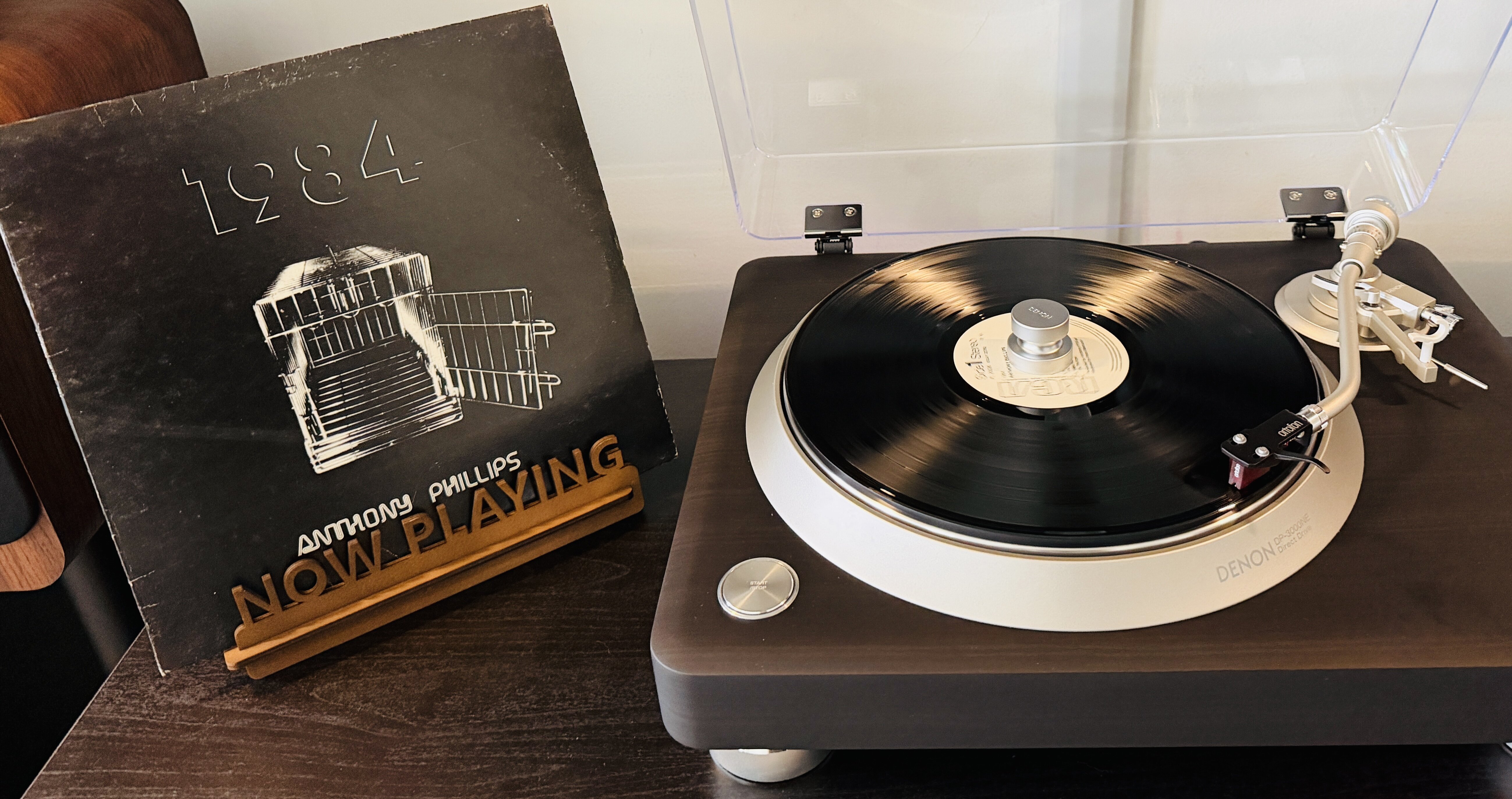
My Copy
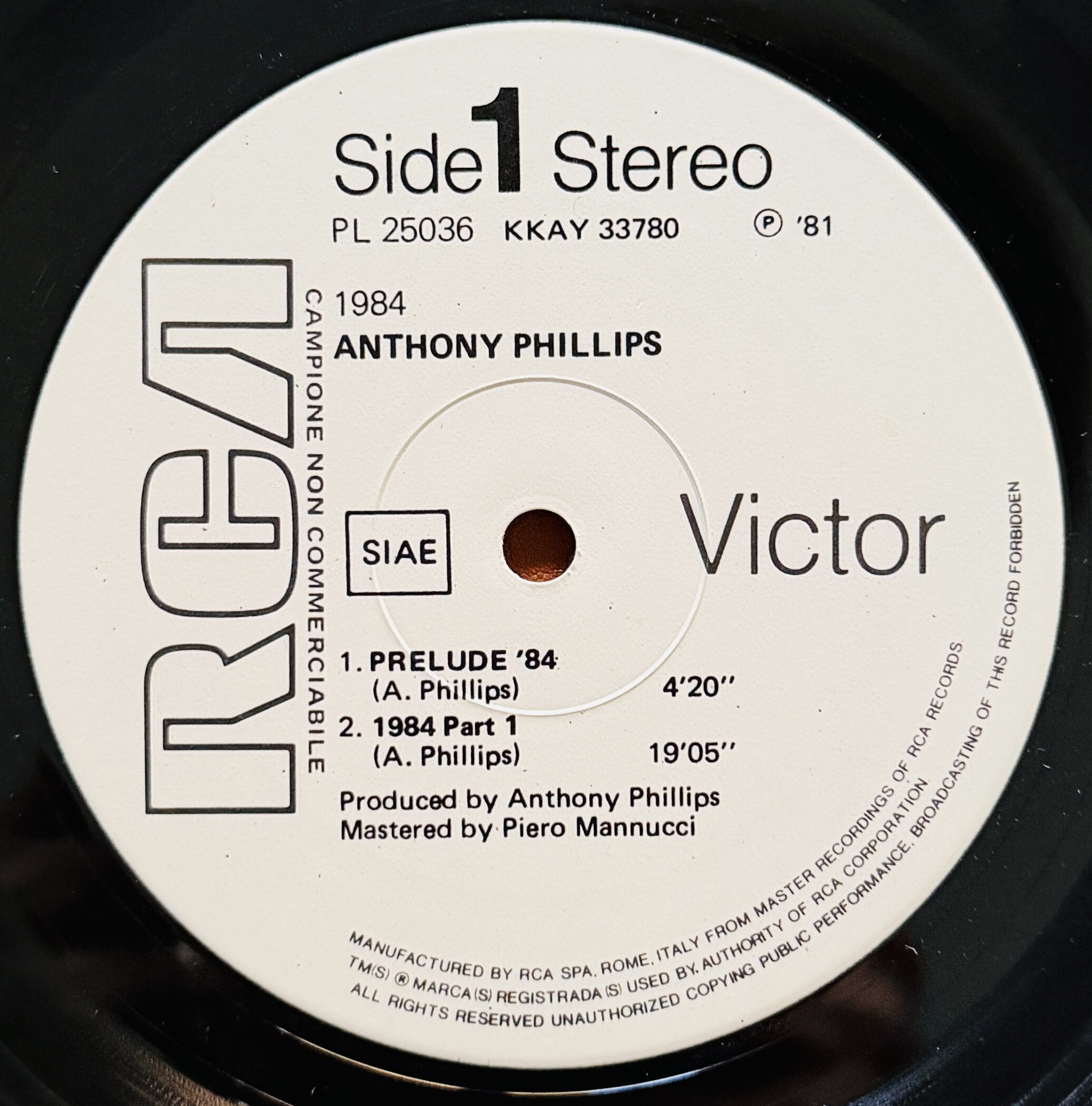
Label: RCA – PL 25036, RCA Victor – PL 25036
Format: Vinyl, LP, Album, Stereo
Country: Italy
Released: 1981
Tracklist
A1 Prelude '84 4:20
A2 1984 Part 1 19:05
B1 1984 Part 2 15:28
B2 Anthem 1984 2:27
Lineup
Bell Tree, Timpani, Tambourine, Gong, Congas, Vibraslap, Marimba, Vibraphone – Morris Pert
Engineer, Vocoder [Manipulation] – Chris David
Keyboards, Drum Machine [Drumbox (Roland CR78)], Guitar, Percussion, Producer, Engineer – Anthony Phillips
Percussion, Effects, Engineer [Assistant] – Richard Scott
Vocoder [Manipulation] – Anita David