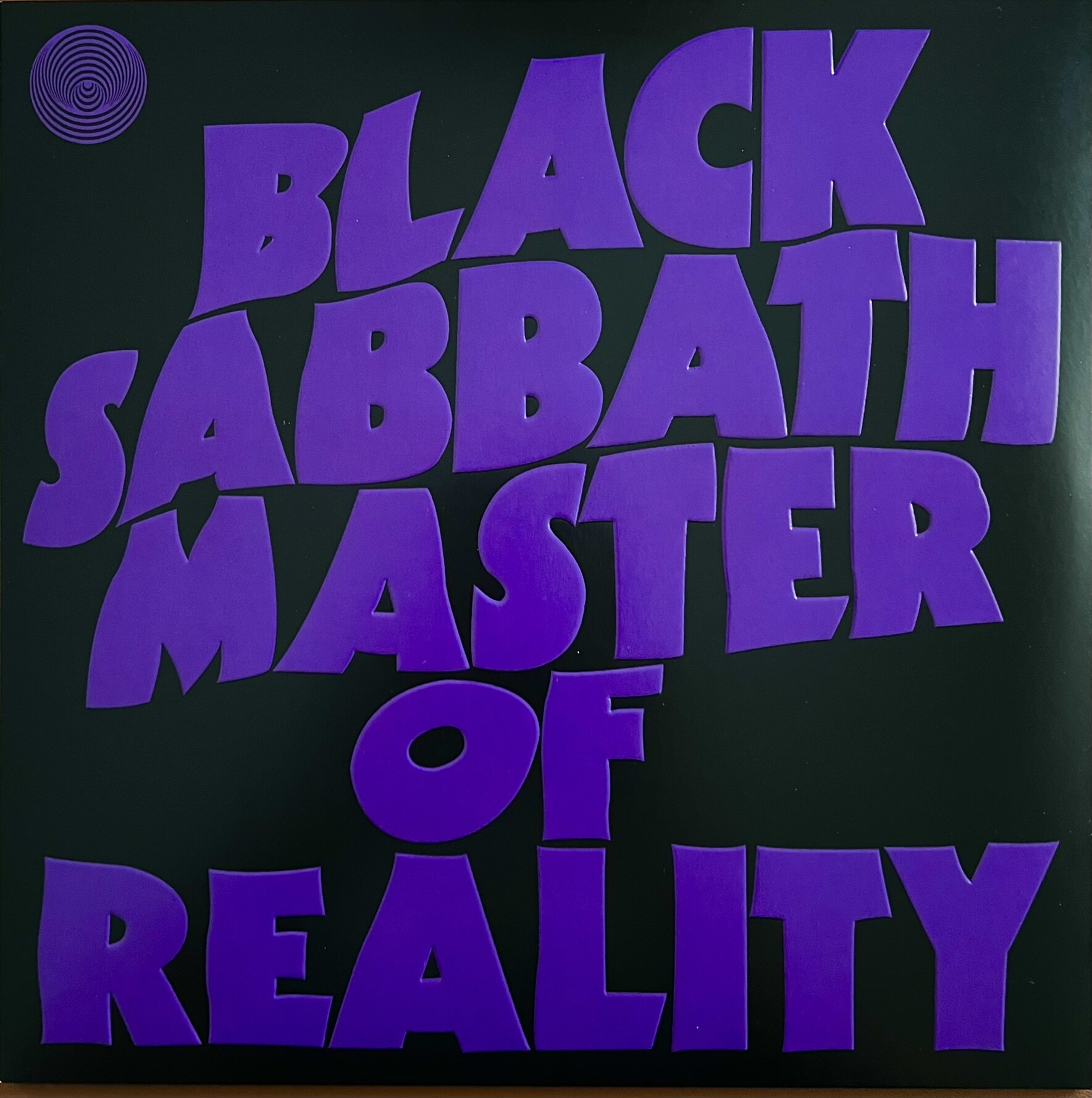
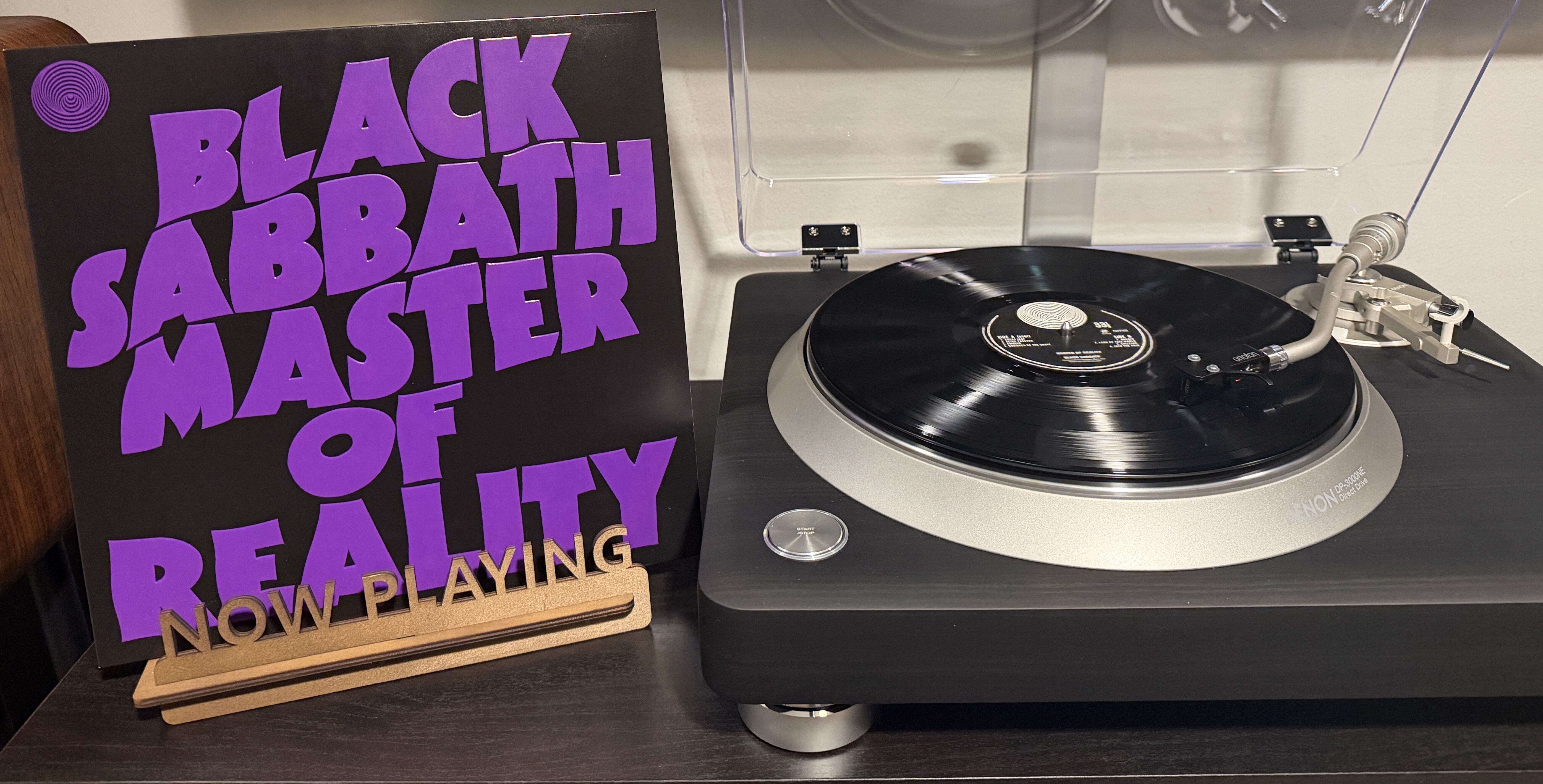
Not Only Prog: Master of Reality by the legendary Black Sabbath, from 1971.
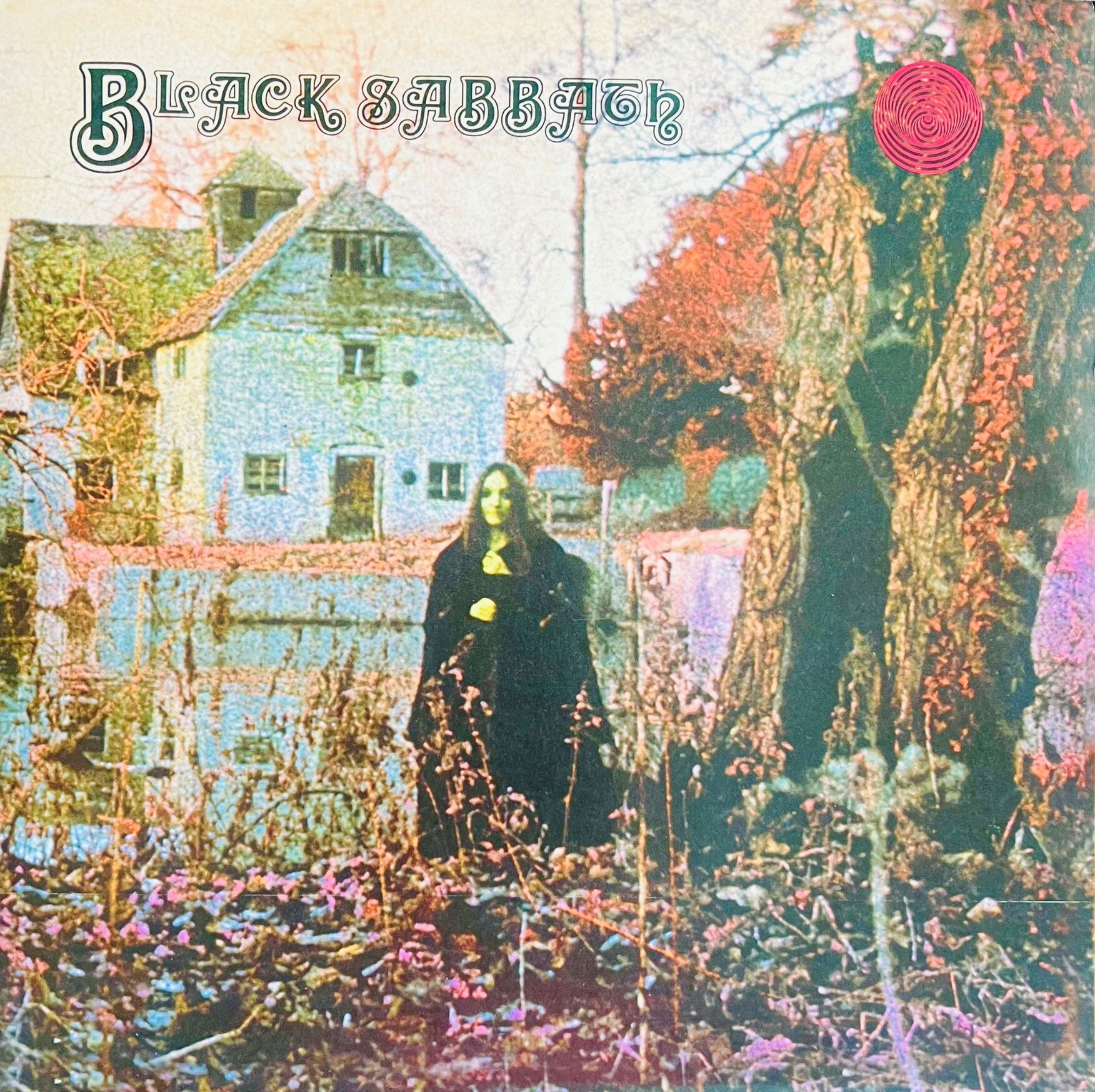
One of the most important Heavy Metal records ever, “Master of Reality” is still regarded as one of the best albums by the Black Sabbath. Its sound influenced several genres, including doom metal, stoner metal and sludge metal. Compared to its predecessors, “Black Sabbath” and “Paranoid” (both from 1970), “Master of Reality” features a slower, darker sound, with heavier, more obsessive rhythms and riffs.
Starting with this album, Iommi changed his guitar tuning by lowering it a tone and a half, and Butler did the same with the bass, so he could press the strings better with his right hand, left impaired after a work accident, giving a dark touch to the album’s sound. This tuning, called downtuning, would later be copied by many heavy metal bands.
If the first two Black Sabbath albums laid the foundations of heavy metal, Master of Reality redefines its parameters, becoming a benchmark for later genres such as stoner rock, doom metal and sludge.
Unlike the dry sound of Paranoid, Rodger Bain’s production on this record is rawer and with less reverb. Guitars and bass form a heavier sound wall (down to 3 semitones lower, C sharp), creating the impression of a block of stone dragging across the floor. Drummer Bill Ward opted for kick drums decidedly larger than normal and for more unusual jazz elements, while Geezer Butler’s bass was boosted so as to move in unison with Iommi’s riffs. Another spot-on stylistic choice was the inclusion of short instrumental pieces with a classical and medieval feel (Embryo, Orchid). This contrast made the following electric tracks even more aggressive and powerful to the ear.
The album consists of 8 tracks that alternate massive, dark riffs with short acoustic interludes:
“Sweet Leaf”, the opening track, is introduced by Iommi’s coughing, and is dedicated to a love for cannabis. A piece built on a hypnotic, very slow riff. It is said that the cough at the beginning of “Sweet Leaf” is real (and caused by Ozzy). The famous cough loop that opens the album wasn’t planned. During an acoustic session, Ozzy Osbourne offered Tony Iommi an incredibly strong marijuana joint (“a large joint”), which made the guitarist cough uncontrollably. The producer, leaving the tape rolling, captured the moment and decided to add an echo effect to use it as the track’s intro, which is in every way a love anthem to cannabis.vEven while dealing with the theme of weed, the title “Sweet Leaf” (Sweet Leaf) flashed into Geezer Butler’s mind during a stay in Dublin. The inspiration came from a pack of Irish cigarettes (probably Sweet Afton) that carried on the package the slogan: “It’s the sweetest leaf that gives you the taste” (“It’s the sweetest leaf that gives you the taste”). Butler immediately sensed it would be the ideal title for their psychedelic love song.
“After Forever”, a song written by Geezer Butler, unexpectedly tackles themes linked to the Christian faith. Because of their dark look, Black Sabbath were often labeled as Satanists by the media. To the great surprise of the public and critics, the lyrics of “After Forever”, written by the Catholic Geezer Butler, turned out to be a Christian hymn, urging people not to mock religion and to reflect on the salvation of the soul.
“Embryo” (instrumental) is a short acoustic guitar interlude.
“Children of the Grave”, one of the band’s most powerful anti-militarist pieces, stands out for its relentless rhythm. Bill Ward said that during the album’s American tour, numerous Vietnam War veterans, amputees or in wheelchairs, would gather under the stage, waving flags and singing the lyrics at the top of their lungs. They found in the cathartic heaviness of the band’s music a way out of their traumas.
“Orchid” (instrumental) is the second interlude, acoustic and delicate, signed by Iommi.
“Lord of this World” is a heavy track that reflects on evil and earthly power.
“Solitude” is a melancholy, hushed ballad, embellished by Ozzy Osbourne’s splendid voice, offering an unusual performance compared to his usual style. It is false to believe that the voice singing the song is Bill Ward’s, and not Ozzy’s. Ward didn’t sing any Black Sabbath song until their seventh album, “Technical Ecstasy”, where he provides vocals on “It’s Alright”.
“Into the Void”, the epic piece that closes the record, is the album’s masterpiece. It is marked by an overwhelming tempo change and volcanic riffs, key elements of stoner/doom. However, its studio recording turned into a real hell for the band. Tony Iommi said that Bill Ward struggled to keep time through the song’s frequent speed changes, while Ozzy Osbourne found it extremely hard to articulate the words written by Butler at the supersonic speed required by the central riff (“Rocket engines burning fuel so fast…”). The band had to record it countless times before getting the final version.
A monumental album in the Sabbath’s career and one of their best. The tracks I prefer are After Forever, Orchid and the splendid Into the Void.
A historic album, both for the history of Heavy Metal and for music in general. Masterpiece.
My Version
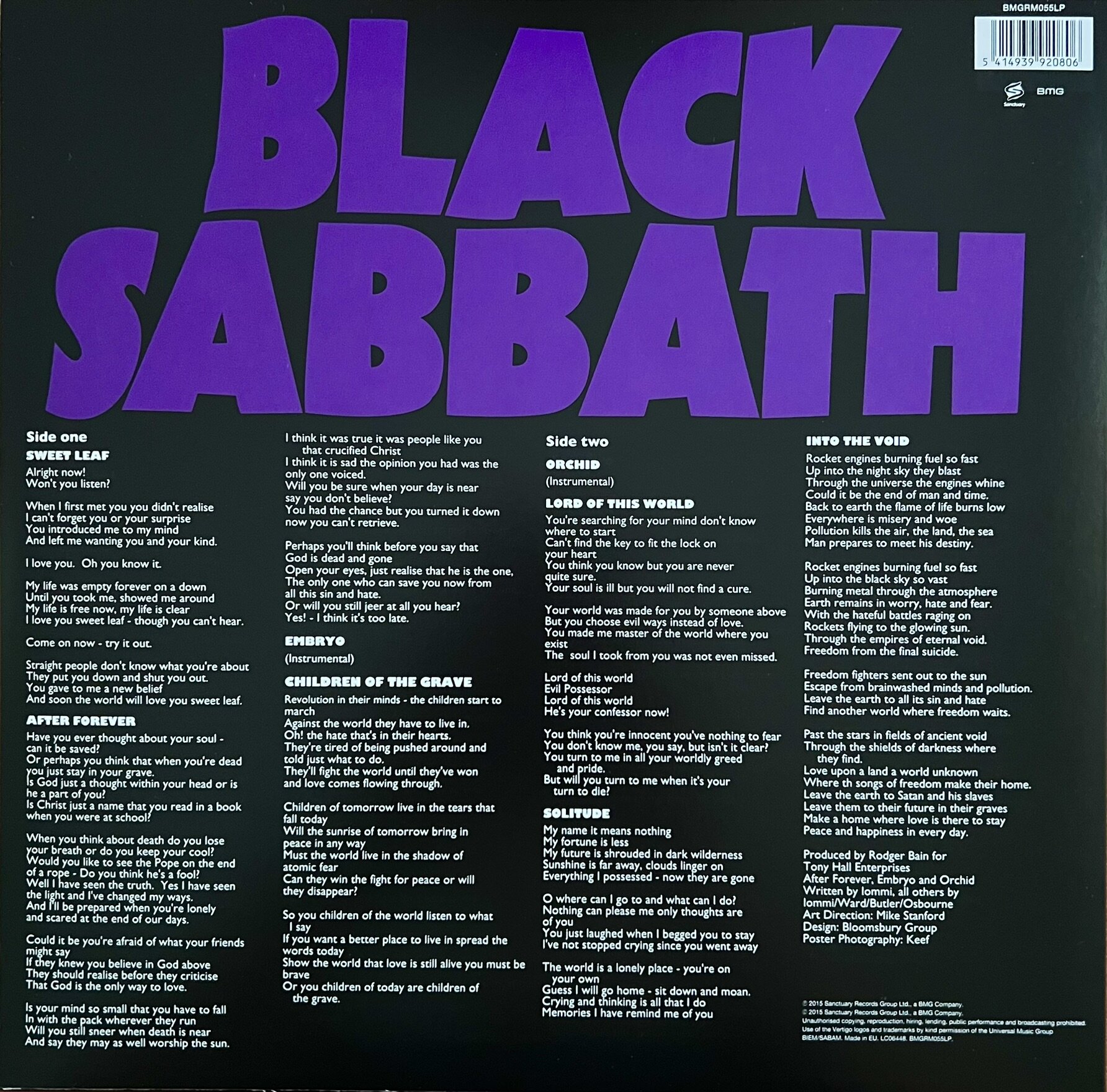
Label: Sanctuary – BMGRM055LP, BMG – BMGRM055LP, Vertigo – BMGRM055LP
Format: Vinyl, LP, Album, Reissue, Embossed Sleeve, 180gr
Country: Europe
Released: 2015
Tracklist
1. Sweet Leaf (5:02)
2. After Forever (5:25)
3. Embryo (0:20)
4. Children of the Grave (5:23)
5. Orchid (1:30)
6. Lord of This World (5:24)
7. Solitude (5:02)
8. Into the Void (6:12)
Length 34:18
Lineup
- Ozzy Osbourne - vocals
- Tony Iommi - electric and acoustic guitar (5), synthesizer (2), piano and flute (7)
- Geezer Butler - bass
- Bill Ward - drums and percussion