Atom Heart Mother by Pink Floyd, a 1970 album.
The record that marks the shift from their early psychedelia to the progressive and symphonic rock that made them famous. Everyone remembers it for the now-legendary cover with the cow, but also for the complicated relationship that the Pink Floyd have always had with this work.
At the start of 1970, Roger Waters, David Gilmour, Richard Wright and Nick Mason were looking for new ideas. After the complex experimentalism of Ummagumma (1969) and the long sessions for the soundtrack to Antonioni’s Zabriskie Point, the band felt stuck and under pressure from EMI.
To find a new path, they began working on a long instrumental track based on a guitar-chord progression by Gilmour, which in concerts they jokingly called “The Amazing Pudding”.
Recognizing their own limits in blending rock with complex orchestral structures, Pink Floyd turned to avant-garde composer Ron Geesin. Geesin wrote the brass and choir arrangements (the John Aldiss Choir) that would enrich the main suite.
Work at Abbey Road Studios was anything but easy: Geesin had heated clashes with the orchestra musicians, seen as too rigid and not inclined to understand his experimental scores, to the point that he had to be partly replaced by the choir director in running the sessions. A very young Alan Parsons also took part in mixing the album.
The vinyl is split into two clearly distinct parts.
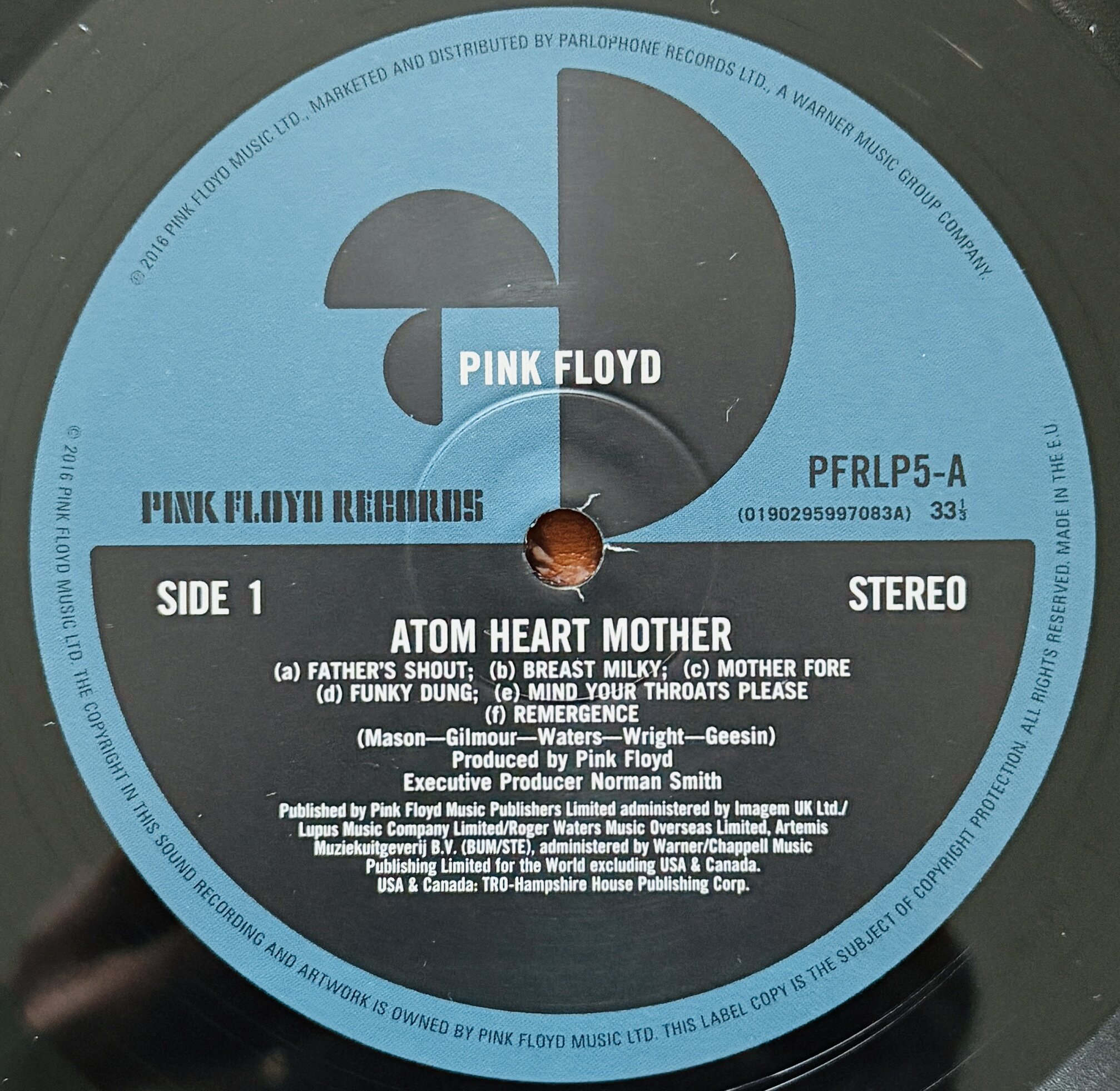
On Side A, we find the suite “Atom Heart Mother”, a towering instrumental piece of over 23 minutes, divided into six parts. It’s a mix of rock, classical music and musique concrète, enhanced by a choir that doesn’t sing words, but phonemes and abstract vocal sounds, creating a distinctive atmosphere.
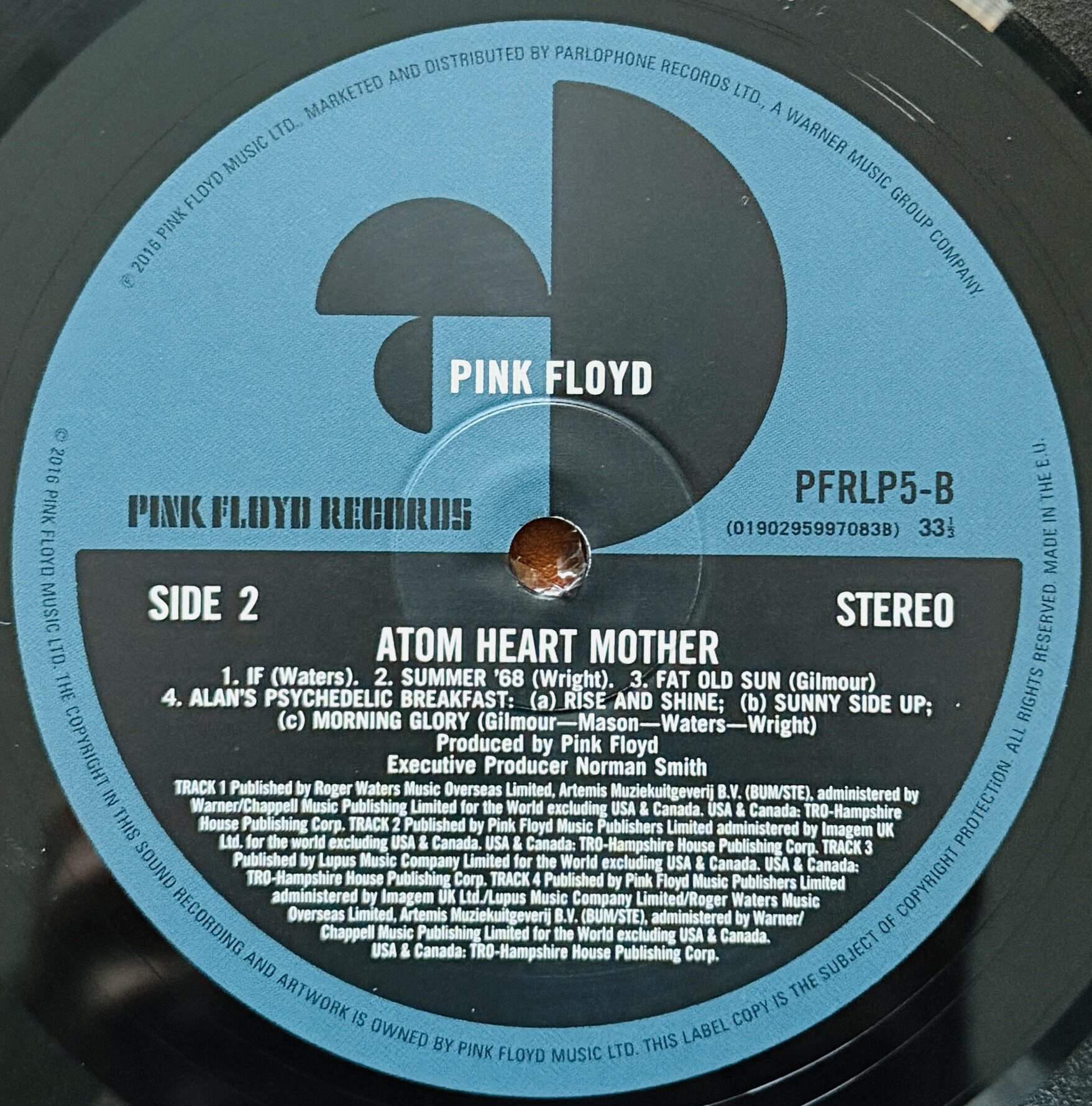
Moving to Side B, we’re faced with a selection of individual tracks, just like on “Ummagumma”. Each member of the band contributed a more intimate, personal composition:
“If” by Roger Waters is an acoustic, introspective folk ballad.
“Summer ’68” by Richard Wright is a baroque-pop piece, embellished with horns that give it a touch of elegance.
“Fat Old Sun” by David Gilmour is a bucolic, dreamy track that culminates in a powerful electric-guitar solo.
“Alan’s Psychedelic Breakfast” is a musique concrète experiment centered on the band’s technician, Alan Styles, taking us on a sonic journey as he prepares and eats his breakfast, amid the sounds of frying eggs and dripping taps—an experience that’s truly one of a kind.
As for the album title, while the suite was still unnamed, Roger Waters came across an article in the Evening Standard. The story was about a pregnant woman who had been fitted with an experimental pacemaker powered by a micro nuclear battery. The headline read “Nuclear Atom Heart Mother Named” (The atom-heart mother identified). The band found the phrase perfect and chose it as the final title for the track and the album.
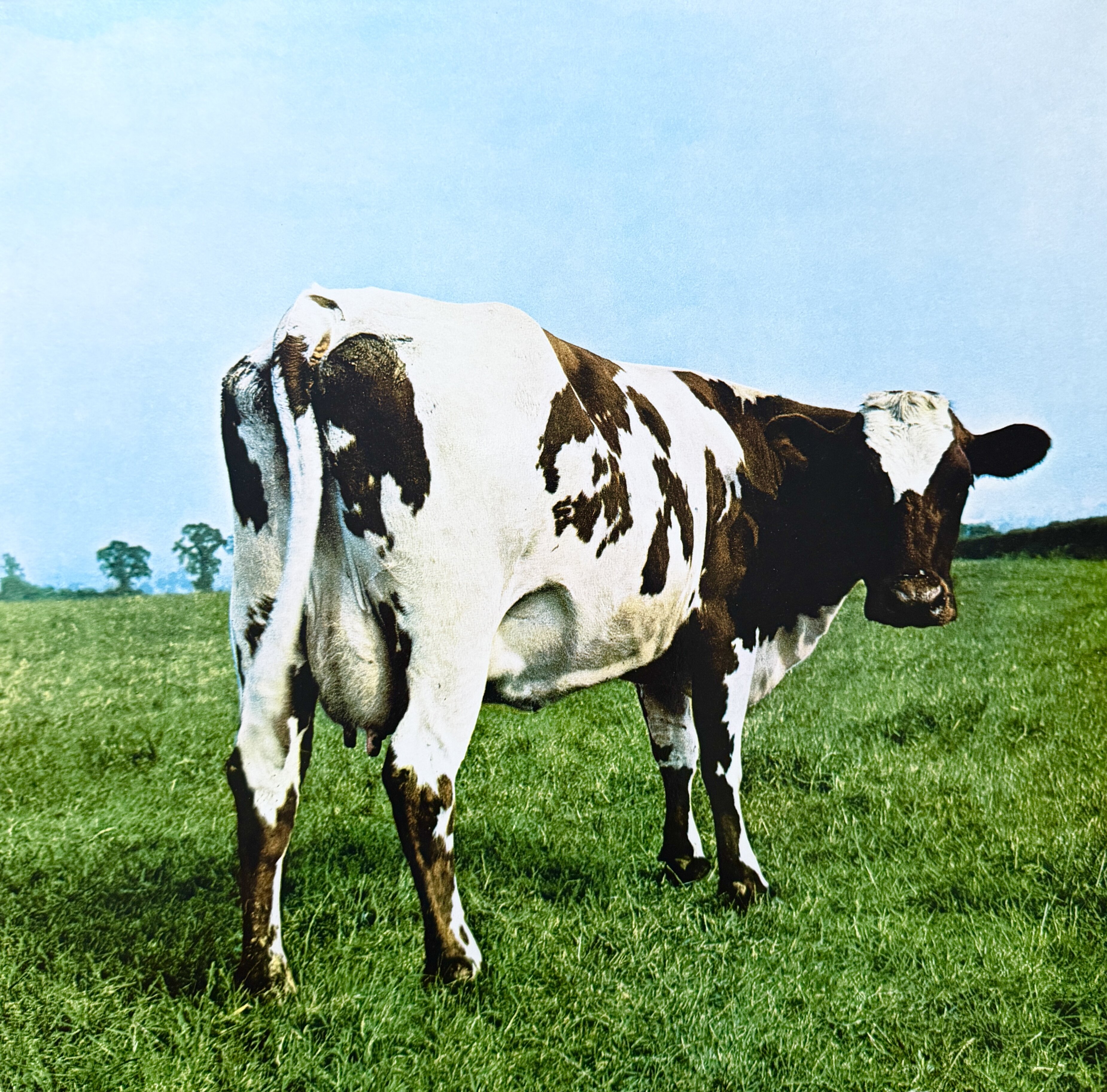
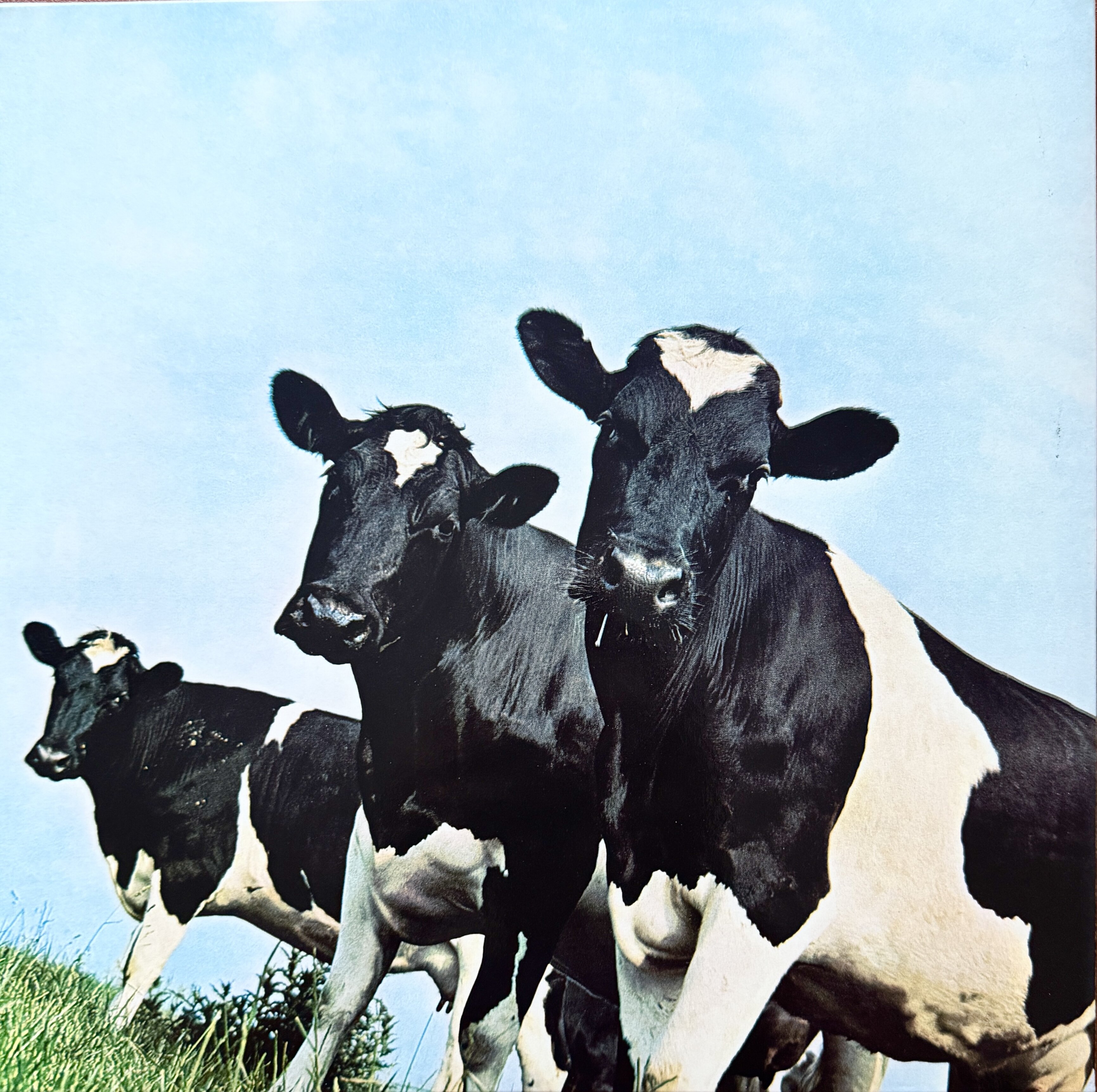
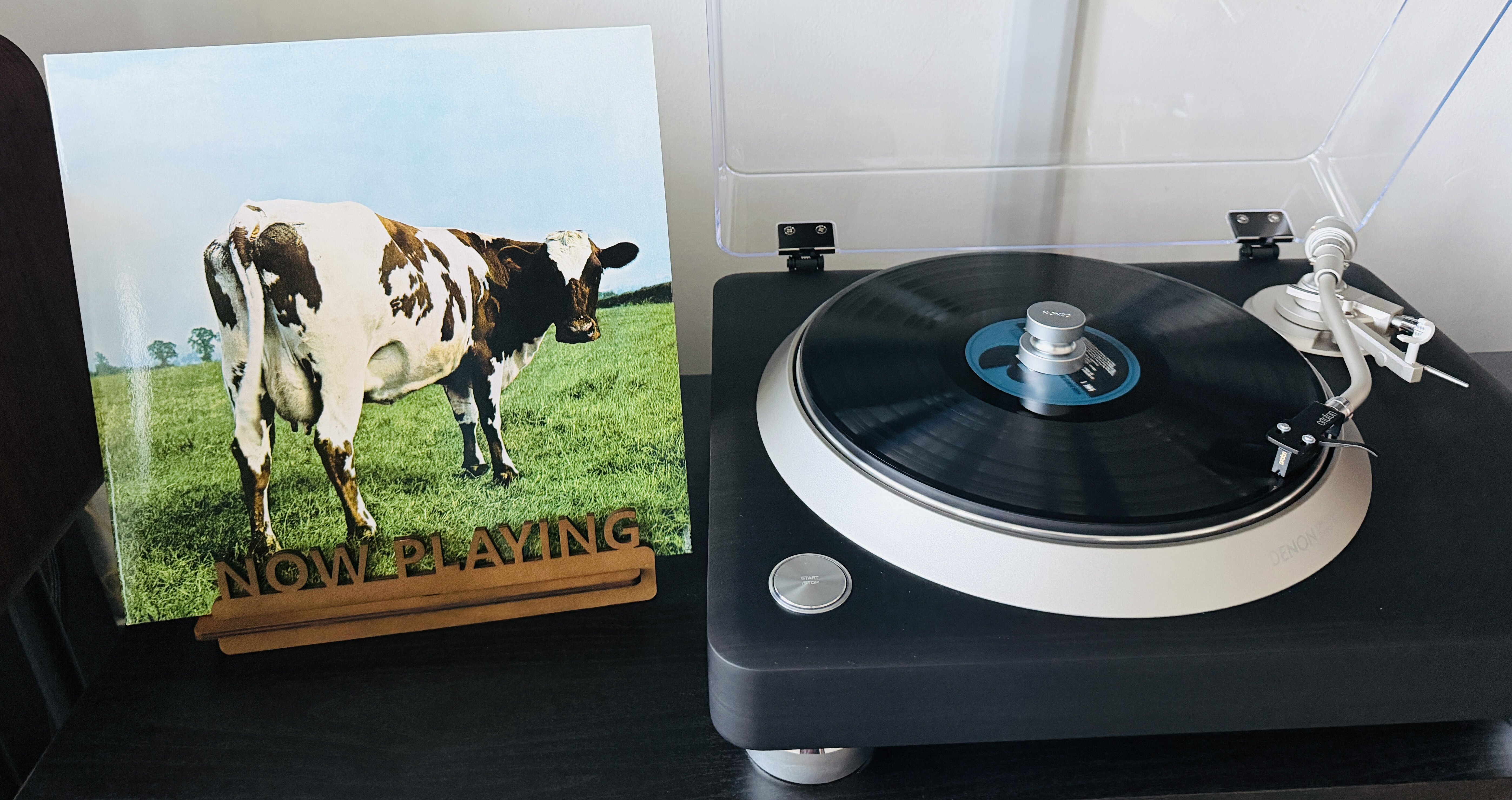
To break with the psychedelic, spacey imagery that was all the rage at the time, the design studio Hipgnosis, led by Storm Thorgerson, had a brilliant idea: photograph the simplest, most “anti-psychedelic” thing they could find—a cow in a Hertfordshire field. This Friesian cow, named Lulubelle III, became an icon. But the real twist was that the cover had neither the name Pink Floyd nor the album title. A bold, winning choice that the band would often repeat in the future.
Atom Heart Mother, despite its experimental, unconventional nature, was a real success. It was the first Pink Floyd album to reach number one in the UK charts. Over time, however, the band members expressed rather critical opinions about it. David Gilmour called it “psychedelic manure” and “the bottom of the barrel”, while Roger Waters said that if he listened to it today, he’d consider it just a pile of rubbish to throw away.
The “Atom Heart Mother” suite, which fills the entire Side A of the vinyl, is a monumental work conceived as a true rock symphony; it’s divided into six movements, each with a very specific atmosphere.
1. Father’s Shout (The father’s shout)
It opens with a cinematic introduction, a crescendo of dark, distorted electronic sounds, followed by the roar of a motorbike crossing the stereo field. Then comes the main theme: a majestic, heroic brass fanfare (written by Ron Geesin), supported by Pink Floyd’s rhythm section and Gilmour’s guitar. It closes by returning to the distorted sounds from the beginning.
2. Breast Milky (Mother’s milk)
The mood changes completely, becoming more intimate and melancholic. The opening is carried by Richard Wright’s Hammond-organ arpeggio and Roger Waters’ bass line. Over this sound bed comes first a very lyrical cello solo, and then one of David Gilmour’s first great blues guitar solos, building in intensity until it returns to the main orchestral theme.
3. Mother Fore (Mother ahead)
Here the star is the John Aldiss Choir. It begins quietly, with only Wright’s organ and the choir soprano’s solo voice. Little by little, Nick Mason’s drums and the other choir sections join in. The singers don’t sing real words, but a series of phonemes, whispers and invented vocal sounds, creating an almost sacred, hypnotic atmosphere that culminates in a dramatic finale.
4. Funky Dung (Funky dung)
As the title suggests, the rhythm shifts and becomes decidedly funky and measured, thanks to Waters’ bass and Mason’s groove. Over this foundation, Gilmour shows off a long, rhythmic guitar solo, using effects like wah-wah. Toward the end, the choir re-enters with grit, singing the phonemes in perfect sync with the band’s funky rhythm. And then the brass fanfare returns.
5. Mind Your Throats Please (Watch your throats, please)
This is the most experimental, cacophonous, avant-garde part of the entire suite. The musical structure dissolves, giving way to abstract electronic sounds, oscillators, metallic noises and Wright’s distorted piano (which really sounds like an alarm signal). The sonic chaos slowly builds, until a megaphone-altered voice shouts a line that has become legendary: “Here is a loud tatty squeaky”, a curious untranslatable “joke”, born of Pink Floyd’s typical British nonsense humor and co-author Ron Geesin. Literally translated, the phrase means: "Here is something loud, tatty and squeaky".
6. Remergence (Resurfacing)
The final movement. The chaos of the previous section calms down and, as in a classical symphony, all the main themes we’ve already heard resurface and intertwine: the cello solo from Breast Milky, the choir vocalizations from Mother Fore, and Gilmour’s guitar filigrees. The piece reaches its peak in the last minutes, where the full orchestra, the choir and Pink Floyd play the main theme together, closing the suite with a final brass-and-organ chord held suspended for a few seconds.
Atom Heart Mother is a mix of contrasts, an imperfect masterpiece that Pink Floyd themselves call a half-disaster. Yet, despite their view, it remains a key record for the transition of ’70s rock.
Pink Floyd had incredible courage to put a 23-minute orchestral suite on Side A and a collage of domestic noises on Side B. It’s a true manifesto of progressive rock, breaking with the rules of the radio song form.
On this album you can hear the “Floydian” sound being born that would make them famous. Listening to tracks like Breast Milky and Fat Old Sun, you can clearly sense the bluesy, expansive, melancholic touch of David Gilmour’s guitar and Richard Wright’s organ textures blending perfectly.
Atom Heart Mother is also a breakaway work. From the nameless cover to the wordless avant-garde choir, it’s a triumph of anti-commercialism that, paradoxically, became their first big commercial success.
The main suite, while an ambitious work, at times comes off as stiff, showing Pink Floyd’s orchestral inexperience in that period. Ron Geesin, who collaborated on the arrangement, managed to bridge this limit only in part, but his contribution was still valuable.
A must-have album to complete the collection of their records.
My Version
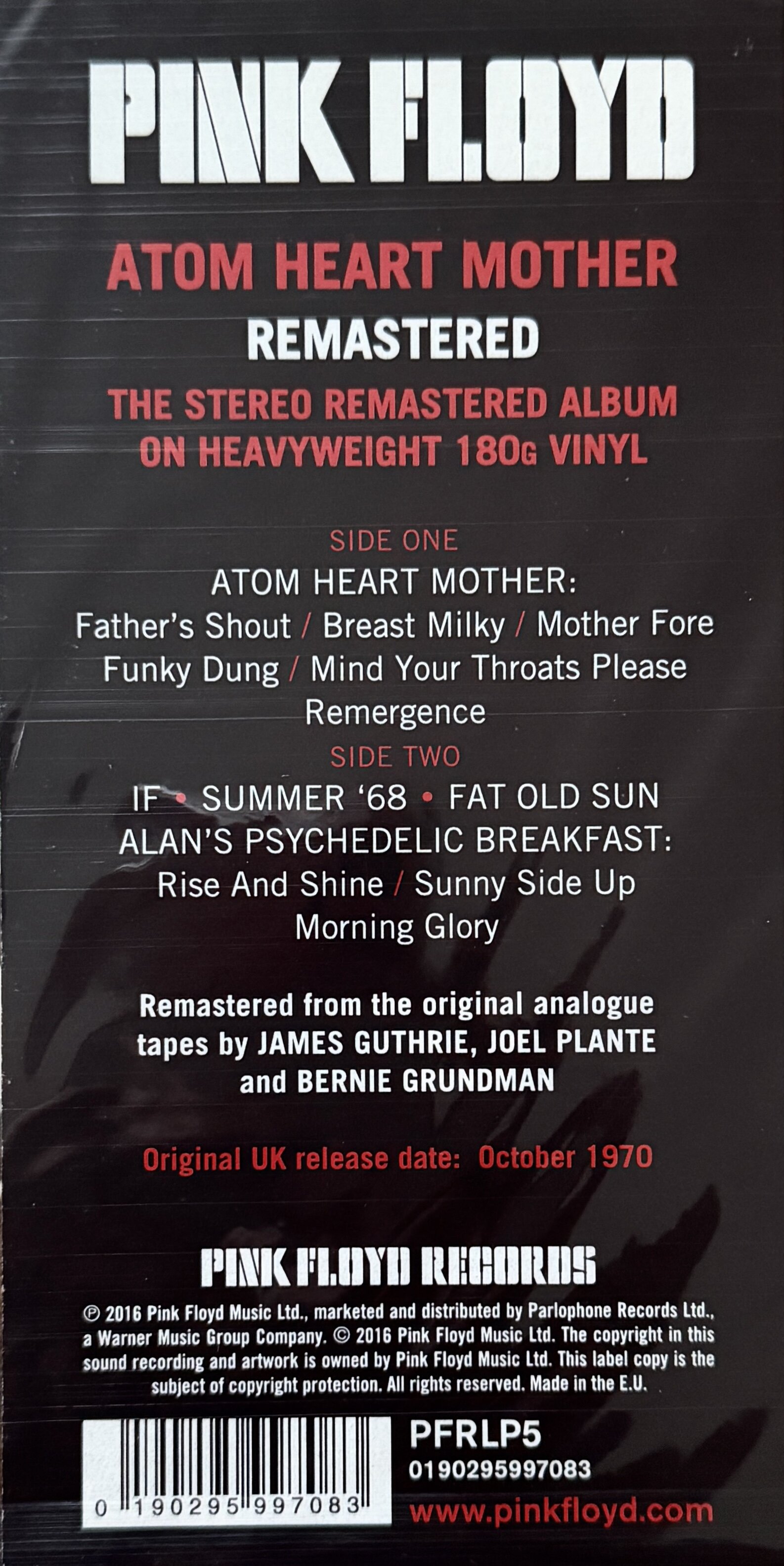
Label: Pink Floyd Records – PFRLP5, Pink Floyd Records – 0190295997083
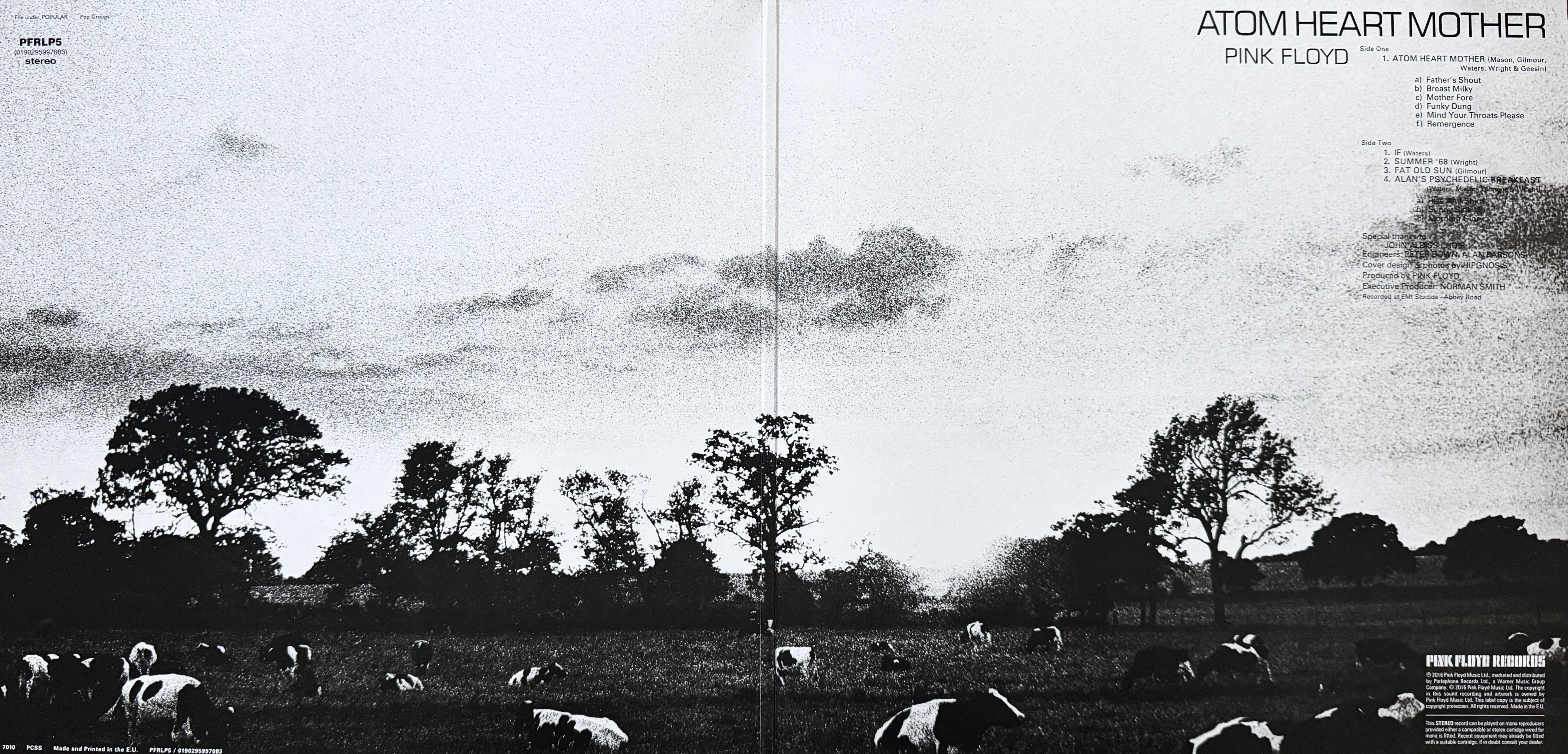
Format: Vinyl, LP, Album, Reissue, Remastered, Gatefold, 180 Gram
Country: Worldwide
Release: 23 Sep 2016
Tracklist
Atom Heart Mother
A.a Father's Shout
A.b Breast Milky
A.c Mother Fore
A.d Funky Dung
A.e Mind Your Throats Please
A.f Remergence
B1 If
B2 Summer '68
B3 Fat Old Sun
Alan's Psychedelic Breakfast
B4.a Rise And Shine
B4.b Sunny Side Up
B4.c Morning Glory
Lineup
Roger Waters – Bass, acoustic voice
David Gilmour – Guitars, vocals
Richard Wright – Keyboards, organ, piano, vocals
Nick Mason – Drums, percussion
Engineer – Alan Parsons, Peter Bown