Not Only Prog: Unknown Pleasures, Joy Division’s debut album, from 1979.
At Strawberry Studios in Stockport, in just three weekends, an album is born that will become a true pillar of post-punk and gothic rock. It is the only studio album by Joy Division released while their frontman, Ian Curtis, was still with us.
A masterpiece told through anecdotes, groundbreaking recording sessions, and a cover that has become an icon of pop culture.
But before reaching this epoch-making debut, between 1977 and 1978, Joy Division had already recorded a full 11-track album for RCA. Too bad they weren’t happy at all with the final mix, too “clean” for their rough punk sound. So they decided not to release it.
And here come manager Rob Gretton and Tony Wilson, the founder of Factory Records. In April 1979, the band shut themselves in the studio with producer Martin Hannett. Since the guys still had day jobs, they recorded only from Friday night to early Sunday morning. Two weekends of night sessions and a third weekend devoted to mixing were enough to finish the record.
The sound of this album is truly unique: claustrophobic, icy and spacious at the same time. And all of this thanks to Martin Hannett’s genius. The producer imposed unconventional recording techniques, like having Stephen Morris record the drums on the studio roof or isolating individual instruments to create sonic voids. A true visionary.
At first, the band members (especially Bernard Sumner, the guitarist, and Peter Hook, the bassist) weren’t happy at all with the result. They said Hannett had “softened” the aggressive, heavy energy they brought to live shows. But over time, they had to admit that mix had made their songs immortal. And so, a record that seemed destined to stay in the shadows became a real classic.
The band’s notebooks reveal that Unknown Pleasures nearly had different names, like Kinetic Outtake or the unsettling Convulsive Therapy (“Convulsive therapy”). That title was especially heavy when you consider Ian Curtis had only recently been diagnosed with epilepsy.
Curtis’s lyrics explore themes like urban alienation, inner suffering and desolation. Tracks like Disorder or New Dawn Fades offer a glimpse into the singer’s deep unease. She’s Lost Control, instead, tells the story of a girl with severe epileptic seizures whom Curtis had met while working at an employment centre. Sadly, a similar fate would later strike Curtis too.
“Unknown Pleasures” is a landmark album that defined post-punk and gothic rock, distancing itself from the classic punk of 1977. Its sound is marked by sharp contrasts and an atmosphere of emptiness and alienation.
The rhythm section is front and centre, with Peter Hook’s pulsing, melodic bass leading the tracks, taking up the space usually reserved for the guitar. Stephen Morris’s geometric drumming sounds cold and precise, almost like a drum machine.
Bernard Sumner’s guitars don’t accompany the songs, but throw out abrasive scratches and minimalist riffs, enriched by early experiments with synthesizers. Ian Curtis’s baritone voice is deep, solemn and dramatic, evoking a sense of urgency and resignation.
Martin Hannett’s spacious production inserted unusual ambient sounds into the mix, like breaking glass, slamming doors, the noise of a lift and radio frequencies, wrapping everything in an artificial echo that makes the record feel like it was recorded in an abandoned factory.
Among the most important tracks on the album are:
Disorder: The track that opens the record is introduced by one of rock’s most iconic drum patterns, followed by an unmistakable bass line. It speaks of isolation in the city and the feeling of losing control.
New Dawn Fades: This is the album’s darkest, slowest and most cinematic moment. Built on a bass-and-guitar progression that rises in intensity, it culminates in Curtis’s desperate, resigned singing.
Interzone: An energetic, fast track that stays true to the band’s punk roots. It features a rare vocal line where Bernard Sumner sings together with Ian Curtis.
Shadowplay: A driving song that paints a bleak picture of Manchester, with a sharp guitar solo, among the most celebrated on the record.
She’s Lost Control is the album’s standout. The track has a hypnotic rhythm, with a unique metallic drum sound, created by Martin Hannett by having Bernard Sumner record the sound of a spray can and a Synare percussion synth. This blends perfectly with a very high, distorted bass figure.
The song has a moving story. Ian Curtis wrote it thinking of a girl who used to go to the employment centre where he worked. She suffered from epilepsy and, sadly, stopped showing up for appointments. Curtis later found out she had died because of a seizure. The lyrics reflect Curtis’s fear and anguish about the illness, which would unfortunately affect him too in the future, making the song a kind of prophecy of his own fate.
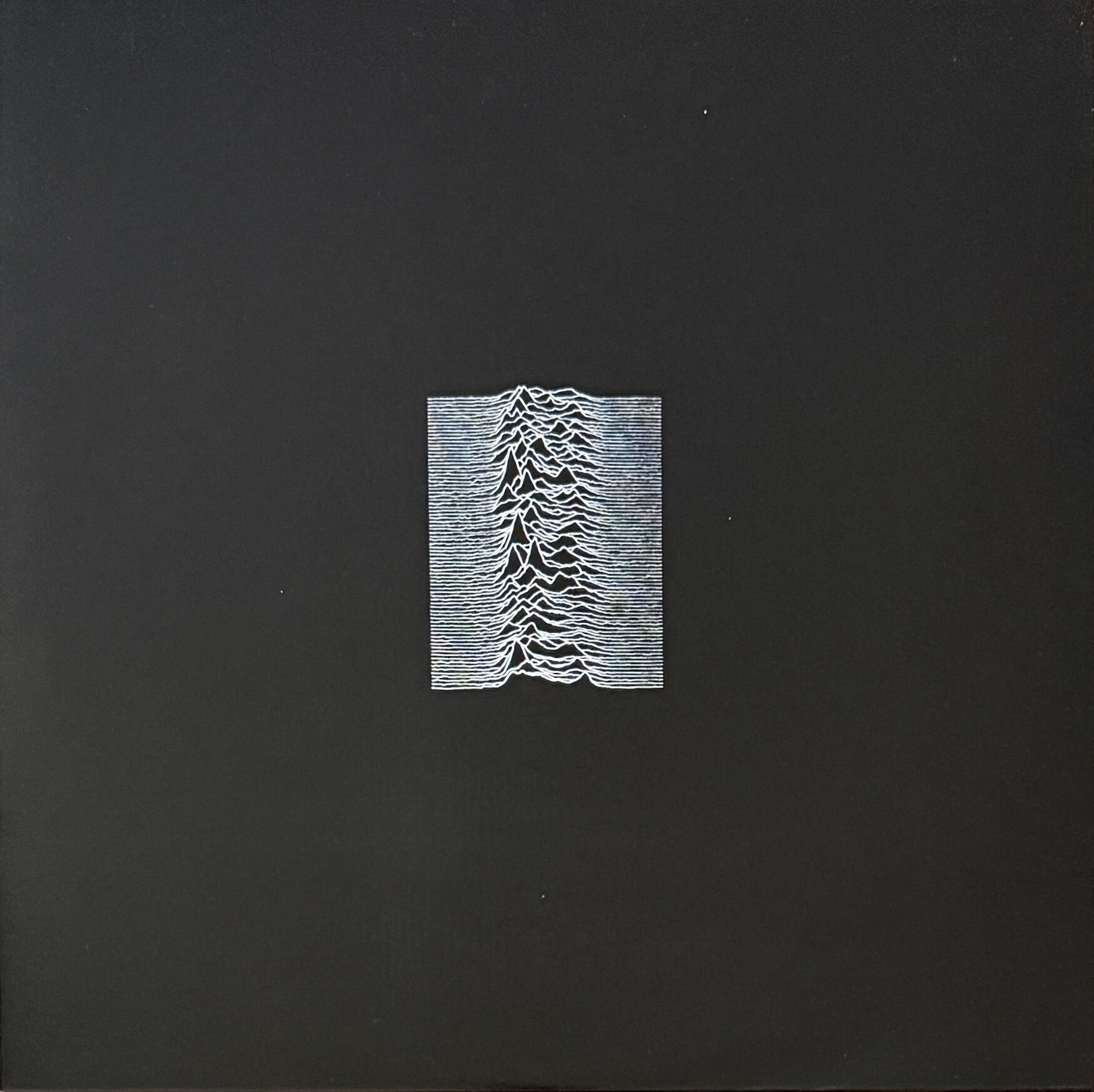
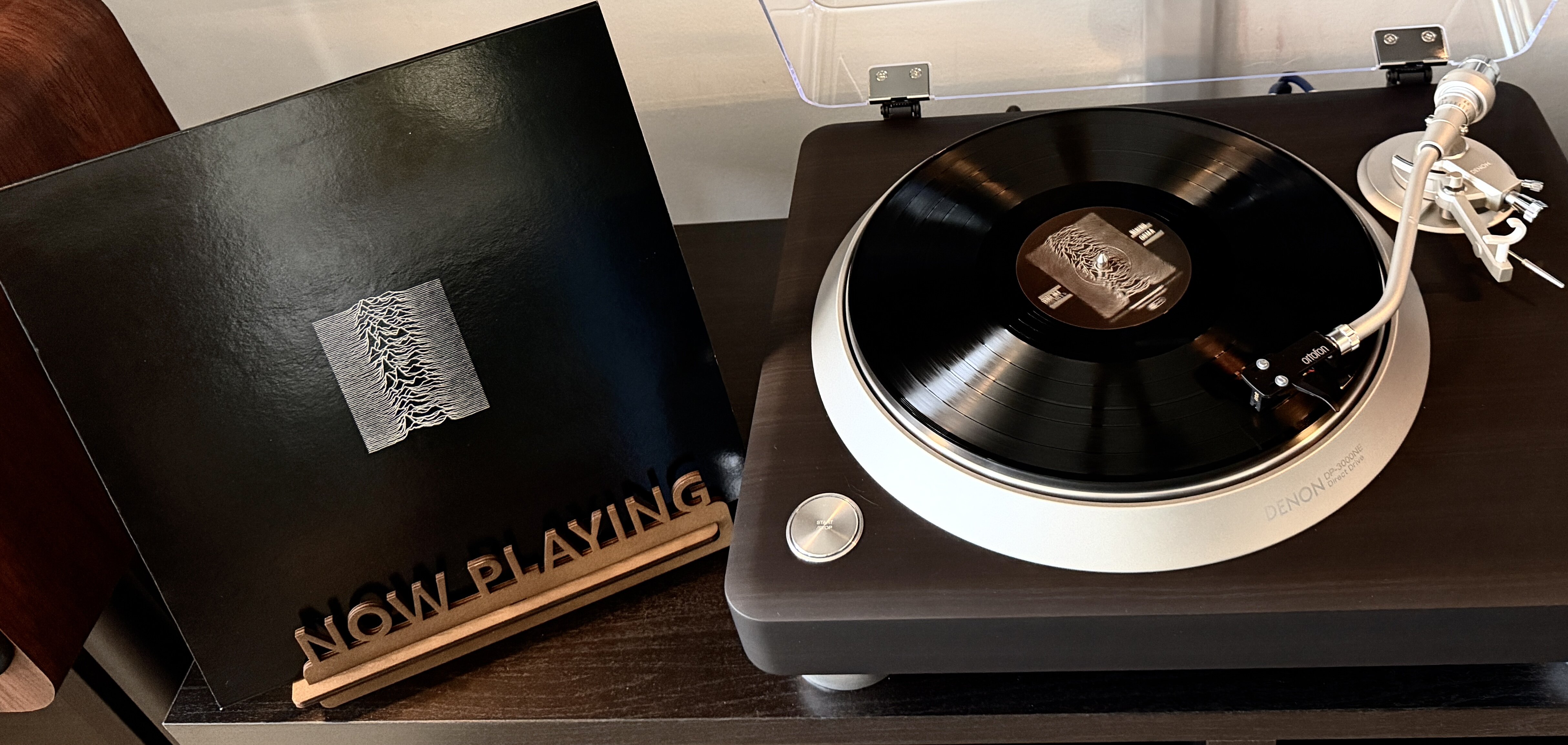
The artwork for Unknown Pleasures is one of those images that sticks with you, a true symbol of pop culture, a bit like the prism line on Pink Floyd’s The Dark Side of the Moon. Graphic designer Peter Saville didn’t invent it from scratch: it was guitarist Bernard Sumner who showed him an illustration found in the Cambridge Encyclopaedia of Astronomy.
The image itself is fascinating: it shows the plot of radio frequencies emitted by pulsar CP 1919, the first neutron star discovered in 1967. It’s a bit like seeing a star’s death in a graph, an image that perfectly matches Joy Division’s cold, geometric sound.
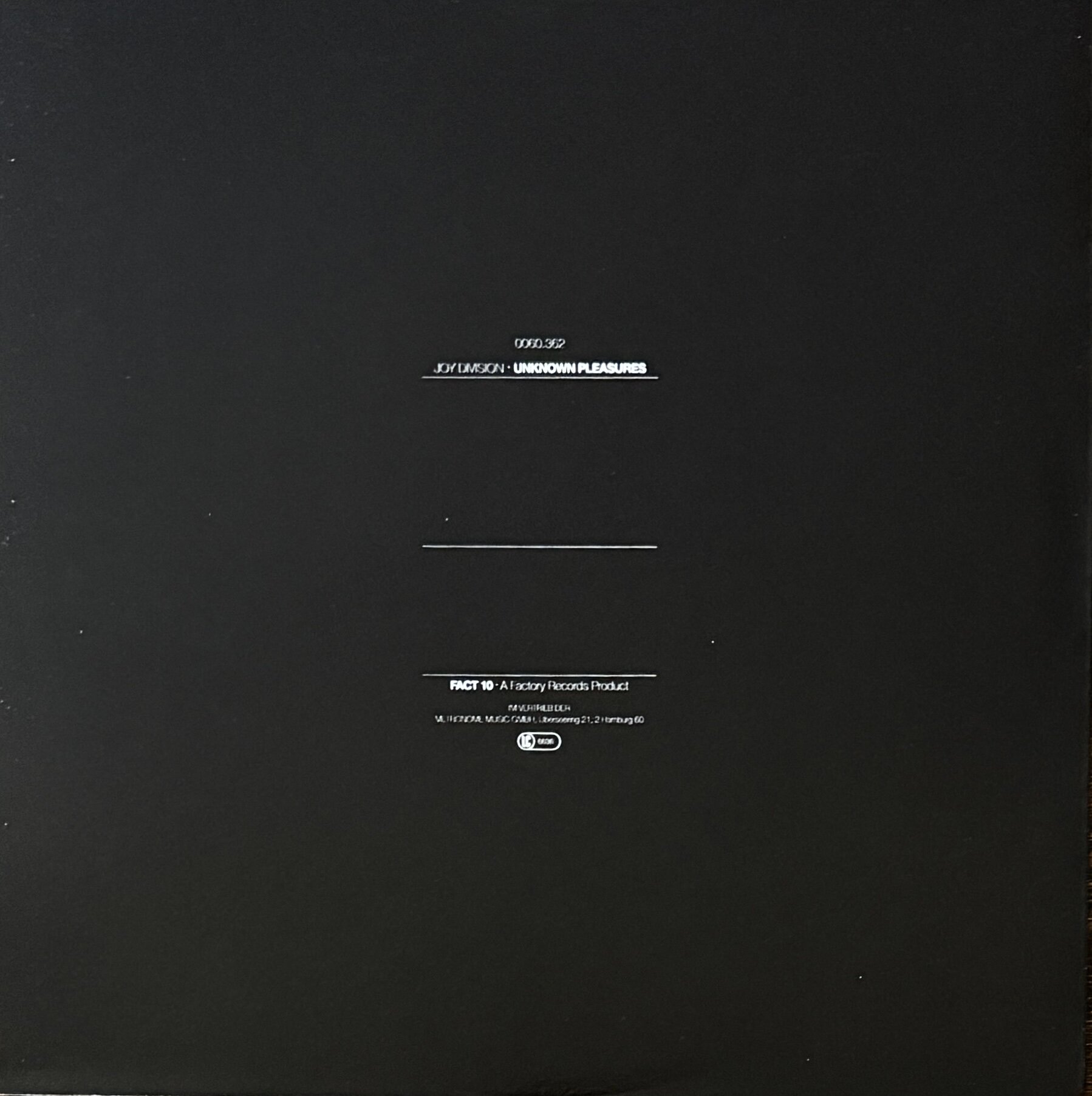
Saville had a brilliant intuition: the band wanted the graph in black on a white background, but he chose the opposite, with white lines on an empty black background. And then he made a bold choice: he removed the band name and the album title from the cover, letting the image speak for itself.
Today, that diagram has become a worldwide icon. It’s printed on millions of T-shirts, bags, posters and design objects, and it’s often worn or bought even by people who have never listened to a Joy Division song. It’s incredible how such a simple image can have such a huge impact.
Nearly fifty years after its release, Unknown Pleasures is a true masterpiece and a generational manifesto. The album perfectly captures the atmosphere of late-’70s Manchester: an industrial city in decline, grey, damp and alienating. Joy Division managed to transform punk, often seen as nihilistic and destructive, into deep psychological introspection, giving voice to feelings like depression, loneliness and fear of the future. Martin Hannett’s production then gave the record a sonic immortality: it doesn’t sound dated at all or tied only to the ’70s, but keeps intact its spectral, icy and, let’s be honest, tragically fascinating nature.
Essential in any collection.
My Version
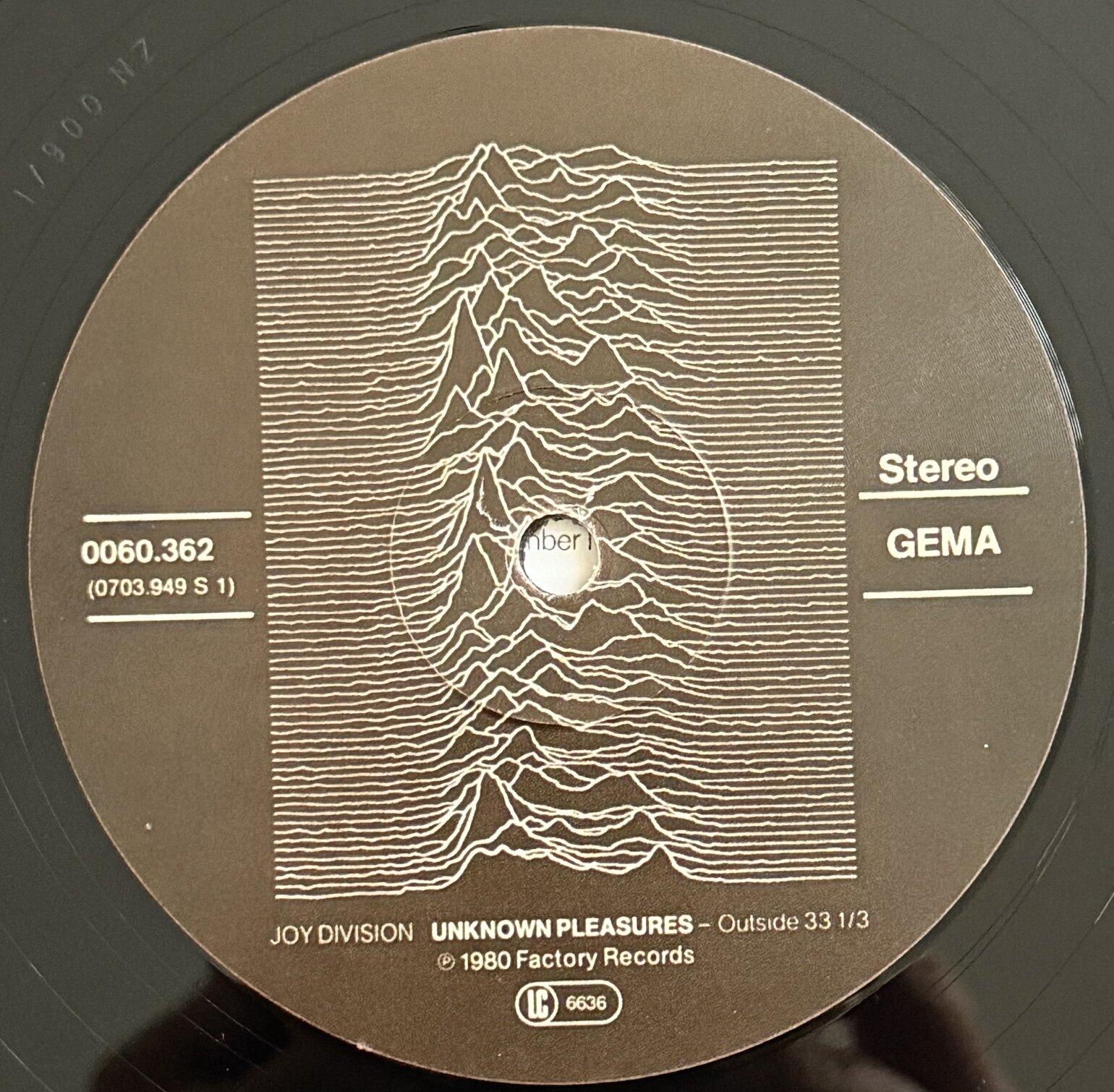
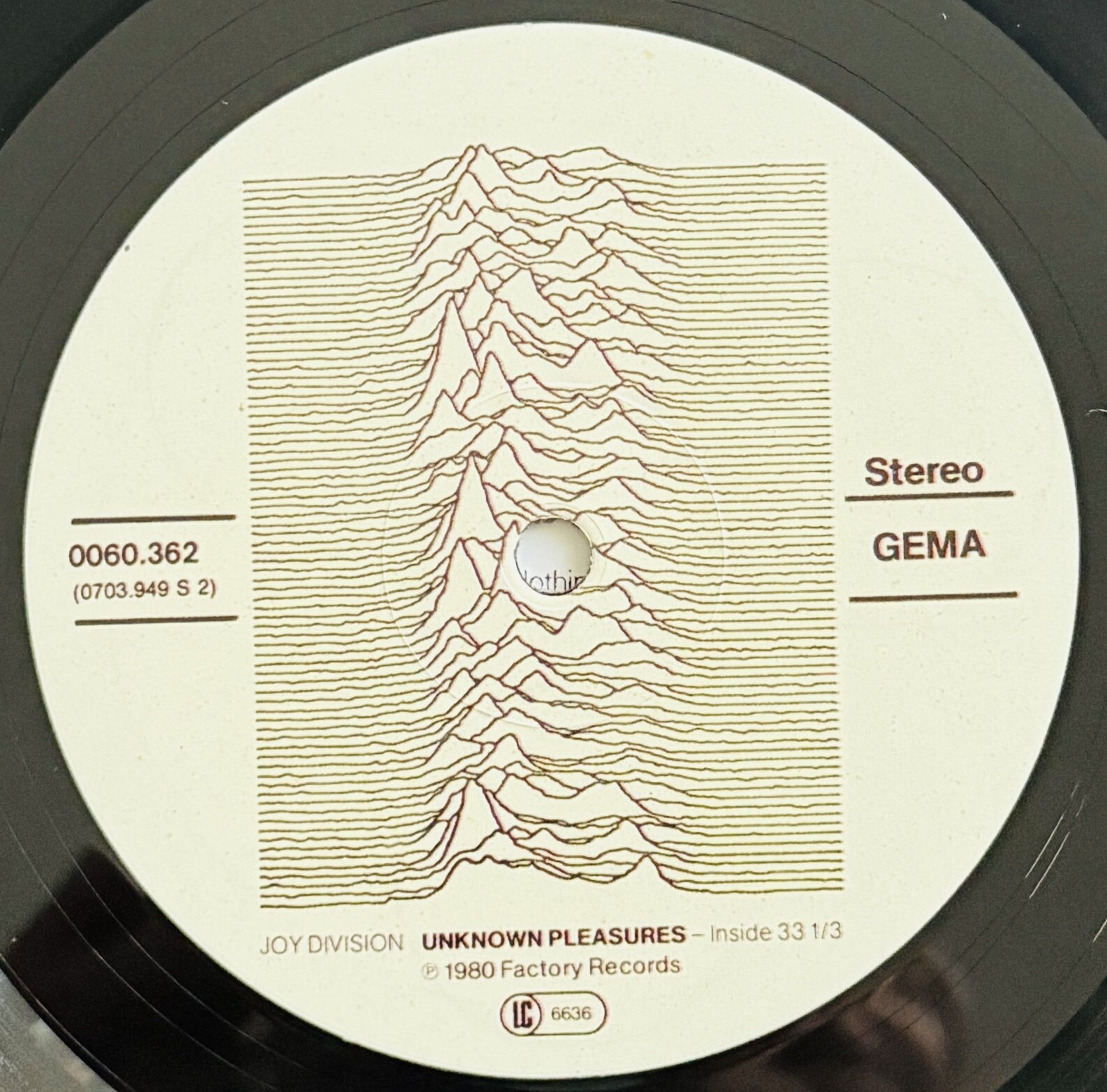
Label: Factory (2) – 0060.362, Factory (2) – FACT 10
Format: Vinyl, LP, Album, Reissue, Unofficial Release
Country: Europe
Released: 2022
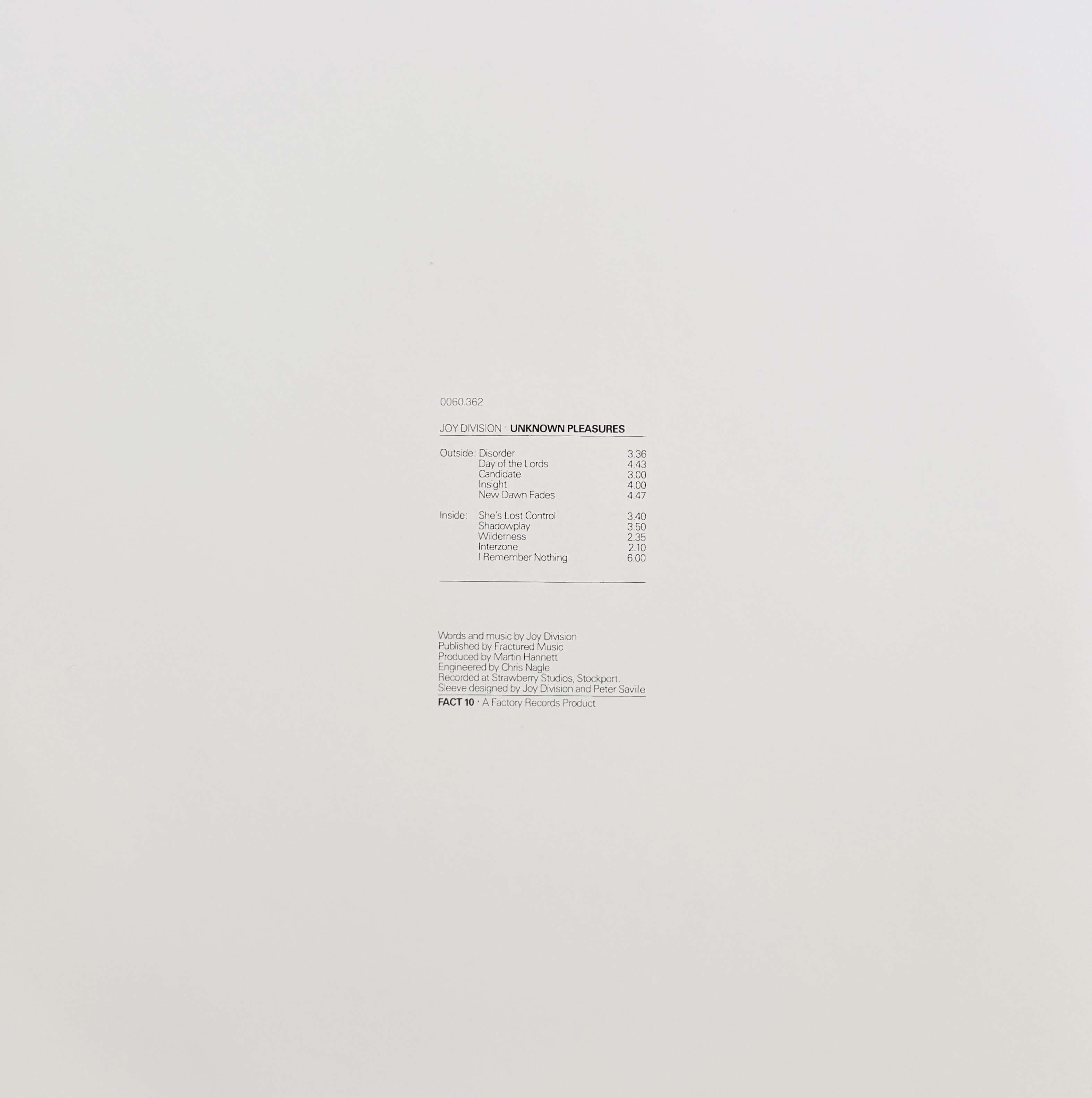
Tracklist
Outside
A1 Disorder 3:36
A2 Day Of The Lords 4:43
A3 Candidate 3:00
A4 Insight 4:00
A5 New Dawn Fades 4:47
Inside
B1 She's Lost Control 3:40
B2 Shadowplay 3:50
B3 Wilderness 2:35
B4 Interzone 2:10
B5 I Remember Nothing 6:00
Lineup
Ian Curtis – Vocals
Bernard Sumner – Guitar and keyboards
Peter Hook – Bass
Stephen Morris – Drums