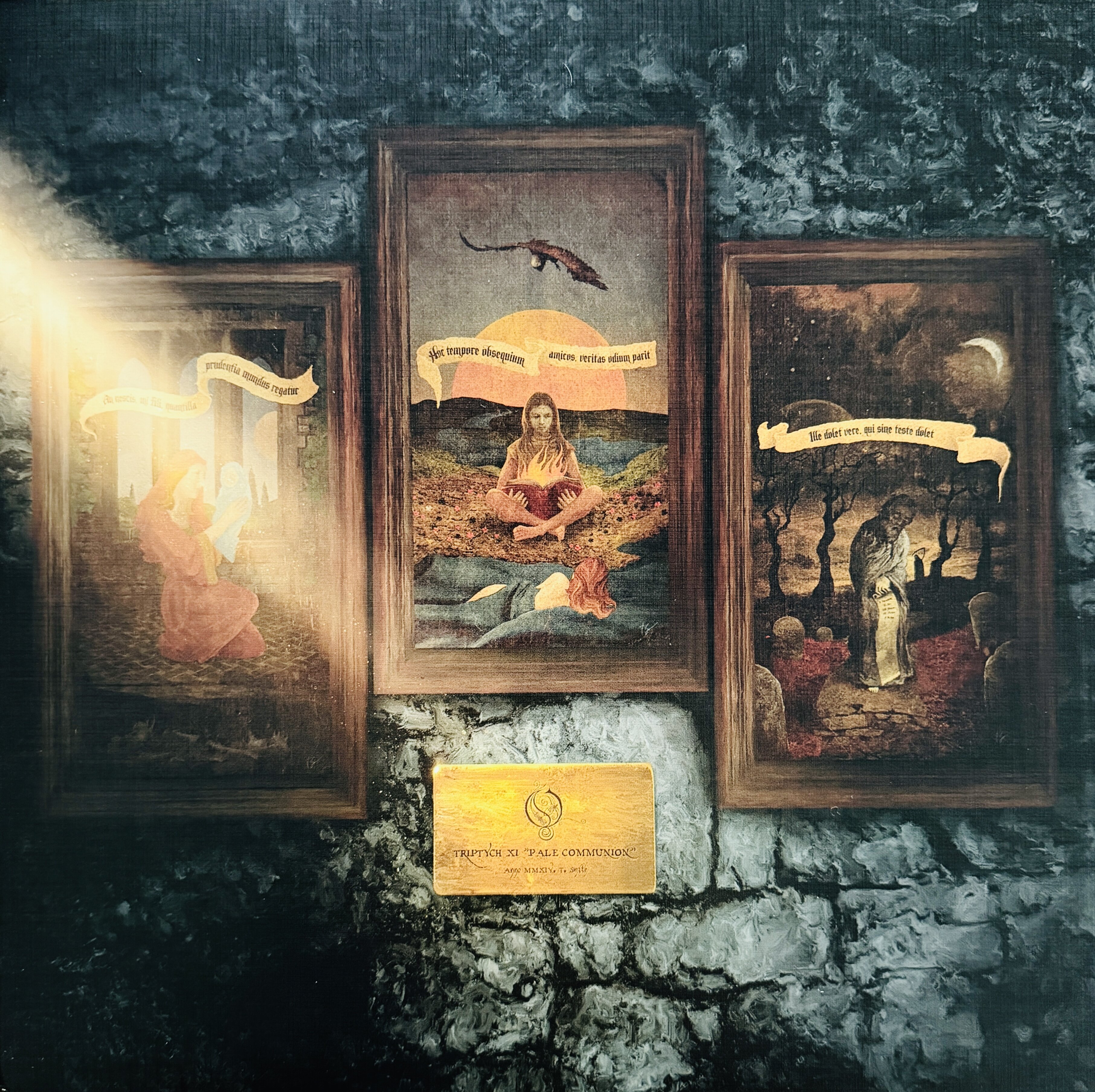
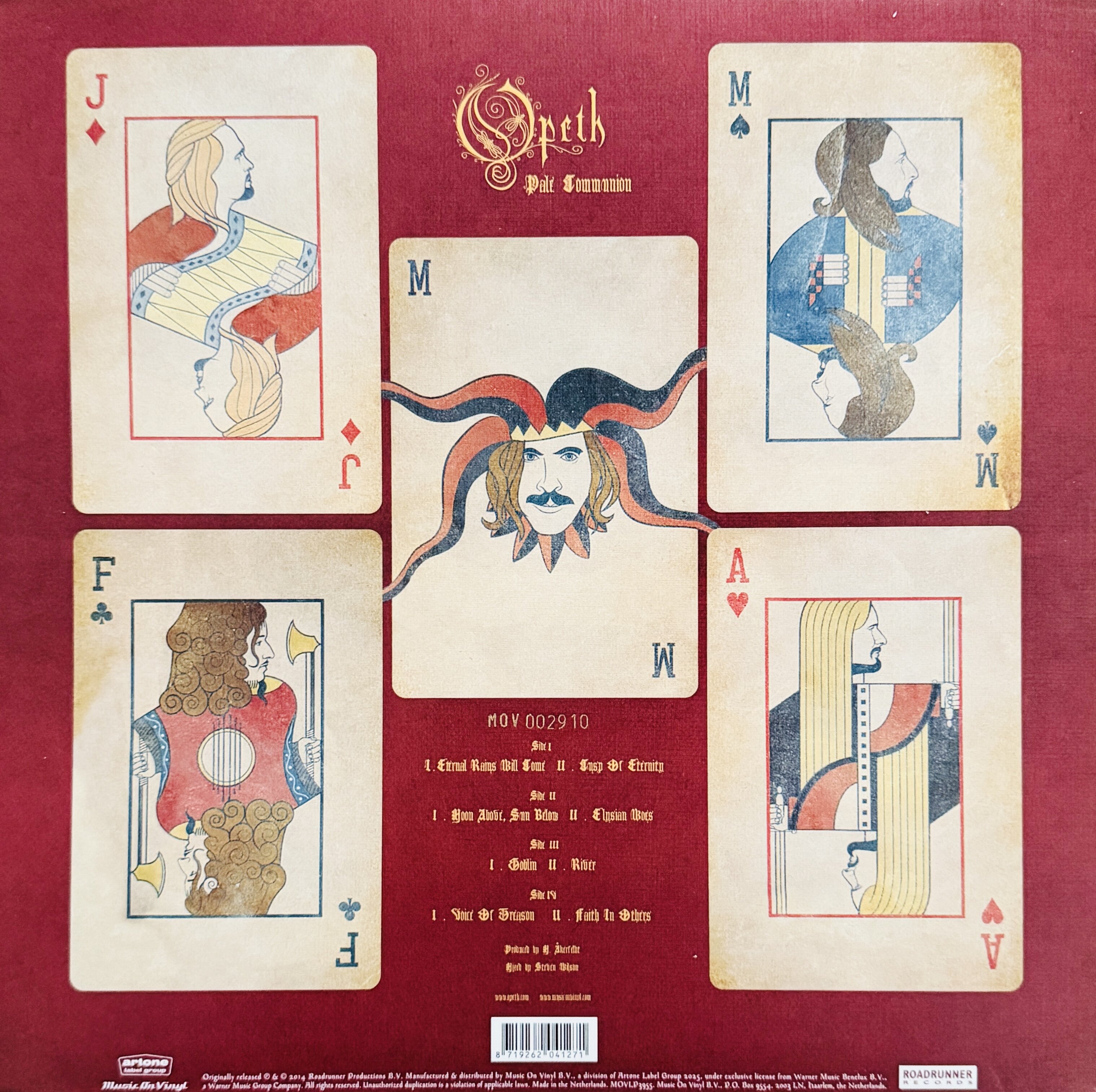
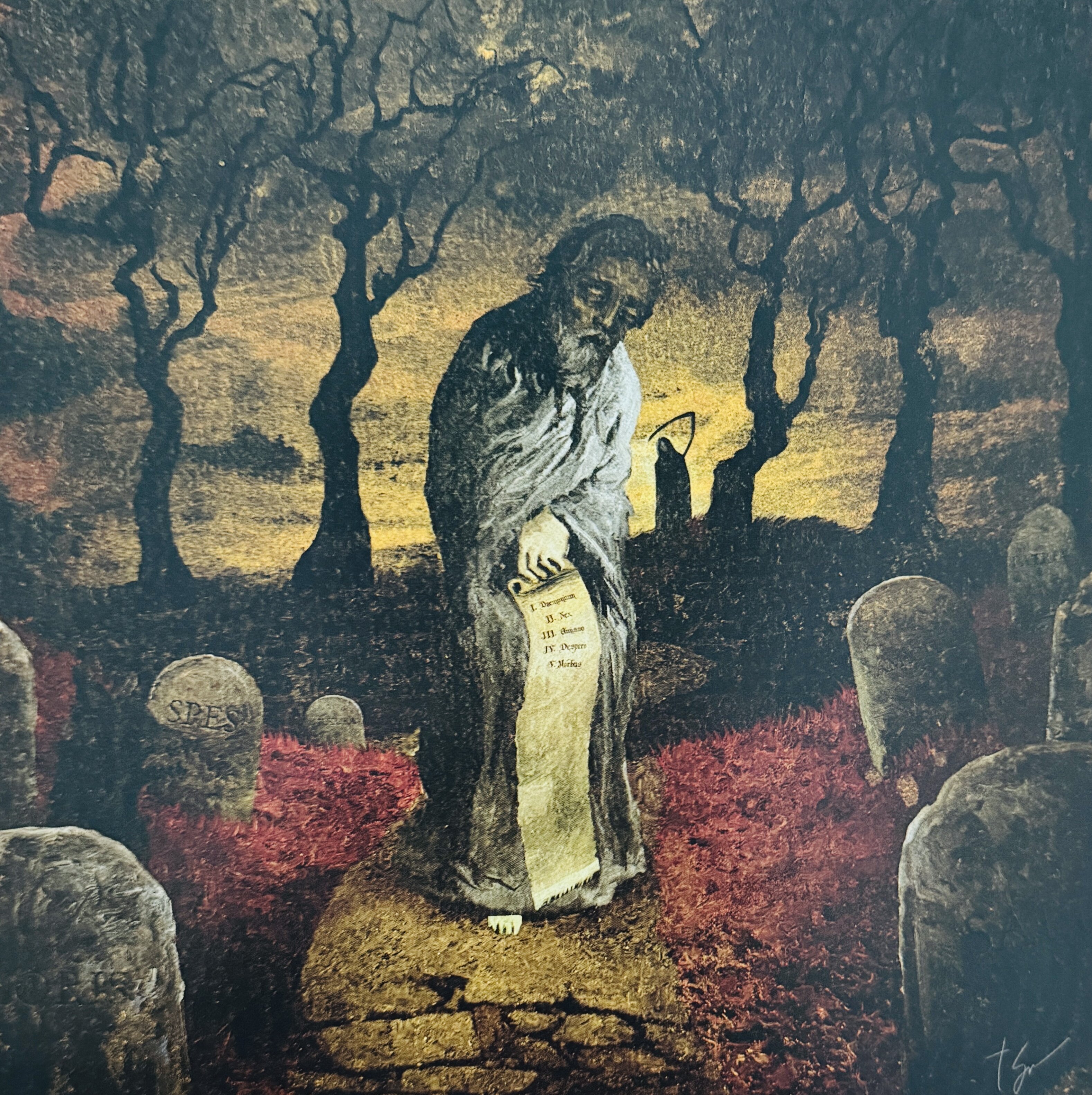
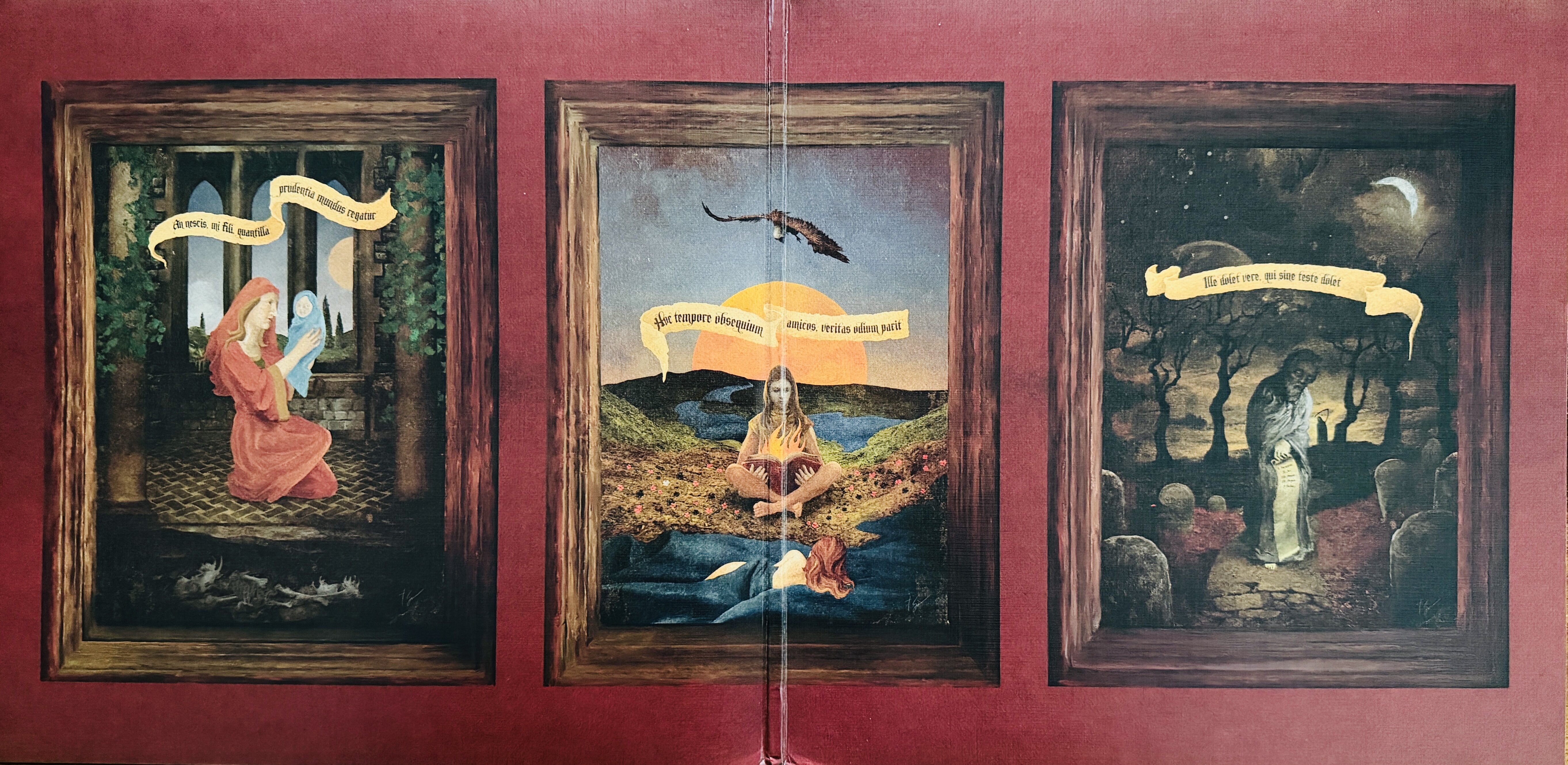
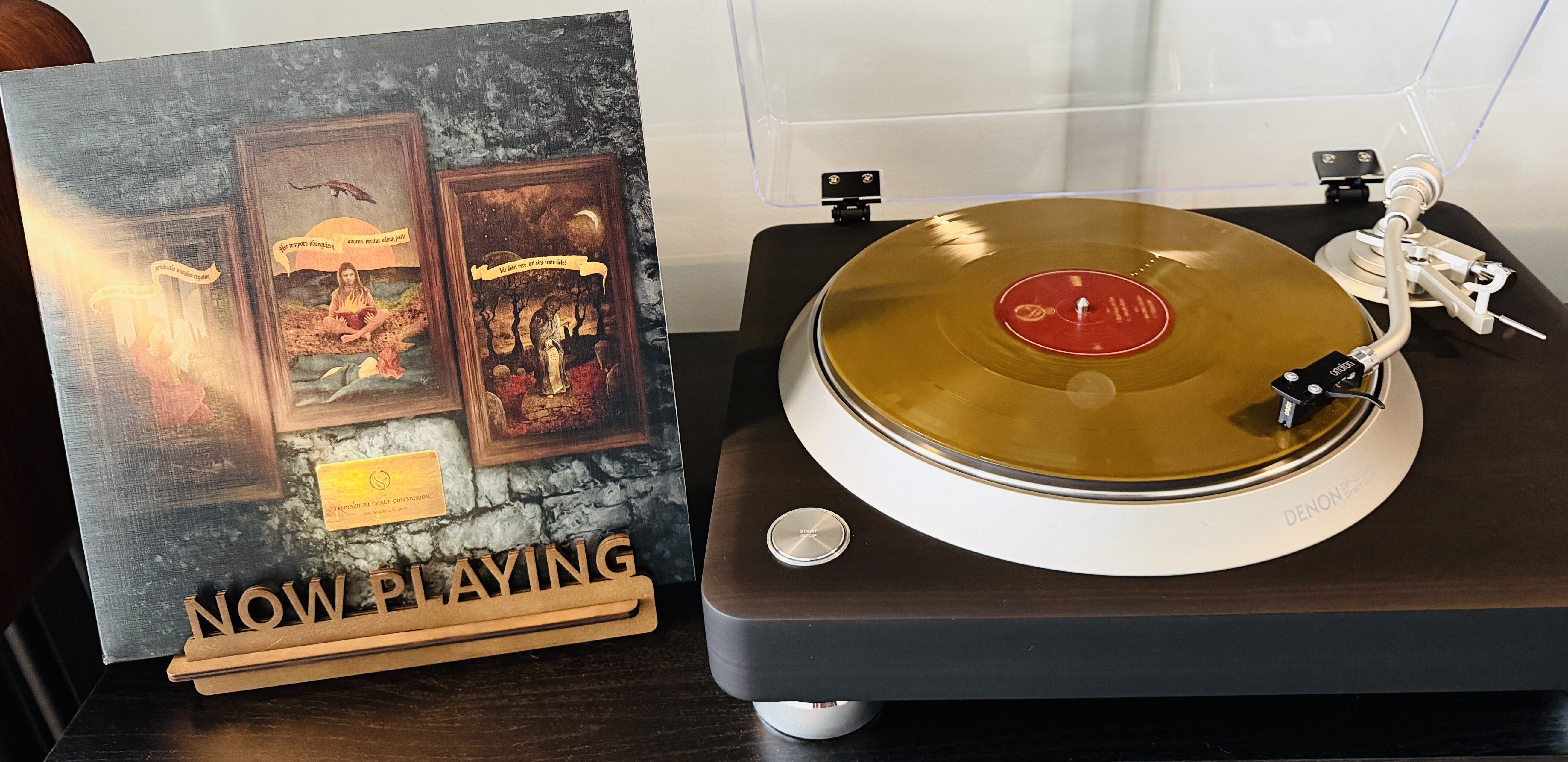
Pale Communion by Opeth, a 2014 album.
Communion marks the consolidation of the style shift begun with Heritage in 2011.
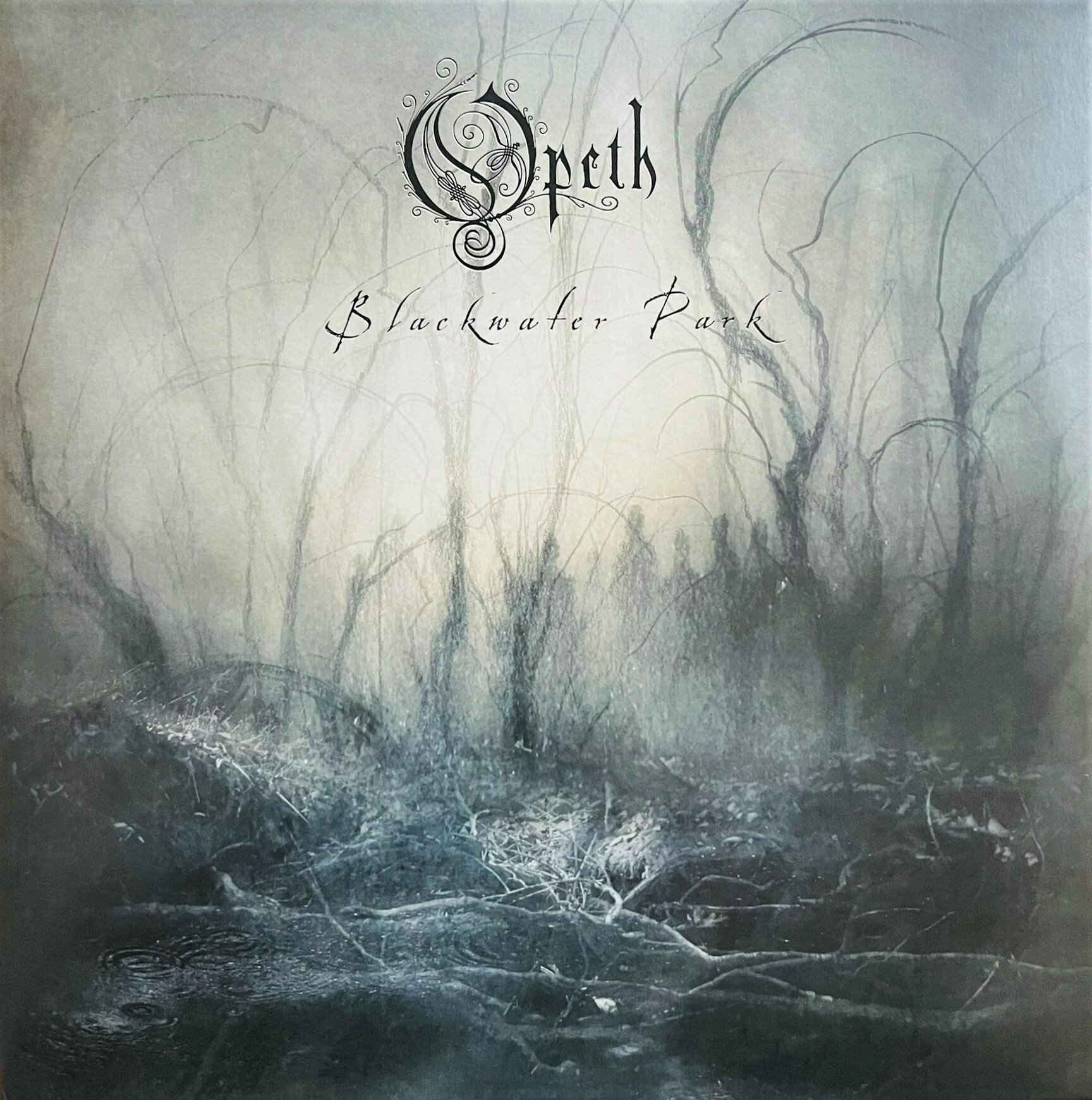
After years exploring progressive death metal with masterpiece albums like Blackwater Park, frontman Mikael Åkerfeldt decided to drop the growl and extreme metal sounds.
With Pale Communion, Opeth dive headfirst into ’70s progressive rock and hard rock, drawing inspiration from prog legends of the ’70s.
The Opeth lineup on this album saw a major change: longtime keyboardist Per Wiberg was replaced by Joakim Svalberg. His touch with vintage keys, the Hammond organ and the Mellotron became a key element of the album.
Here’s the band:
Mikael Åkerfeldt – Vocals, lead guitar, acoustic guitar
Fredrik Åkesson – Rhythm guitar, lead guitar, backing vocals
Joakim Svalberg – Hammond organ, Mellotron, piano, keyboards, backing vocals
Martin Mendez – Bass
Martin “Axe” Axenrot – Drums, percussion
Joakim Svalberg’s studio debut also sees him taking part for the first time in the whole recording and arranging process. If Heritage introduced the progressive turn, Pale Communion perfects it also thanks to his outstanding work. His keyboards aren’t just a backdrop, but often steal the show, as on the opening track “Eternal Rains Will Come”, which starts with a burst of Hammond organ woven into the drums.
Svalberg makes heavy use of Hammond organ, Mellotron and piano. This combination gives the record that analog warmth and that nostalgic vibe typical of early ’70s British progressive rock. Beyond the keyboards, Svalberg contributes significantly to the backing vocals and the complex clean vocal harmonies that define the album’s songs.
Huge was the impact of Steven Wilson in his artistic partnership with Mikael Åkerfeldt, as he worked on the production and mixing of the record. His touch is evident throughout the album, not only in the mix, but also in the backing vocals and the second voices that intertwine perfectly with Åkerfeldt’s voice, especially in the more melodic and dreamy moments.
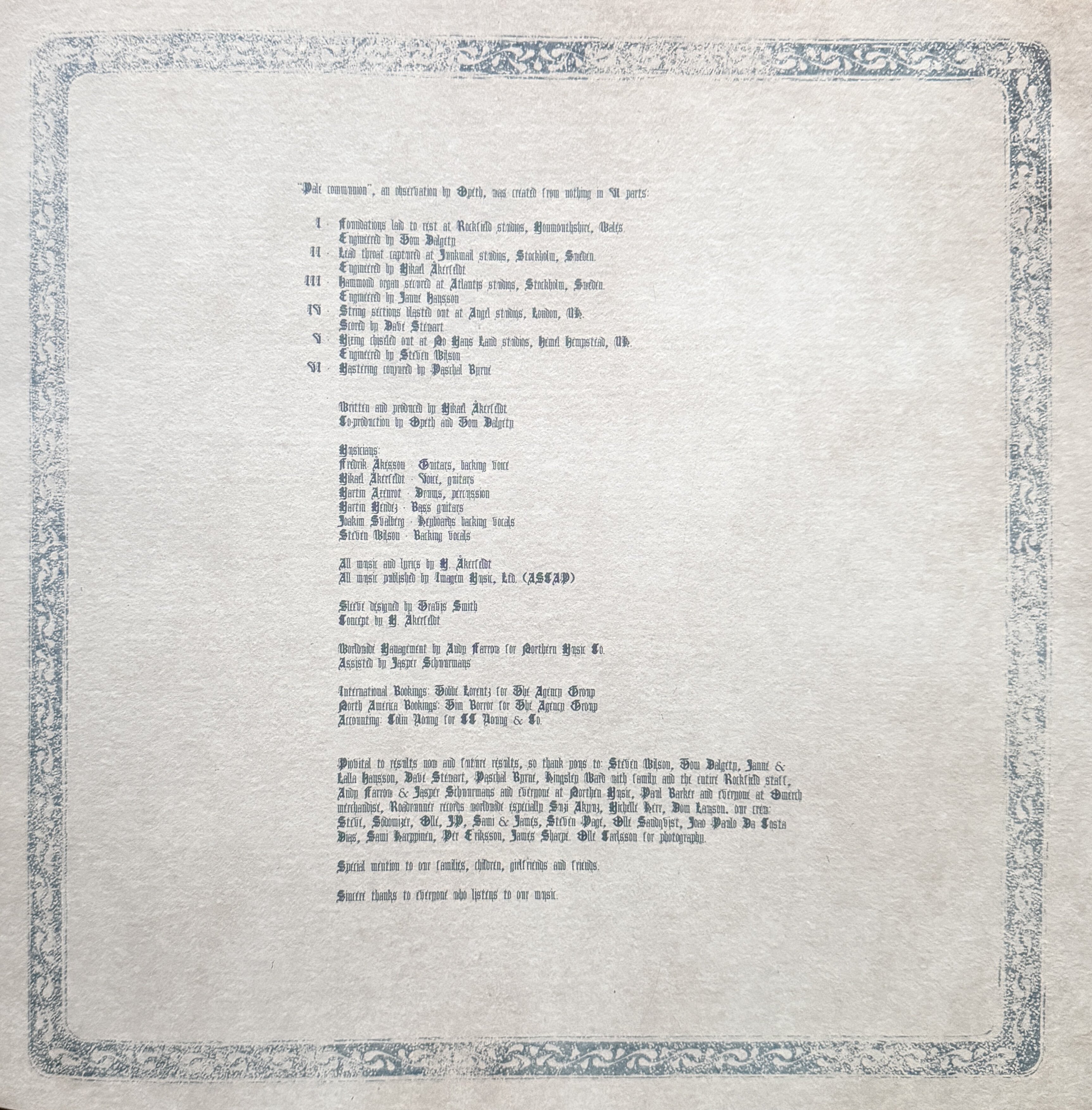
Another high-impact collaboration is the one with Dave Stewart, who handled the string arrangements. Stewart, a well-known composer and arranger tied to the Canterbury scene and Wilson’s projects, orchestrated the real strings that enrich epic tracks like “Voice of Treason” and the closing “Faith in Others”. Recorded at Angel Studios in London, these real strings add an incredible cinematic and dramatic depth to these pieces.
Pale Communion is a pure, refined and nostalgic progressive rock album, rooted in ’70s sounds.
It marks the farewell to Extreme Metal, with Mikael Åkerfeldt dropping the growl for a warm, expressive voice rich in layered vocal harmonies, often supported by Steven Wilson and Joakim Svalberg. The guitars leave behind the down-tunings and heavy distortions of extreme metal, opting for energetic, fluid riffs closer to classic hard rock and jazz-rock fusion. The Hammond organ, Mellotron and Rhodes piano take center stage, giving the record analog warmth and a retro feel. Dave Stewart’s arrangements, as in “Voice of Treason”, introduce elements of symphonic prog, with real strings creating a dramatic, almost cinematic tension, like a soundtrack.
Opeth keep their famed structural unpredictability, but apply it to non-metal contexts. The songs constantly change direction: from acoustic, dreamy sections inspired by British folk rock, to sudden, tight jazz-fusion instrumental interlocks, up to majestic hard-rock openings.
Mikael Åkerfeldt openly shared all the musical influences and tributes that inspired Pale Communion. Mikael is a passionate collector of rare ’60s and ’70s vinyl, with a soft spot for progressive rock, folk, hard rock and jazz-fusion. During the many promotional interviews for the album’s 2014 release, given to international outlets, he explained where his inspirations came from. The album is a true tribute to the greats of music’s past.
Here they are:
King Crimson and Genesis were a source of inspiration for structural complexity and the theatrical use of the Mellotron. Deep Purple and Uriah Heep influenced the record with their tight duels between lead guitar and distorted Hammond organ. Goblin are directly honored in the instrumental track “Goblin”, which reprises the prog-horror and funk-rock typical of the Italian band. The meticulous care for vocal harmonies and the acoustic passages, particularly evident in the first half of “River”, are a tribute to Crosby, Stills, Nash & Young.
“Faith in Others”, the track that closes the album, is the most emotional moment on the whole record. The piece is steeped in a deep, moving Swedish melancholy typical of the band. It begins in an intimate, almost bare way, with the piano and Åkerfeldt’s delicate, vulnerable voice. Then the song gradually expands thanks to the monumental real-string arrangement written by Dave Stewart. The interplay between the Mellotron, the strings and one of Mikael’s best clean vocal performances creates a dramatic, cinematic crescendo.
Besides “Faith in Others”, there are other tracks that stand out on this album, each with its own unique charm.
Let’s start with “Eternal Rains Will Come”, which opens the album with an engaging neo-prog atmosphere. The first three minutes are an explosion of jazzy, syncopated rhythms, with majestic Hammond organ blasts and spectacular riffs.
Then there’s “Moon Above, Sun Below”, a structured suite of almost 11 minutes that is the longest and most complex piece on the record. It’s a track able to blend acoustic elements, driving grooves and constant time changes in an incredibly fluid and cohesive way. Even without growls, in some passages it manages to keep that darkness typical of the band’s classic style.
“River” is another track that surprises with its boldness. It starts almost like a sunny folk-rock ballad, with splendid 12-string guitars and three-part vocal harmonies reminiscent of Crosby, Stills, Nash & Young. Halfway through, however, the song transforms radically into a progressive hard-rock gallop, dominated by blistering guitar solos and epic duels between Fredrik Åkesson and Joakim Svalberg’s organ.
“Voice of Treason” marks the symphonic turn on the album. Characterized by a martial, tribal and hypnotic rhythm, it is carried by an imposing orchestral arrangement with warm Middle Eastern accents that recall Led Zeppelin’s “Kashmir”. It’s one of the heaviest and most dramatic moments on the album.
If Heritage had left many puzzled with its experimental and at times disorienting sound, Pale Communion is an album of great elegance and coherence. The studio arrangements are richer and denser, Steven Wilson’s production is impeccable and clean, and the blend between the instruments reaches a grandeur that was missing on the previous record.
Purists didn’t appreciate it as much, seeing it as a reworking of ’70s prog rock rather than something completely new and, above all, far from what Opeth had done on their masterpieces.
In my view, Pale Communion is a fantastic album that should be read as the record that kicked off Opeth’s second youth, a new phase, no longer death metal. Spectacular album.
My Version
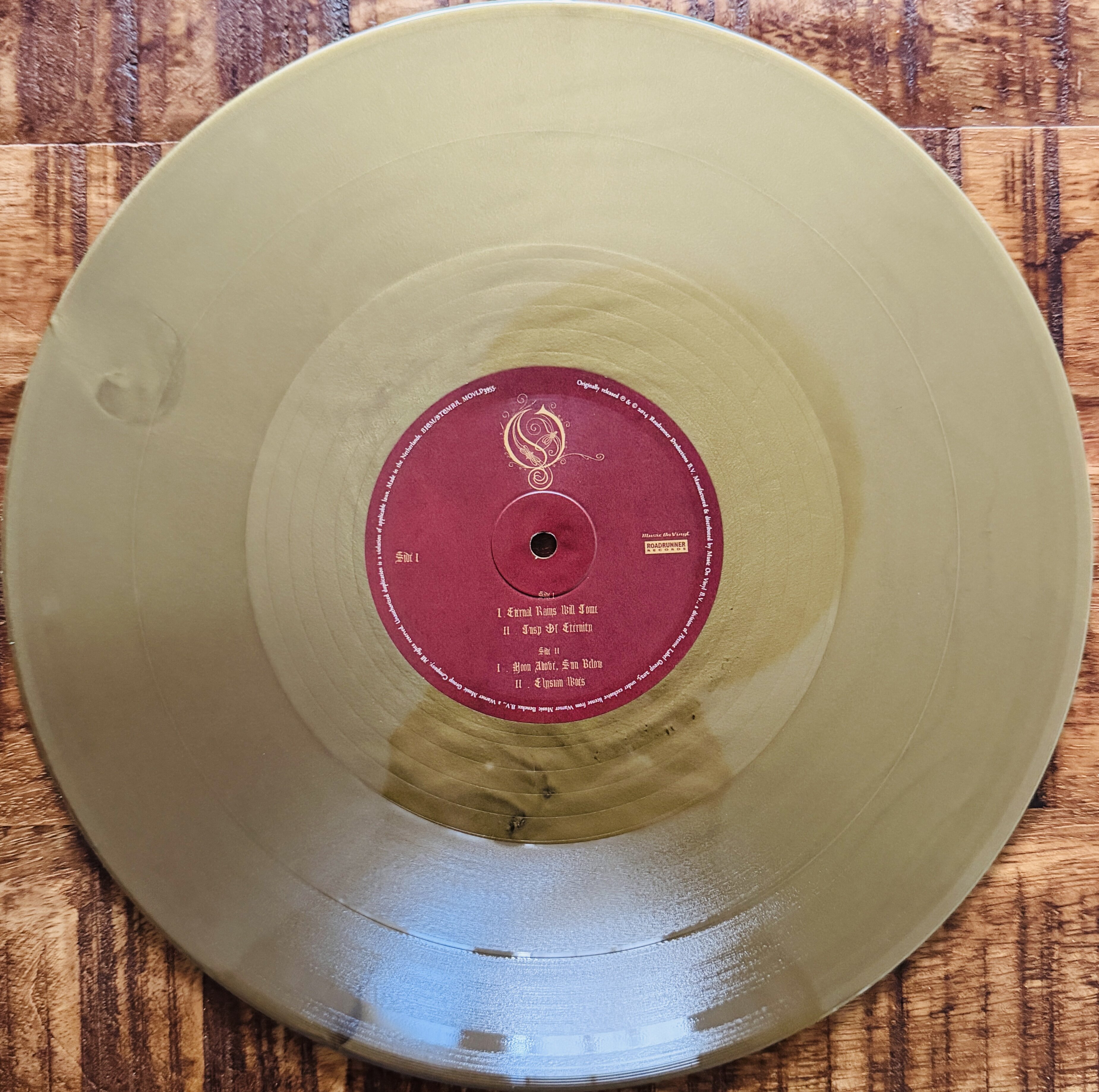
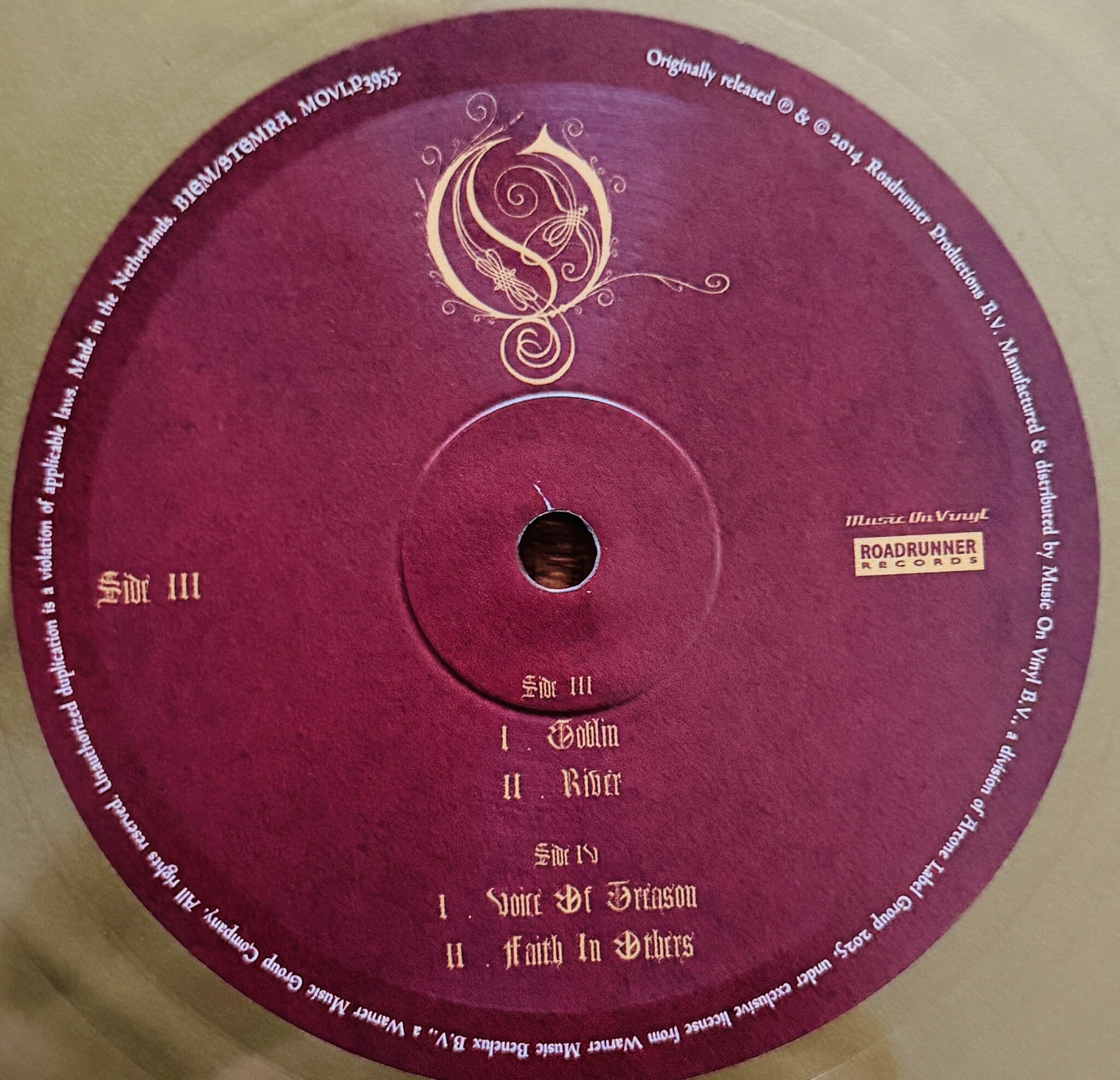
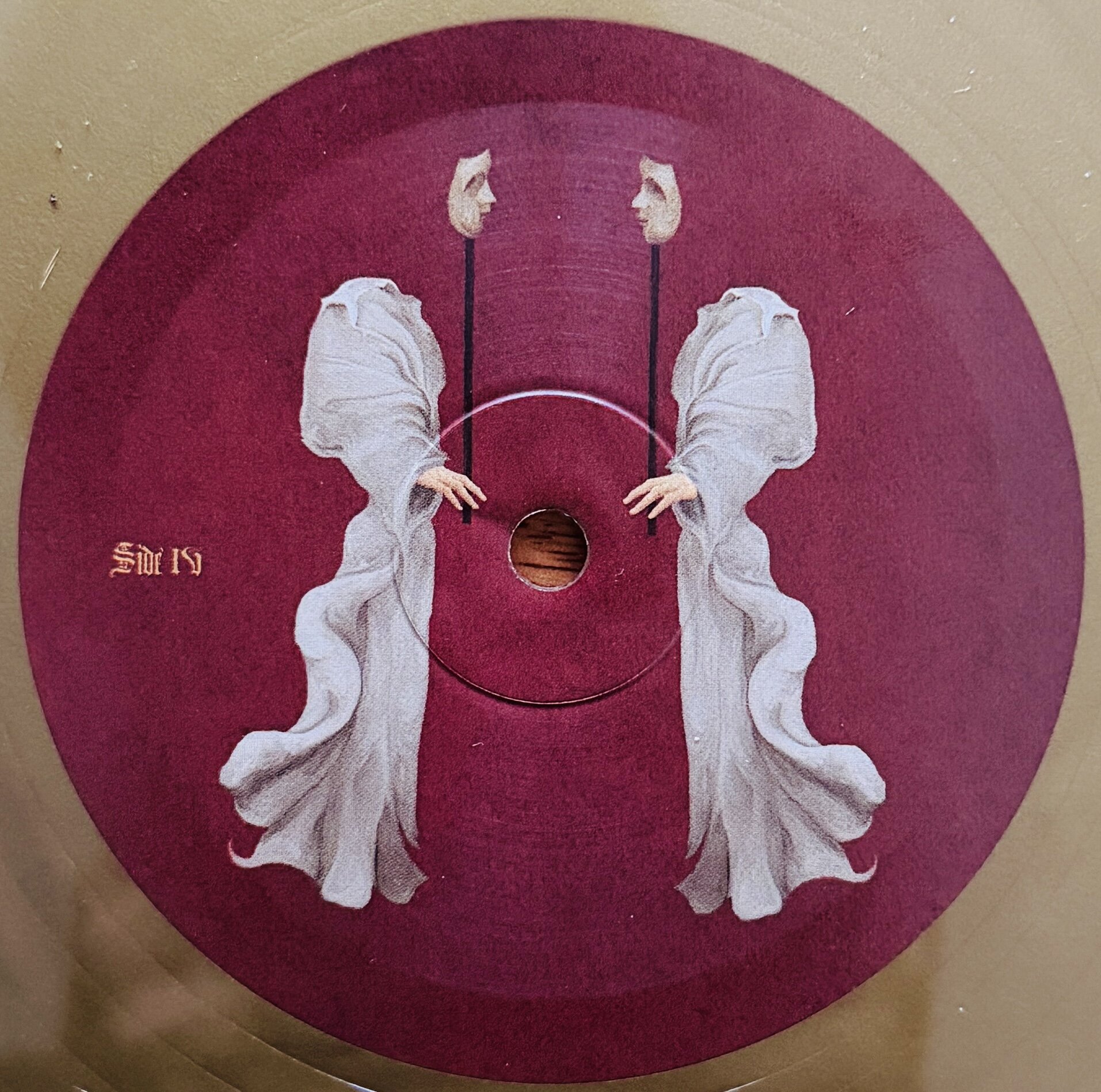
Label: Music On Vinyl – MOVLP3955, Artone Label Group – MOVLP3955, Roadrunner Records – MOVLP3955
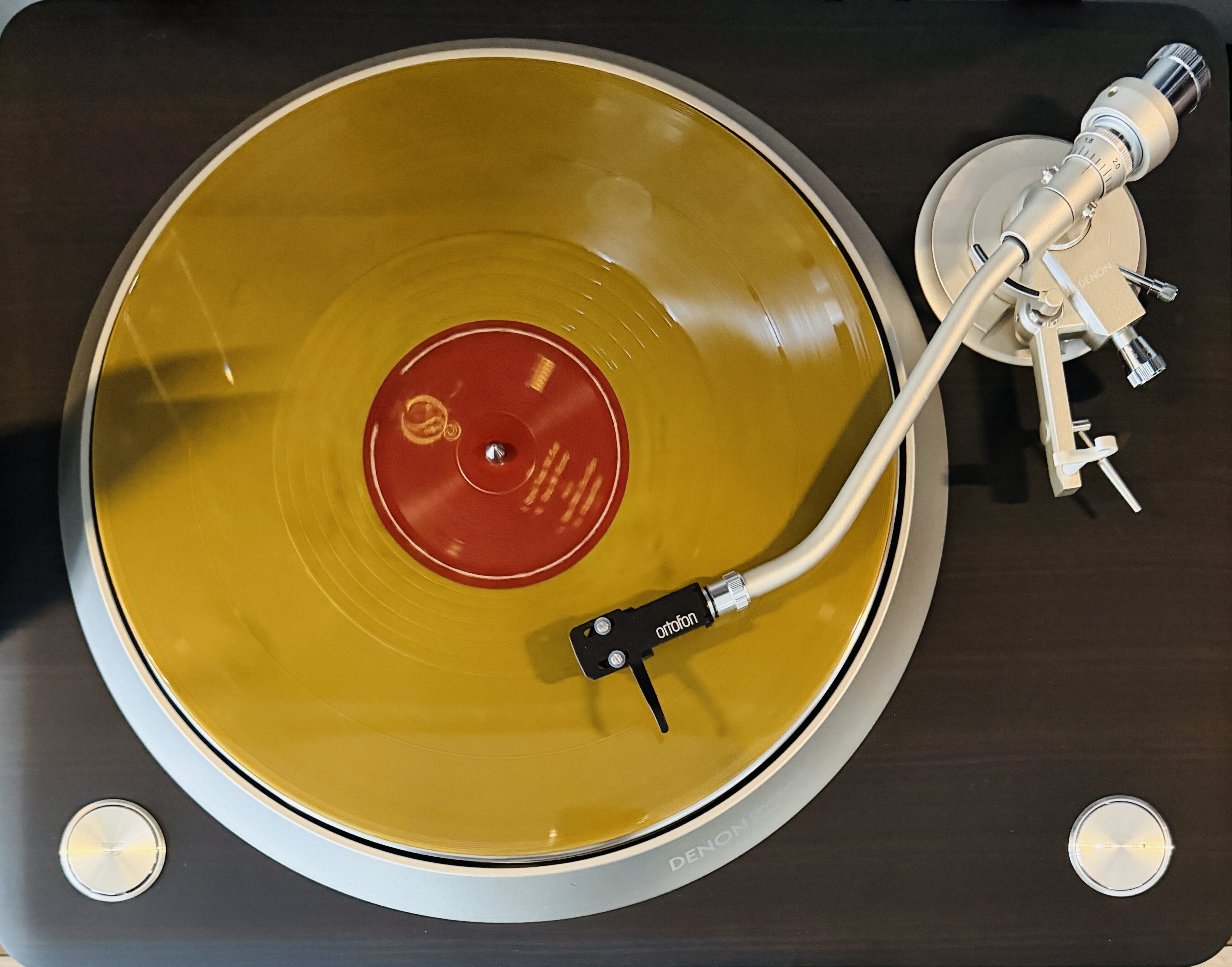
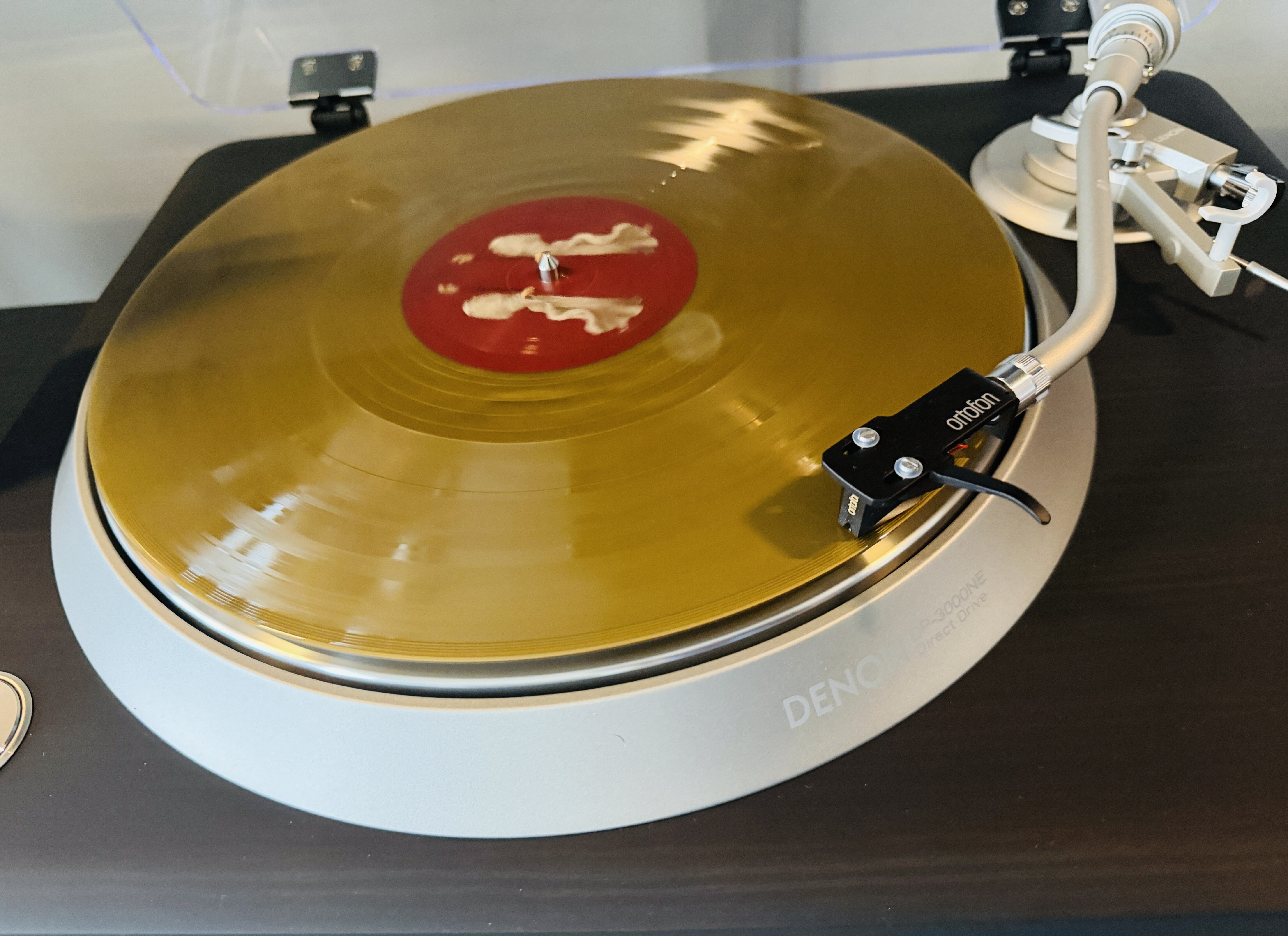
Format: 2 x Vinyl, LP, Album, Limited Edition, Numbered, Reissue, Gold, 180g
Country: Europe
Released: 5 Dec 2025
Tracklist
AI Eternal Rains Will Come
AII Cusp Of Eternity
BI Moon Above, Sun Below
BII Elysian Woes
CI Goblin
CII River
DI Voice Of Treason
DII Faith In Others
Lineup
Bass Guitar – Martin Mendez
Drums, Percussion – Martin Axenrot
Guitar, Backing Vocals – Fredrik Åkesson
Guitar, Vocals, Engineer [Lead Throat], Written By, Producer – Mikael Åkerfeldt
Keyboards, Backing Vocals, Piano – Joakim Svalberg
Mixed By [Mixing Chisled Out Engineered By], Backing Vocals – Steven Wilson
Score [Strings Scored By] – Dave Stewart