Not Only Prog: Who's Next by The Who, a 1971 album.
The story of “Who’s Next” is that of a journey from a wild, ambitious project to the creation of a true masterpiece.
After the worldwide success of “Tommy”, Pete Townshend, the genius behind The Who, decides to throw himself into a new adventure. “Lifehouse” is born, an incredibly visionary sci‑fi multimedia project.
The plot was meant to tell of a bleak future, where pollution keeps everyone shut indoors wearing special suits, and people are distracted and controlled by a global entertainment network (a bit like the Internet, but ahead of its time). And then there’s a rebel musician who discovers a spiritual frequency that, with a rock concert, can unite everyone’s souls into a single “purest note”.
Unfortunately, “Lifehouse” proved too ambitious for the times. Townshend wanted to combine music, a film and interactive concerts at London’s Young Vic, but things got complicated. The bandmates didn’t really understand the story, the managers were doubtful, and in the end Townshend, under pressure, had a nervous breakdown and the project was shelved.
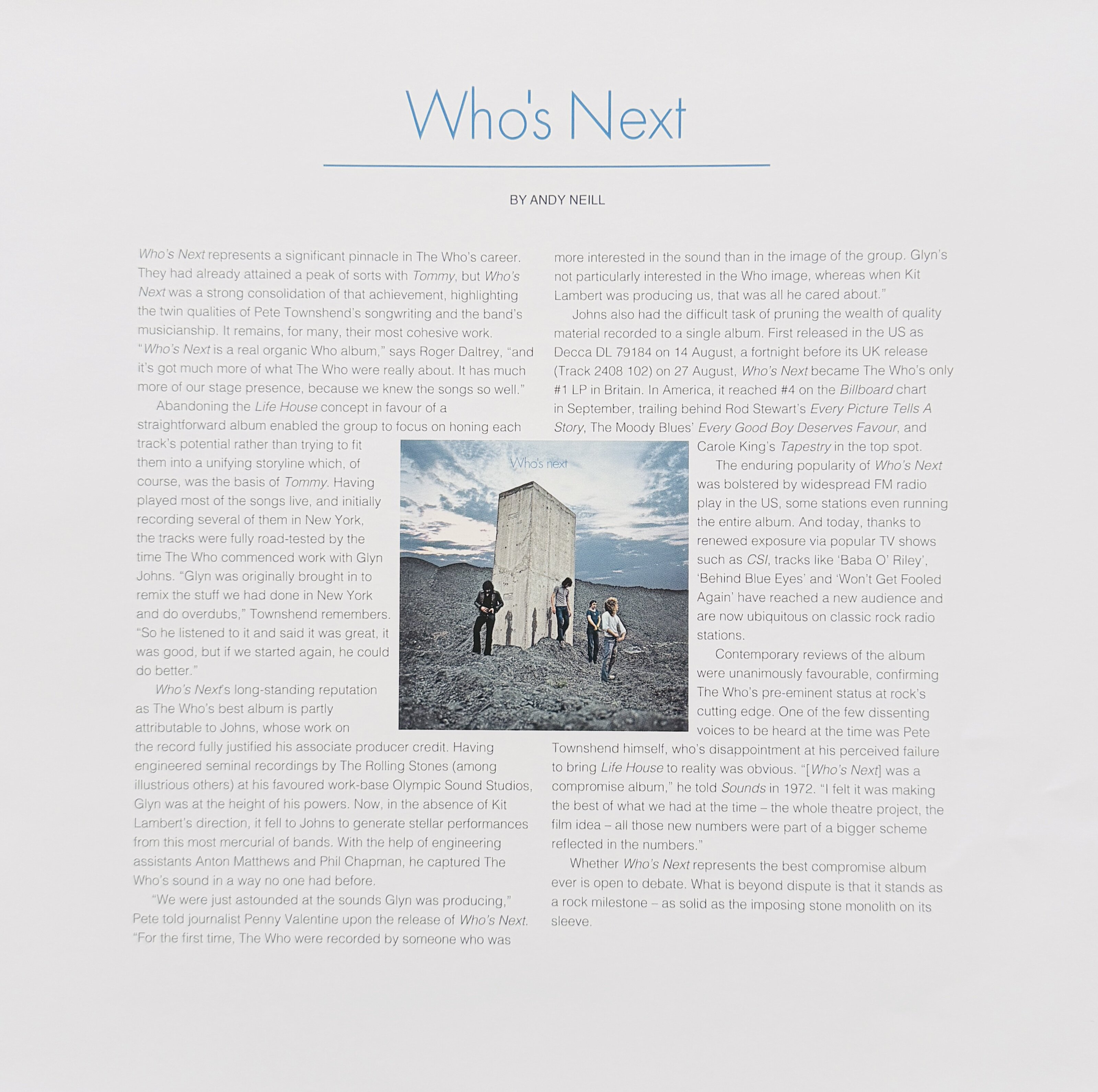
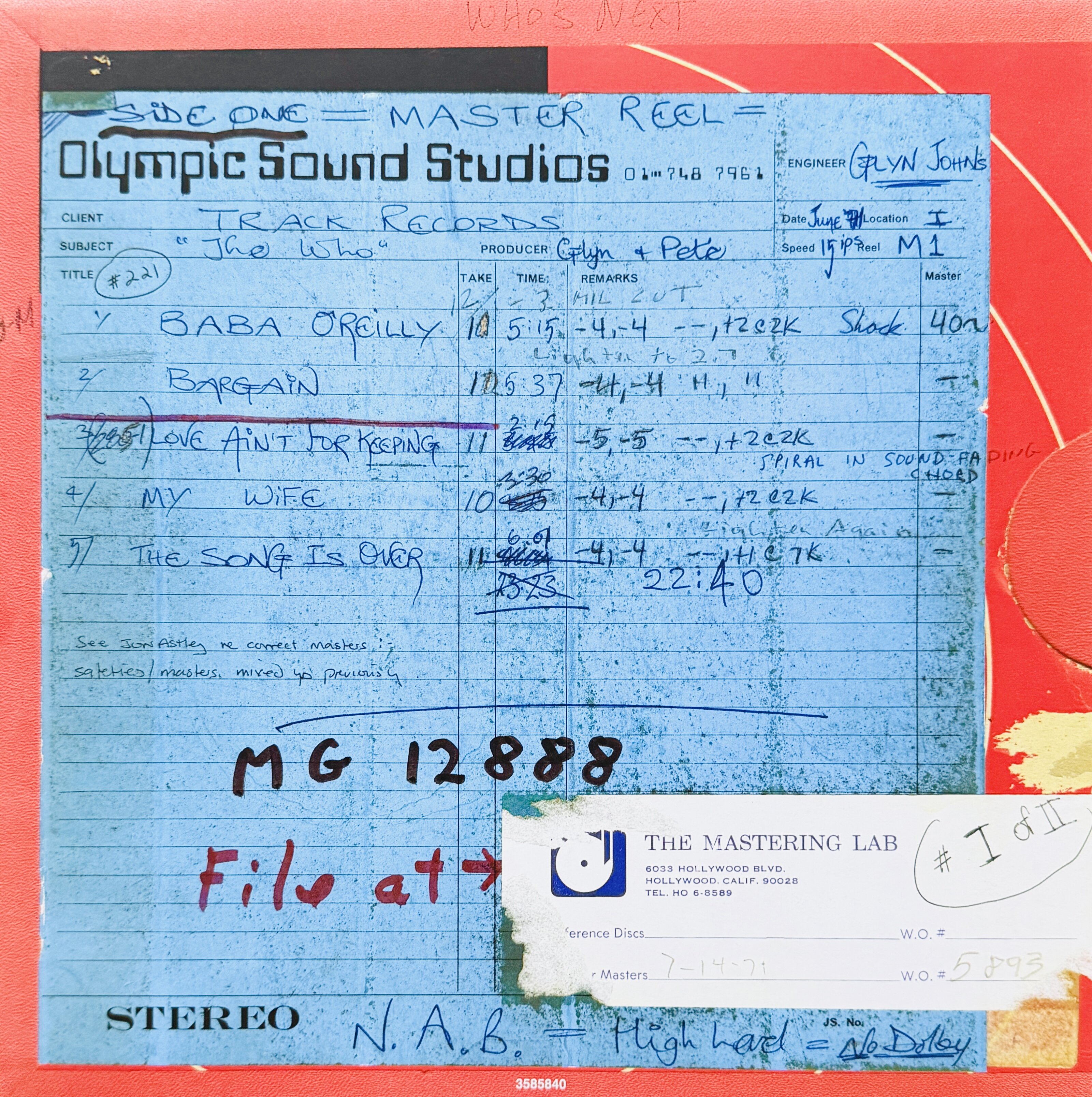
With “Lifehouse” put away, the band found itself with a large number of fantastic tracks, recorded here and there, but without a real common thread. And this is where Glyn Johns enters the scene, a world-famous sound engineer and associate producer.
Johns had a brilliant idea: drop the philosophical concepts and the films, and focus on what The Who do better than anyone else—hard-and-pure rock, with the best songs. The band then moved to London’s Olympic Studios and started over from scratch. The studio atmosphere immediately became positive, relaxed and focused. And the result was this wonderful album, “Who’s Next”, an album that made rock history.
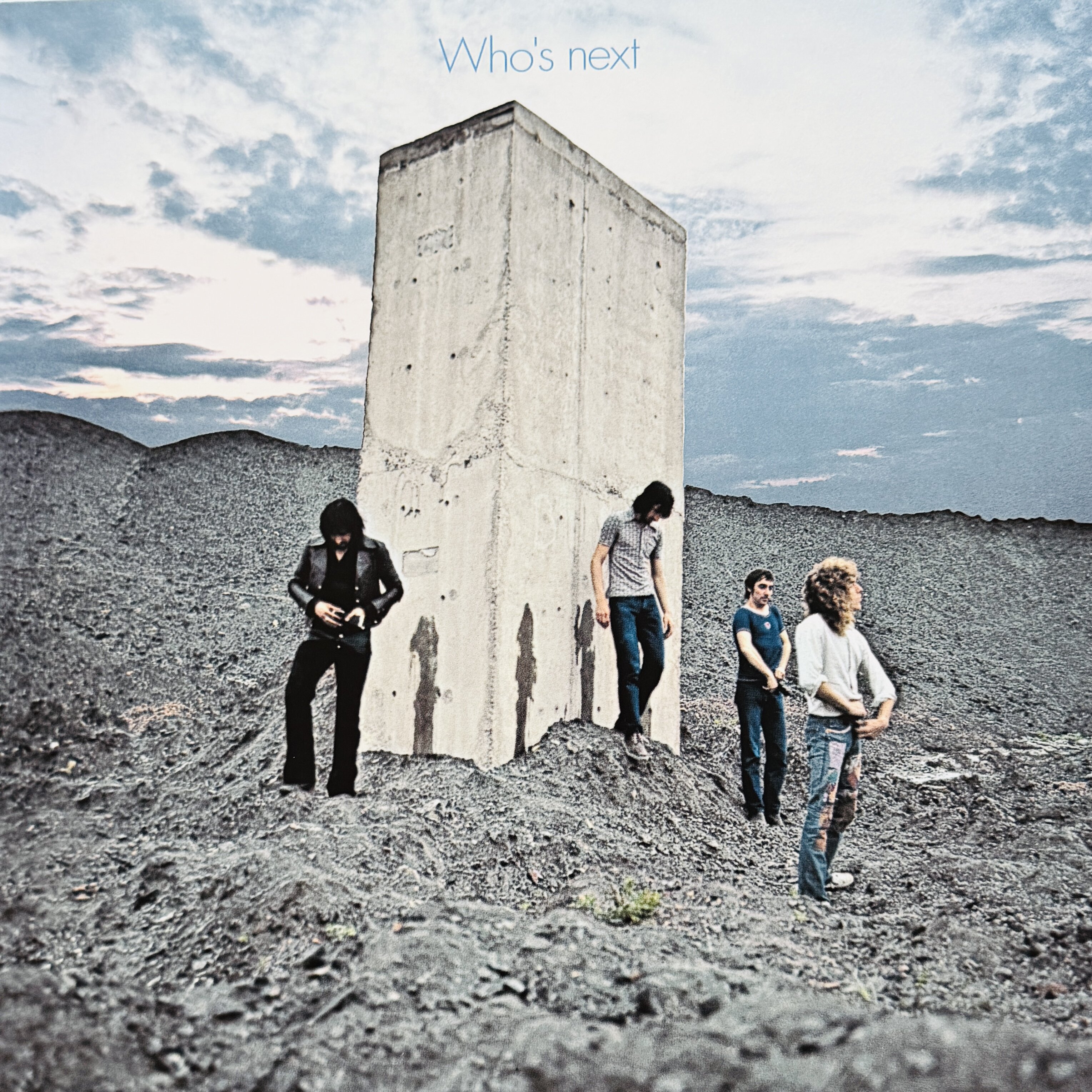
The title “Who’s Next” (which in Italian means “Who is next?”), beyond the wordplay with their name, was a response to the previous project, “Lifehouse”, which hadn’t gone as planned. After spending months trying to find a conceptual and pretentious title for their rock opera, they decided to go with something simple and direct. A way of saying: “Here’s our new record, next up”. The title then took on an even more ironic and irreverent meaning when they chose the cover (shot by Ethan Russell).
It’s an album that marked a turning point in rock, laying the groundwork for ’70s Arena Rock and Hard Rock.
The album was a true pioneer in integrating synthesizers (VCS 3 and ARP) and electronic organs into hard rock songs. Unlike other progressive rock bands of the time, Pete Townshend didn’t use keyboards for virtuoso solos, but as a rhythmic, hypnotic base, creating those iconic loops of Baba O’Riley and Won’t Get Fooled Again on which the band built its trademark wall of guitar sound.
Who’s Next is a model album in its use of dynamics, alternating moments of sweetness with bursts of pure energy. Many tracks start with intimate acoustic-guitar arpeggios or piano ballads like Behind Blue Eyes and The Song Is Over, then suddenly turn into heavy, distorted rock, driven by Townshend’s electric-guitar power chords.
The Who redefined the role of bass and drums on this album. Keith Moon on drums doesn’t just keep time; he plays in a wild, orchestral way, filling every space with rolls and tempo changes. John Entwistle on bass, with his powerful, metallic, distorted tone (thanks to steel strings and his customized amps), acts almost like a second lead guitar.
Unlike the previous records, which had a rougher, more chaotic sound typical of ’60s garage rock and mod pop, Who’s Next boasts crystal-clear production thanks to Glyn Johns’ work. The sound is clean, powerful and spacious, ideal for big stadiums and arenas, without sacrificing the dynamics and detail of every single instrument.
A perfect balance between the primal anger of rock and roll, technological experimentation, and the melodic complexity inherited from classical music and Townshend’s theatrical projects.
This album doesn’t have a single weak track; on the contrary, some made music history:
Baba O’Riley, the track that opens the album, is famous for its hypnotic synth intro and for the burst of energy from the piano and guitar chords. The title is a tribute to two important figures for Townshend: the guru Meher Baba and minimalist composer Terry Riley. Surprisingly, it closes with a cracking folk-rock-style violin solo.
Behind Blue Eyes is one of the greatest rock ballads ever. It starts out intimate and melancholy, with an acoustic feel and Roger Daltrey’s delicate voice. Halfway through, the song changes completely, turning into a powerful hard-rock piece, with Keith Moon’s overwhelming drumming.
My Wife is the only track on the album not written by Pete Townshend, but by bassist John Entwistle. It’s an ironic song about the paranoia of a man who fears his wife’s reaction after a night out drinking. Musically it’s an energetic rock number, with a brass section played by Entwistle himself.
But if I have to say what the album’s highest point is, it’s without a doubt Won’t Get Fooled Again, the 8-and-a-half-minute track that closes the record. It’s The Who’s manifesto and one of the most important rock songs ever. This track offers a deep, disenchanted reflection on revolutions. Townshend wonders whether the new revolutionary leaders won’t end up behaving just like the dictators they’ve just overthrown. And it’s impossible not to quote the iconic line: “Meet the new boss, same as the old boss” (“Let me introduce the new boss, he’s the same as the old boss”). Toward the end of the piece, after a simply insane Keith Moon drum solo that blends with the synth loop, Roger Daltrey leaves everyone speechless with a powerful, liberating scream. One of the greatest vocal screams in rock history. The heart of this track beats thanks to a Lowrey organ running through an ARP synthesizer. This futuristic, hypnotic sound never stops, creating a base over which the band plays with a precision and force that were cutting-edge at the time.
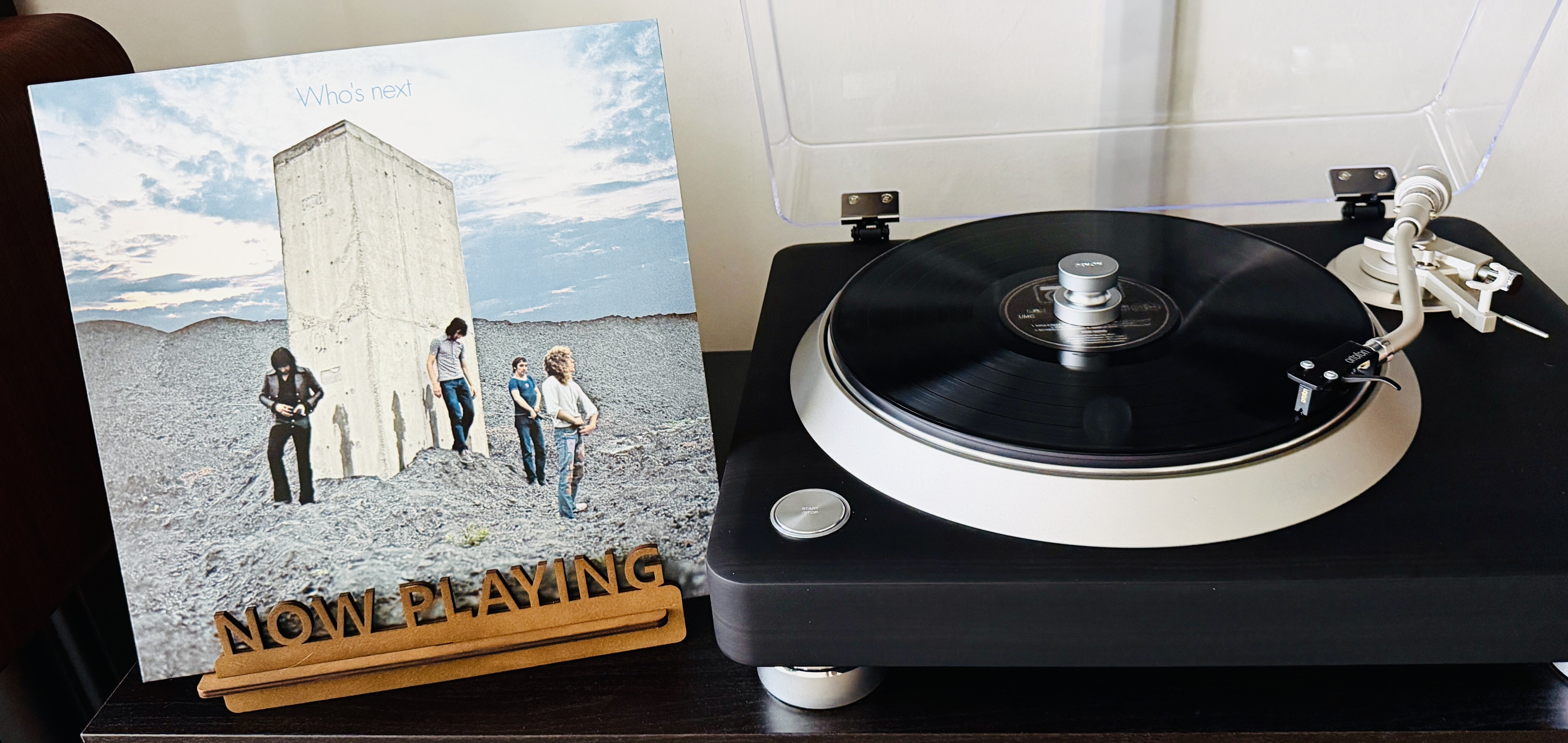
The cover of “Who’s Next” is one of the most iconic, irreverent and celebrated in music history, and it perfectly reflects The Who’s rebellious spirit. The idea came to John Entwistle and Keith Moon after seeing Stanley Kubrick’s “2001: A Space Odyssey”. They wanted to make a fun parody of the mysterious black monolith that appears at the beginning of the film.
Photographer Ethan Russell took the photo on July 4, 1971, at Easington Colliery in County Durham. The image shows the band members walking away from a series of concrete pillars sticking out of a coal-slag cliff. There’s a small curious anecdote: in the photo it looks like they’ve just urinated on the pillars, but in reality only Pete Townshend actually managed to. For the others, the photographer used empty film canisters filled with rainwater to wet the concrete and create the effect.
Decades after its release in 1971, “Who’s Next” is not only The Who’s absolute masterpiece, but also one of rock’s milestones. It’s a record full of energy, with no dips in tension or filler tracks, where every song hits hard.
The album represents the artistic peak of the individual musicians, where each delivers the definitive performance of their career. Roger Daltrey’s thunderous, mature voice, Keith Moon’s orchestral and reckless drumming, John Entwistle’s lead-like bass, and Pete Townshend’s monumental power chords merge into an unrepeatable alchemy.
If Live at Leeds shows their live ferocity, Who’s Next remains the definitive testimony to their studio greatness. Essential album.
My Version
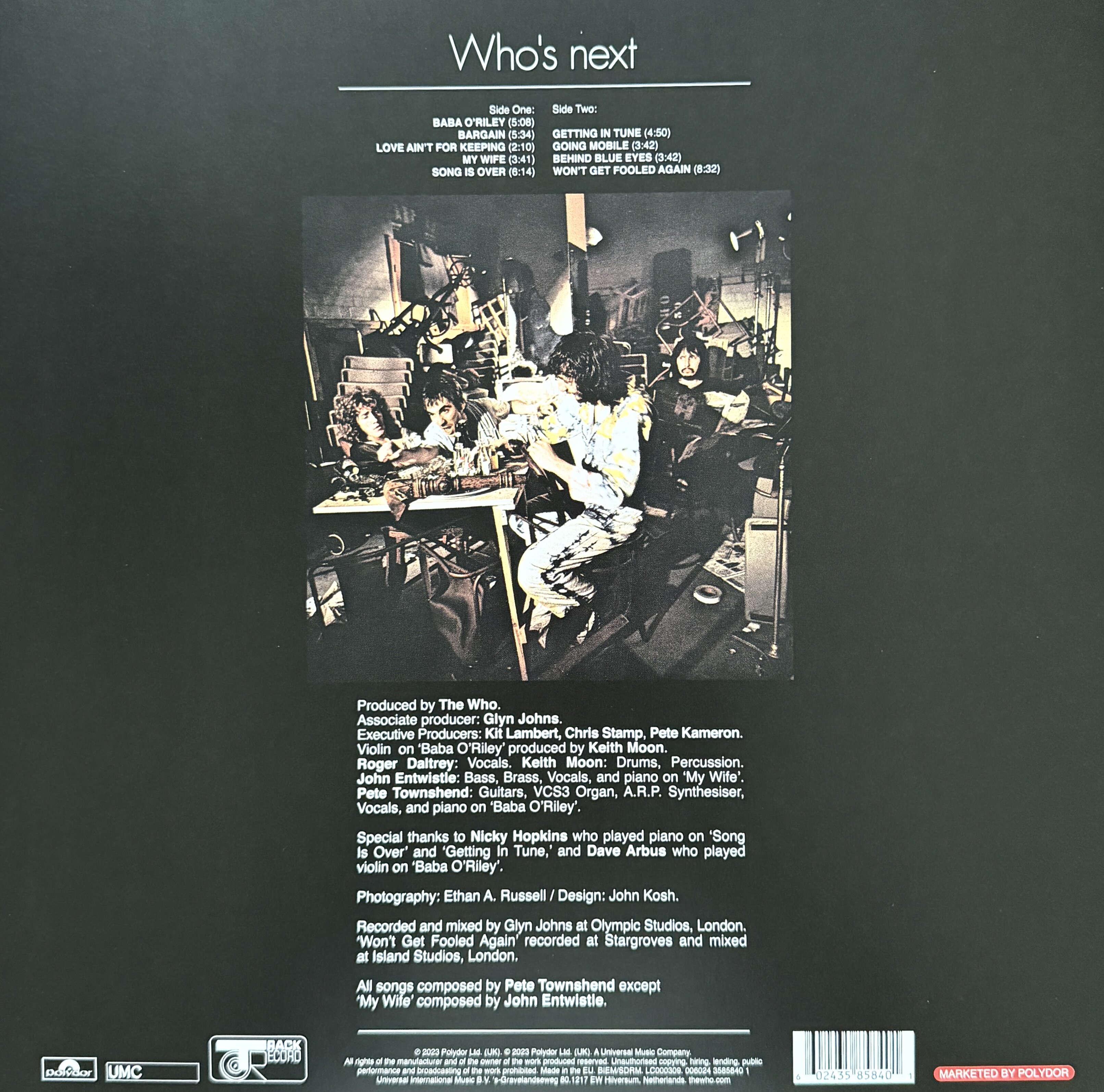
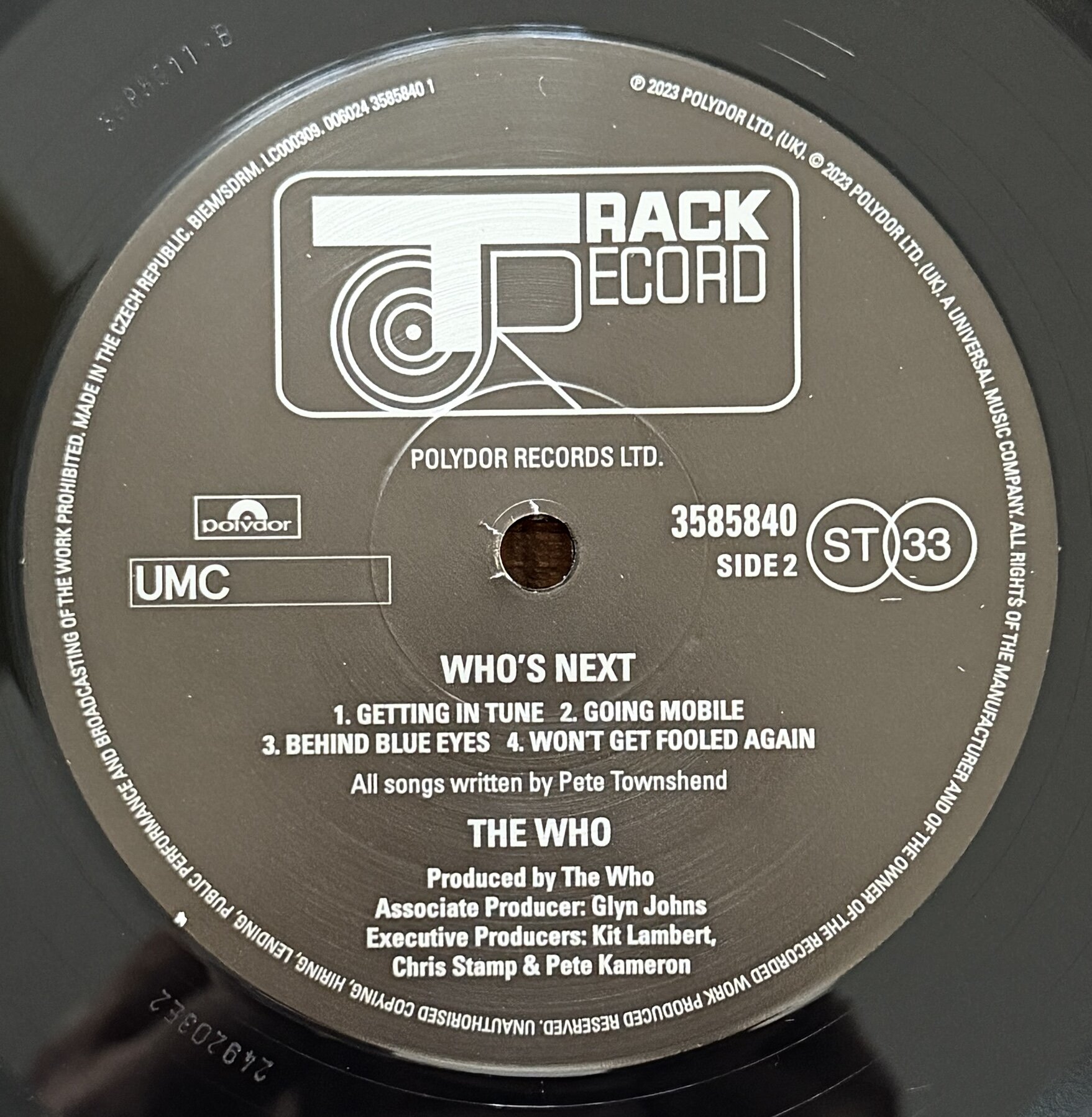
Label: Polydor – 006024 3585840 1, UMC – 006024 3585840 1, Track Record – 006024 3585840 1
Format: Vinyl, LP, Album, Remastered, Stereo, 180 Gram
Country: Worldwide
Released: 2023
Tracklist
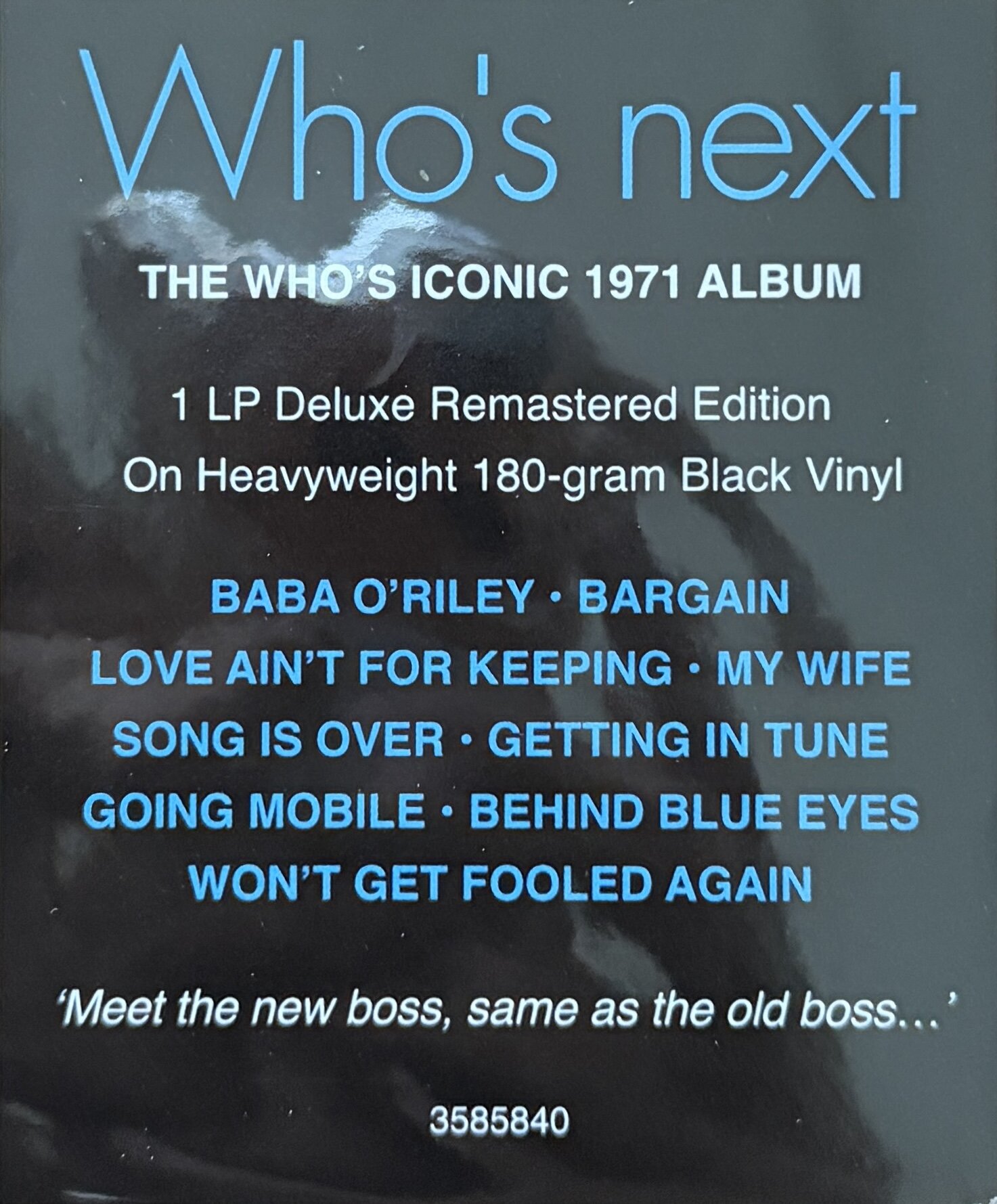
A1 Baba O'Riley 5:08
A2 Bargain 5:34
A3 Love Ain't For Keeping 2:10
A4 My Wife 3:14
A5 Song Is Over 6:14
B1 Getting In Tune 4:50
B2 Going Mobile 3:42
B3 Behind Blue Eyes 3:42
B4 Won't Get Fooled Again 8:32
Lineup
Bass, Brass, Vocals – John Entwistle
Drums, Percussion – Keith Moon
Guitar [Guitars], Organ [VCS3 Organ], Synthesizer [A.R.P. Synthesiser], Vocals, Songwriter – Pete Townshend
Vocals – Roger Daltrey