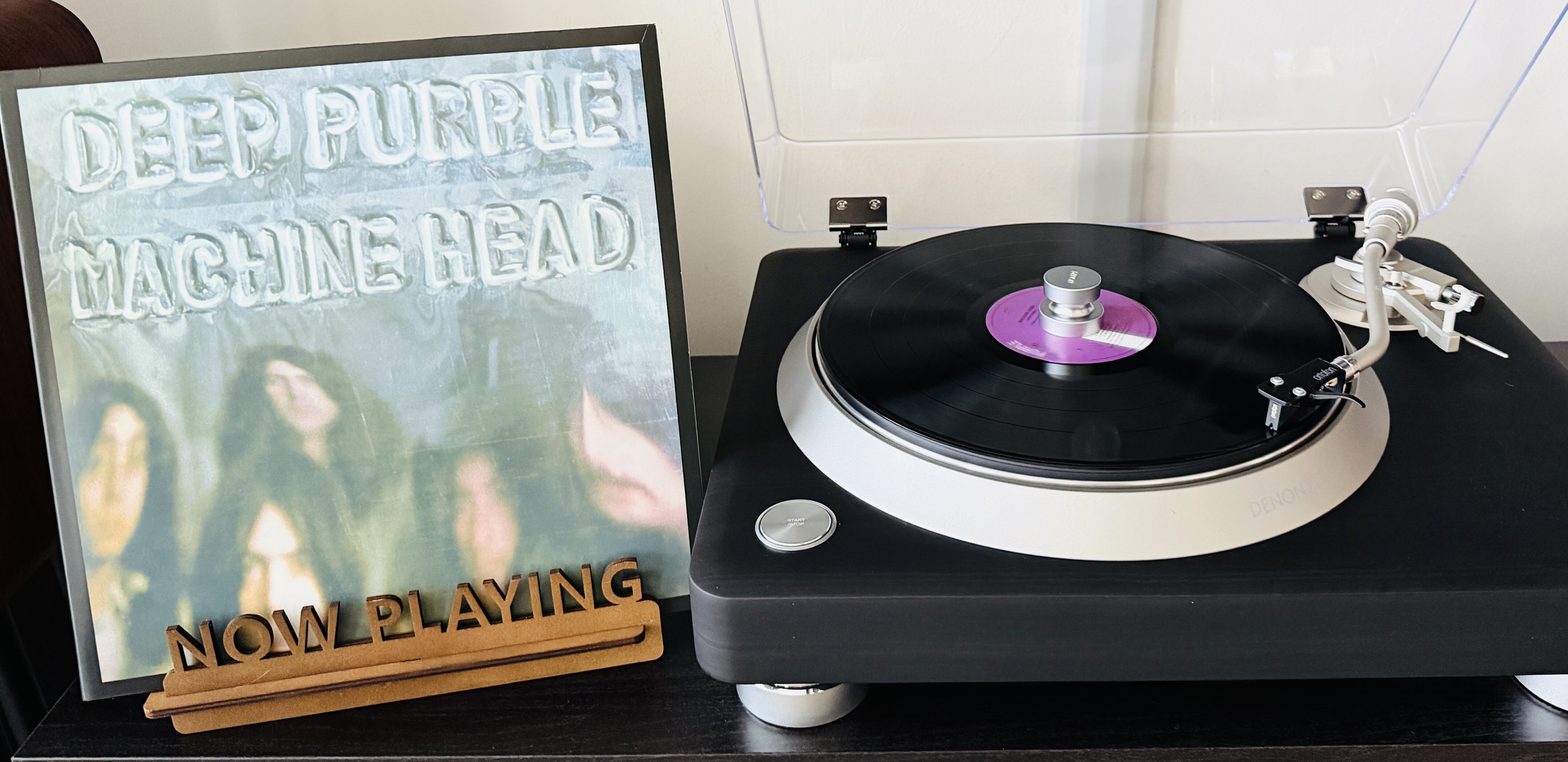
Not Only Prog: Machine Head by Deep Purple, a 1972 album.
Machine Head, the sixth studio album by Deep Purple, is a true pillar of hard rock and pre-heavy metal.
The record was cut by the legendary Mark II lineup, with Ritchie Blackmore on guitar, Ian Gillan on vocals, Roger Glover on bass, Jon Lord on keyboards, and Ian Paice on drums.
The story of its making is truly adventurous and almost cinematic, so much so that it was told in the lyrics of their most famous track, Smoke on the Water.
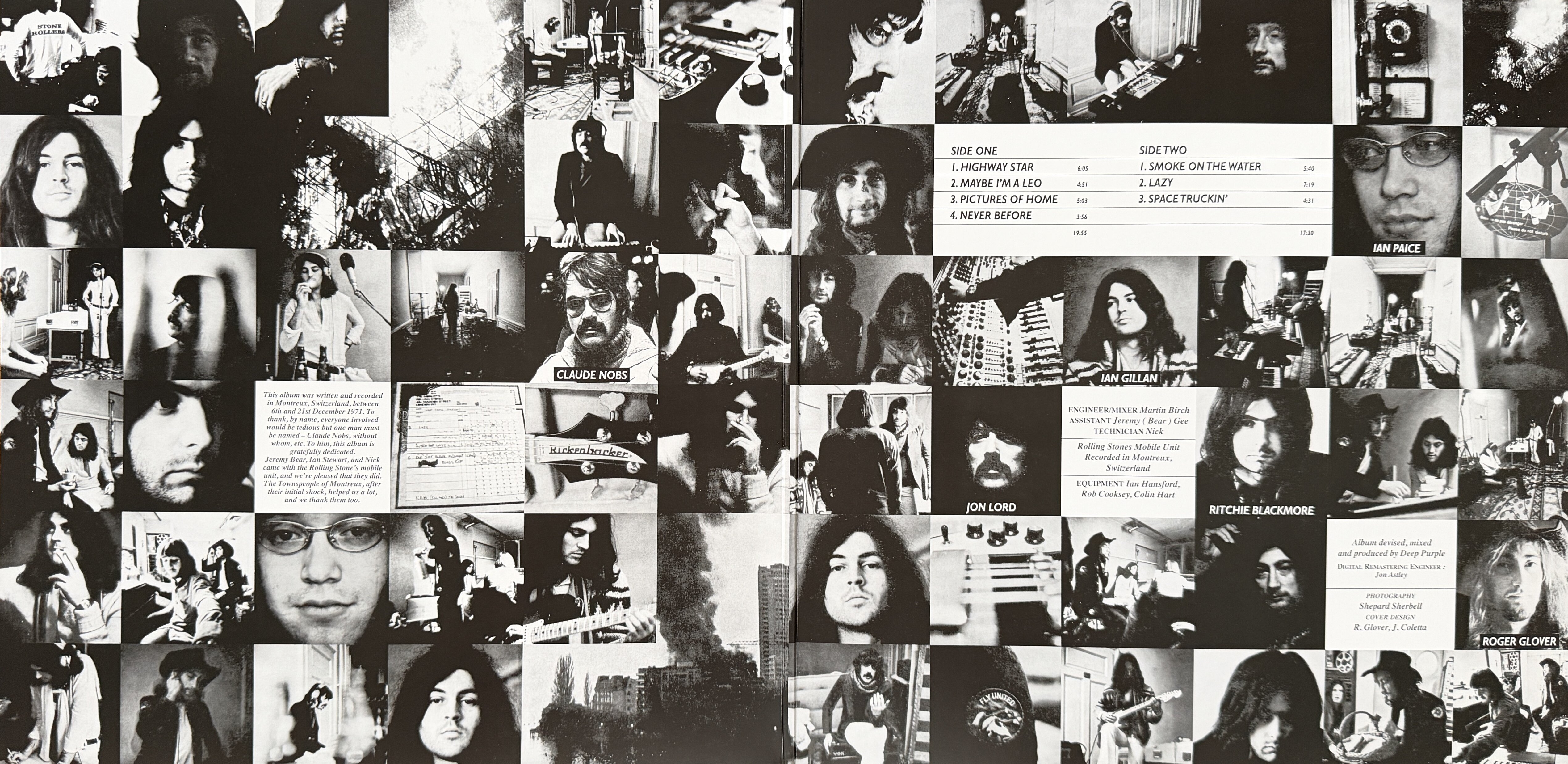
In December 1971, Deep Purple arrive in Montreux, Switzerland, with a very clear plan: record their new album inside the Casino, closed for the winter. To do it, they borrow the Rolling Stones’ mobile studio, but on December 4, during a concert by Frank Zappa and the Mothers of Invention, the unthinkable happens: a spectator fires a flare gun at the ceiling and a huge fire destroys the entire Casino.
Deep Purple, left without a place to record, move to the Pavilion theatre. Unfortunately, the locals complain about the noise and the band gets kicked out. They then find shelter in the almost deserted Grand Hotel and, with a bit of ingenuity, set up a makeshift studio in the corridors and rooms. Mattresses and red lights for isolation and the right mood, and off they go with the music.
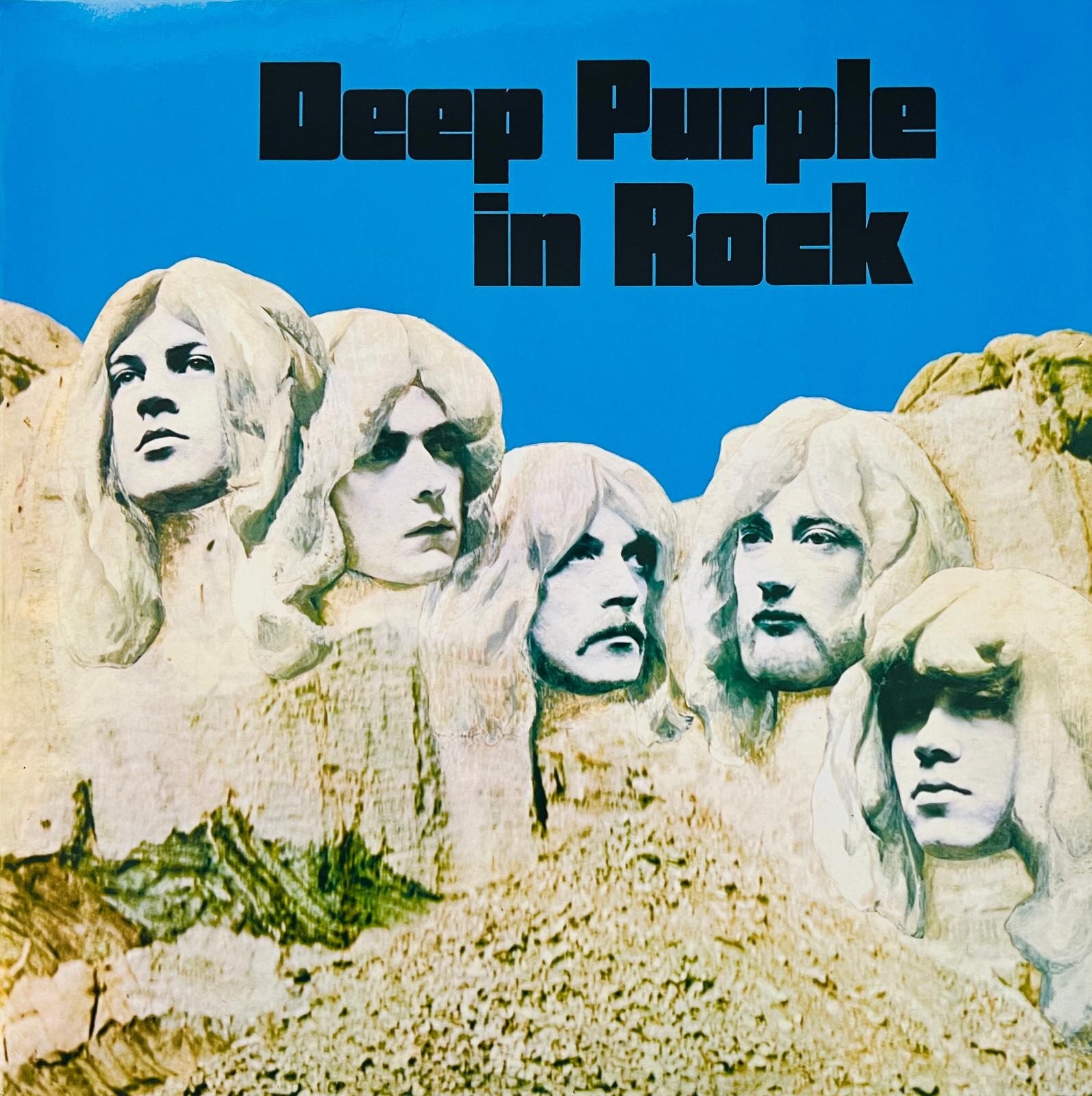
“Machine Head” is a key album of ’70s hard rock, laying the groundwork for future heavy metal. Compared to the previous “In Rock”, the sound is more mature, cleaner and more focused, with a perfect balance between distorted energy and technical precision.
The Blackmore-Lord duo is the album’s core. Ritchie Blackmore’s Fender Stratocaster electric guitar and Jon Lord’s Hammond organ (distorted through a Marshall amp) weave together in a gripping musical dialogue, creating a powerful wall of sound. They trade solos that echo classical music and the blues, delivering moments of pure emotion.
The rhythm section, made up of Roger Glover’s bass and Ian Paice’s dynamic, jazzy and lightning-fast drums, is a relentless engine that drives every track with energy. Their teamwork builds a solid, engaging base for melodies and solos.
Ian Gillan, with his theatrical voice, delivers an incredible performance. He partly drops the over-the-top virtuosity of the past for a more controlled vocal line, yet still powerful, gritty and full of charisma.
Every track on Machine Head has its own reason to be considered a piece of history, but some songs truly stand out for their quality and flawless execution:
Highway Star is a song born almost as a joke on the back of a tour bus, in response to a journalist’s curiosity about how they composed: a true anthem to speed that contains two legendary solos—Jon Lord’s organ solo, inspired by Bach, and Blackmore’s guitar solo, built entirely on classical-style arpeggiated progressions.
Lazy is a monumental hard-blues track of over seven minutes. It opens with a long, psychedelic organ improvisation by Jon Lord, then bursts into an overwhelming groove in which Gillan also tries his hand at the harmonica.
Space Truckin’ is the album’s sci-fi track par excellence. Driven by a super-heavy, distorted bass riff, it’s a pounding, sweeping song that, in live concerts, turns into the foundation for very long and thrilling instrumental improvisations.
Even if the whole album is top-tier, the real star for cultural, historical and commercial impact is Smoke on the Water. The song is built around a four-note guitar riff (played by Blackmore plucking the strings two at a time, without a pick) that has become the most famous in music history.
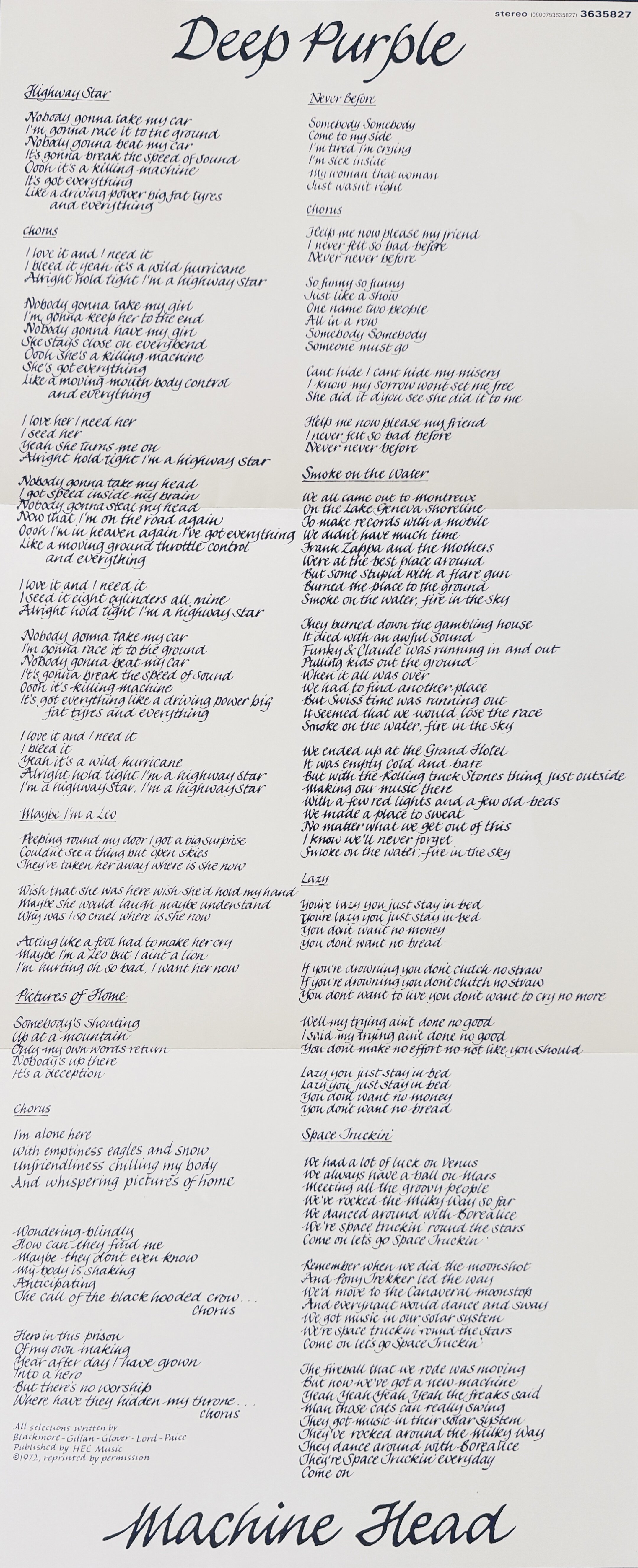
The genius of “Smoke on the Water” lies precisely in its disarming simplicity, which contrasts with the lyrics’ narrative. It’s not a made-up story, but an almost documentary account of what happened to the band in Montreux: the casino fire caused by “some stupid with a flare gun” (some stupid with a flare gun), the heroic Claude Nobs running back and forth to get the kids to safety (Funky Claude was running in and out), and the Rolling Stones’ mobile studio parked outside the Grand Hotel.
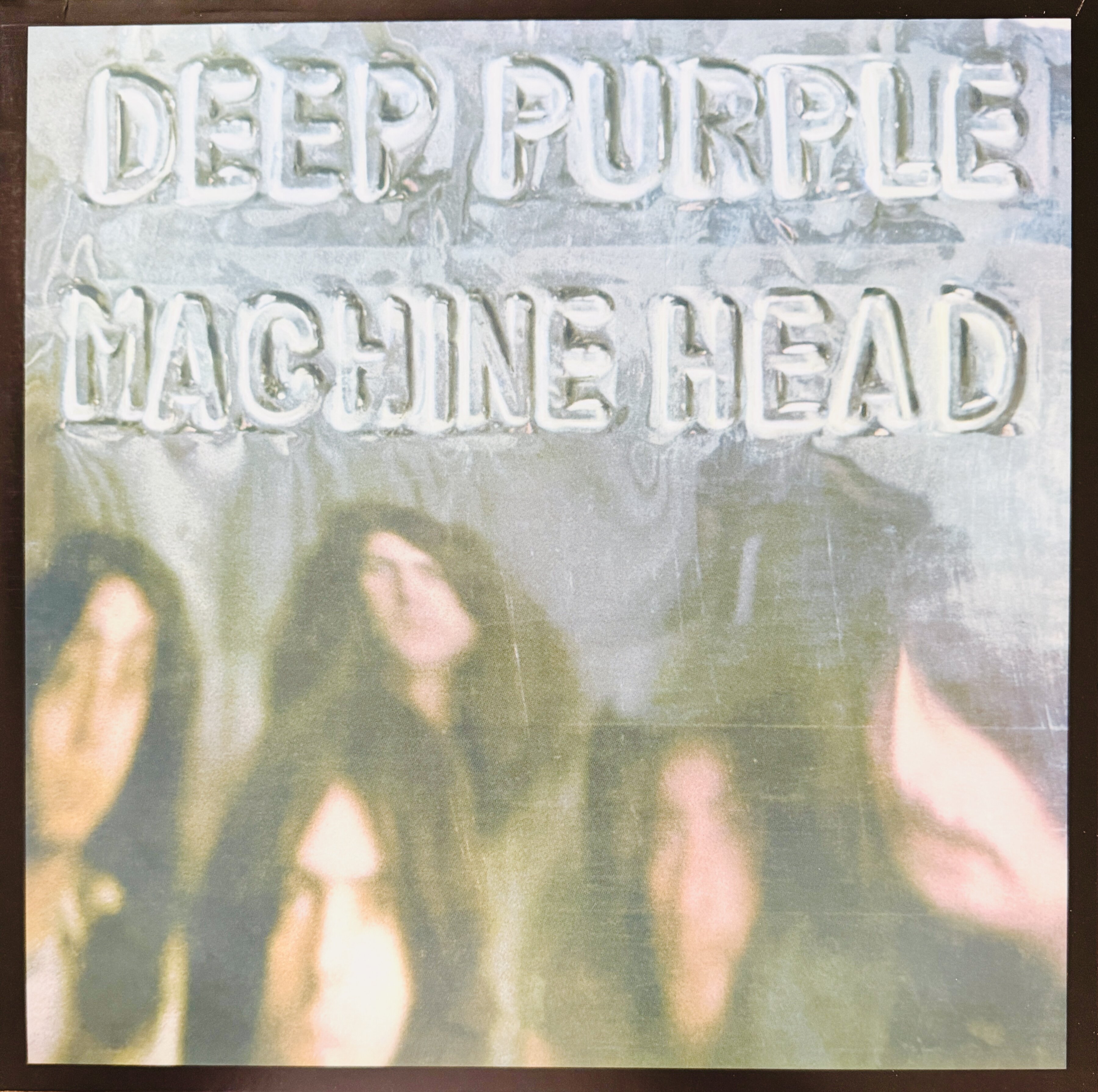
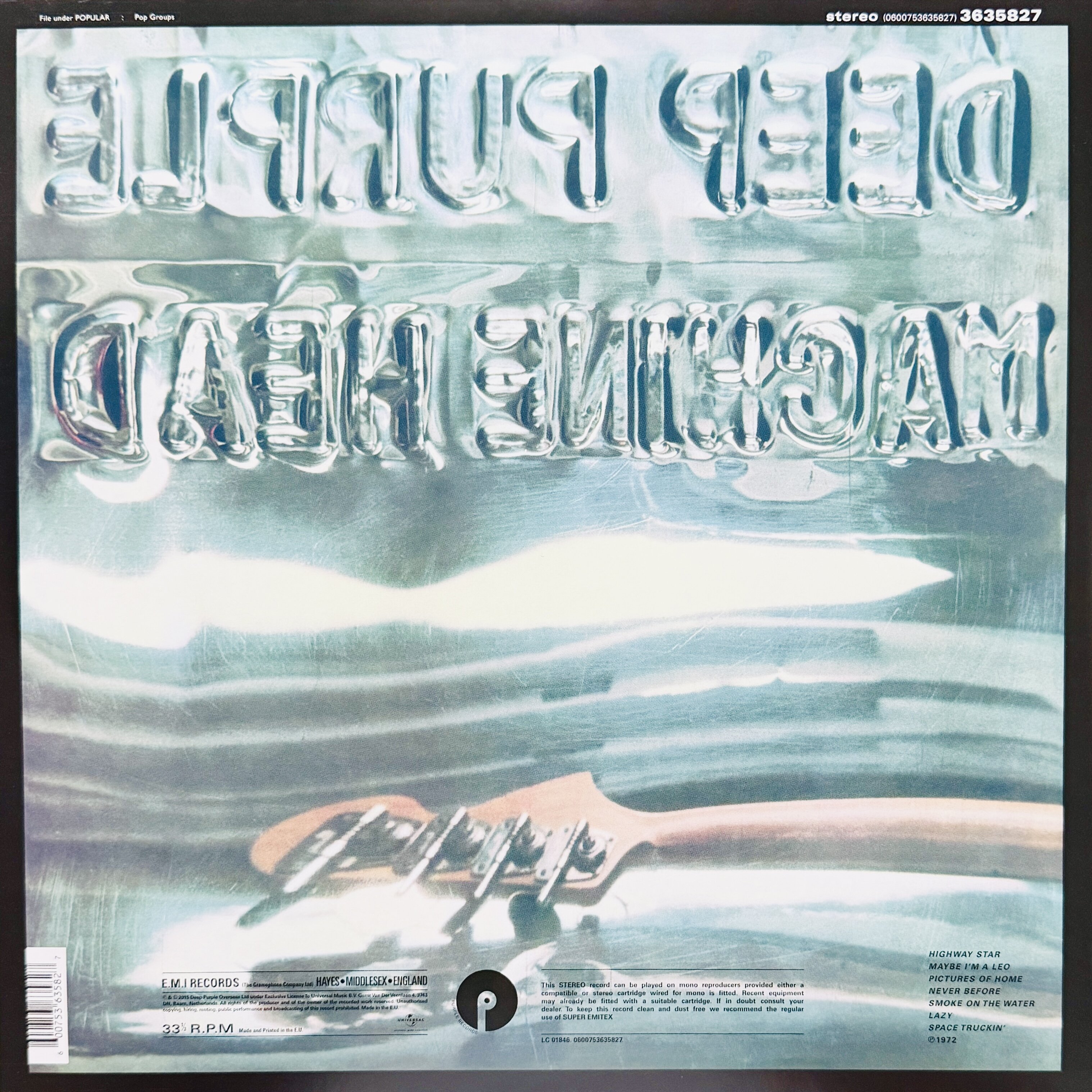
The title and iconic cover come from a mix of industrial aesthetics, a technical wordplay, and an emergency but brilliant photo session. The term “Machine Head” in English has a double meaning: the headstock of the guitar and bass and, in musical technical jargon, the machine heads on the headstock of string instruments, used to tune them. Translated as “Machine head”, the title reflected the band’s almost mechanical, precise and unstoppable sonic power in that period.
The album cover is one of the most famous in hard rock, but its creation was handmade and tied to the limited budget of bassist Roger Glover and photographer Shep Rosenberg.
Glover and Rosenberg took a sheet of shiny metal (a mirror-polished bronze plate) and brought it into the corridors of the Grand Hotel in Montreux, where the band was recording.
The photographer stood in front of the band holding the metal plate in front of himself. The members of Deep Purple stood facing the “mirror” and Rosenberg took the shot by aiming the lens directly at the metal’s reflection.
The stretched and distorted effect on the musicians’ faces is due to the natural curves and imperfections of the metal plate. In particular, guitarist Ritchie Blackmore’s face (top right) looks almost ghostly, and he moved so much during the shots that you can clearly see a motion trail.
This is a legendary album, one of the best not only by the band, but in the whole history of rock. It was a real turning point, defining the style and sound of modern hard rock. If 1970’s In Rock had marked the start of their heavier shift, Machine Head is its perfect evolution. The record is brilliant because it takes the raw energy of the early works and locks it into clean, accessible pop-rock structures, with an incredibly powerful sound for the time. Every song is packed with unforgettable riffs and solos that have become a must for every guitarist.
Machine Head’s impact was enormous. Along with the early albums by Black Sabbath and Led Zeppelin, it’s considered one of the three records that gave birth to heavy metal. Tracks like Highway Star and Pictures of Home, with their speed and precision, already contain the seeds of speed metal and neoclassical metal that would explode in the ’80s, influencing guitarists like Yngwie Malmsteen.
The album also captures Deep Purple’s Mark II lineup at its peak, shortly before internal clashes—especially between Ritchie Blackmore and Ian Gillan—led to the band’s breakup. The chemistry between the musicians, born in those hotel rooms in Montreux, remains one of rock’s finest things.
Machine Head is a timeless masterpiece, a fundamental record that has lost none of its force and that continues, decades later, to redefine what power in music means. Essential.
My Version
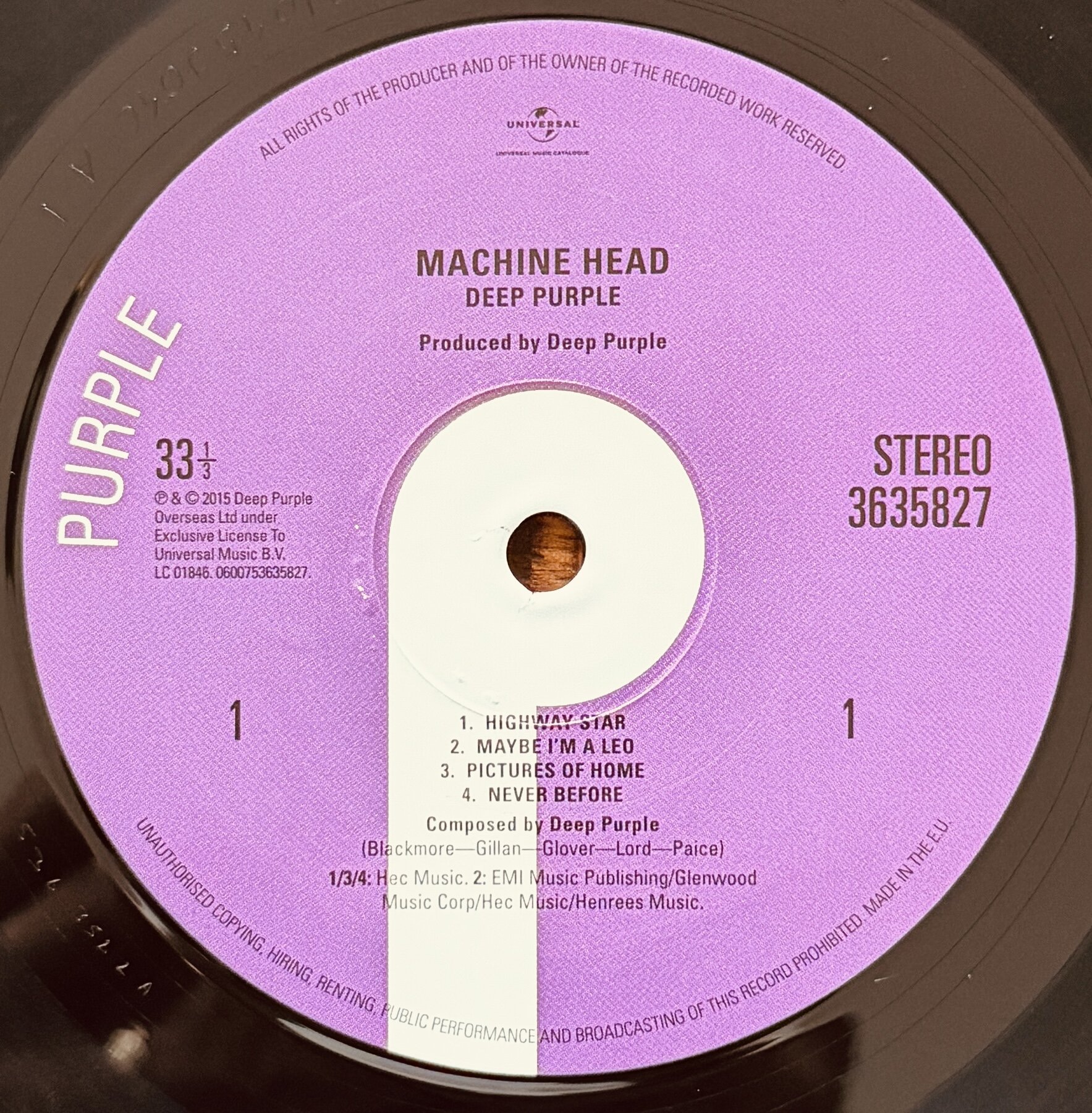
Label: Purple Records – 3635827, Universal Music Catalogue – 3635827, Purple Records – 0600753635827, Universal Music Catalogue – 0600753635827
Format: Vinyl, LP, Album, Reissue, Remastered, Stereo, Gatefold
Country: Europe
Release: 2015
Genre: Rock
Style: Hard Rock, Heavy Metal
Tracklist
A1 Highway Star 6:05
A2 Maybe I'm A Leo 4:51
A3 Pictures Of Home 5:03
A4 Never Before 3:56
B1 Smoke On The Water 5:40
B2 Lazy 7:19
B3 Space Truckin' 4:31
Lineup
Ian Gillan – vocals, harmonica
Ritchie Blackmore – guitar
Jon Lord – Hammond organ, piano and keyboards
Roger Glover – bass
Ian Paice – drums and percussion