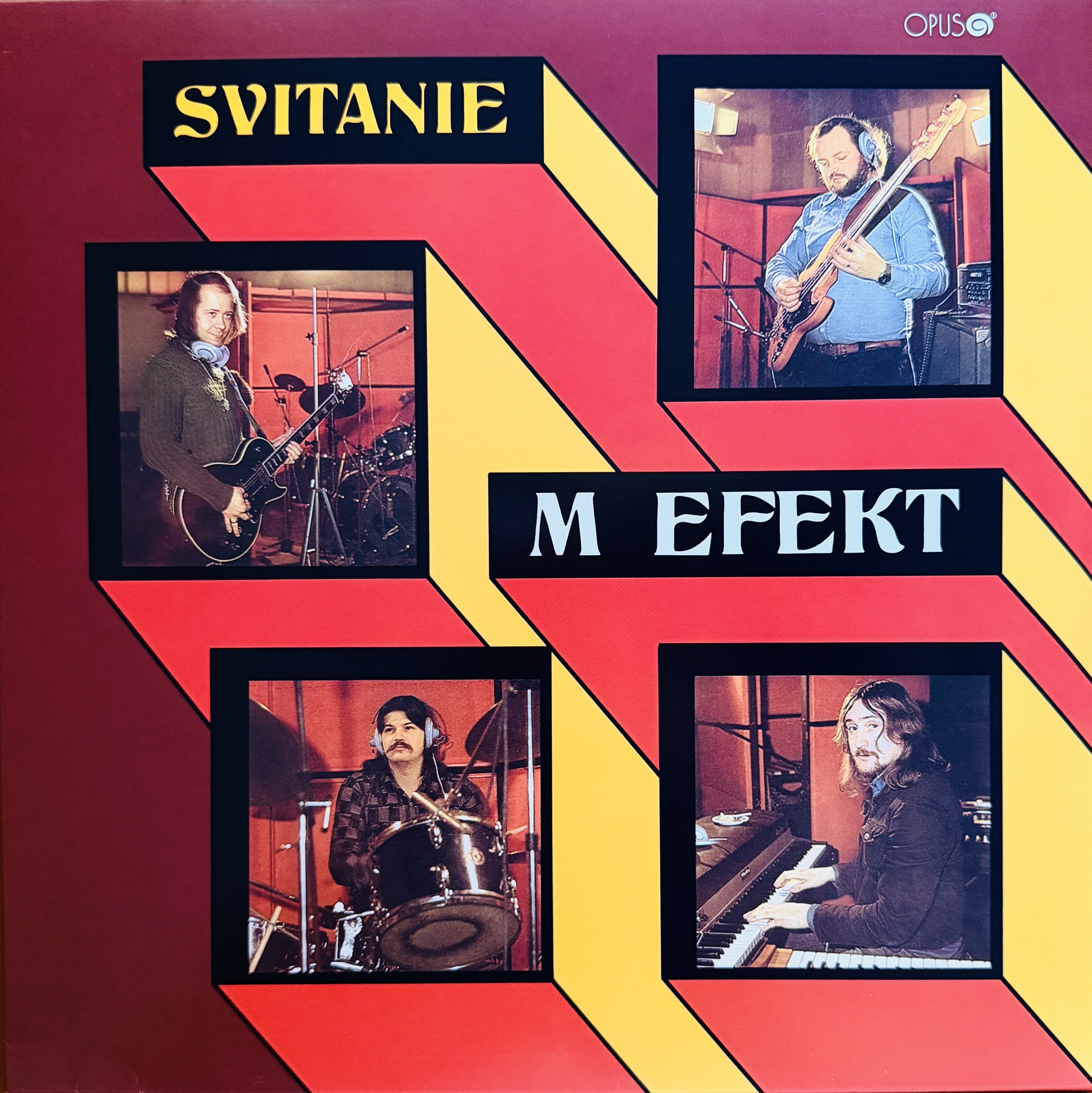
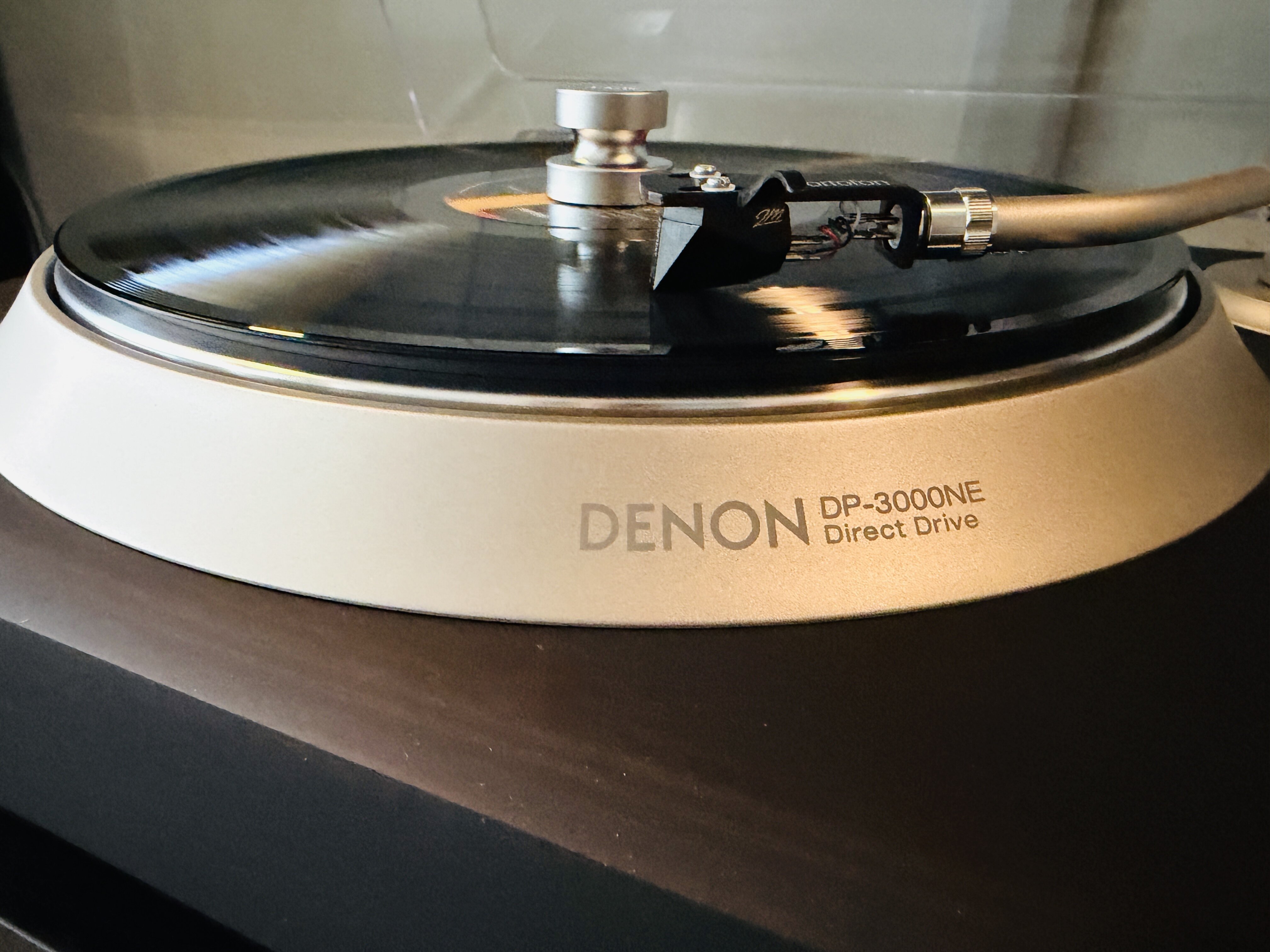
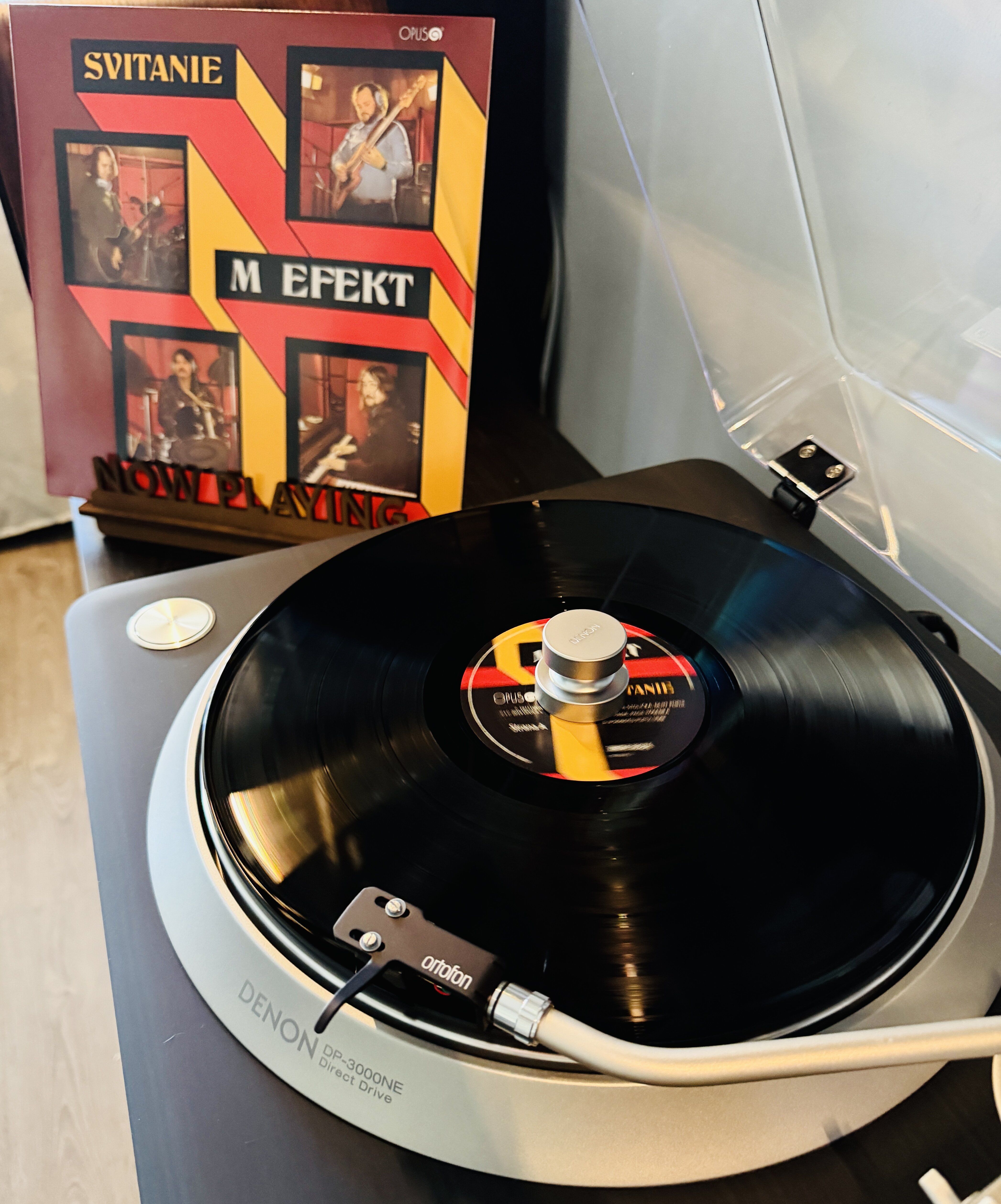
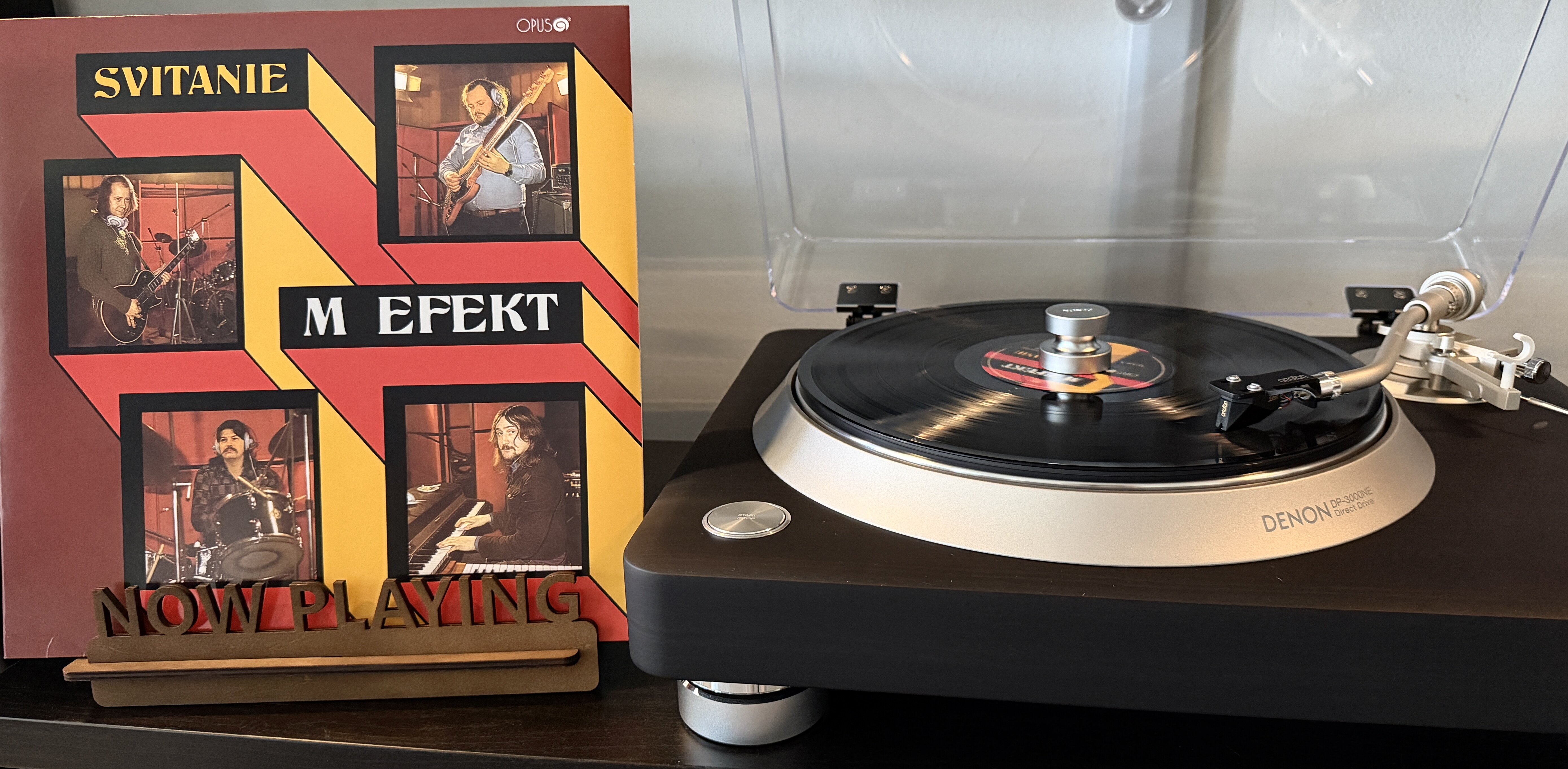
Svitanie by Blue Effect (M. Efekt), from 1977.
Svitanie is the seventh studio album by the legendary Czechoslovak band Blue Effect, credited on the cover as M. Efekt.
It is their masterpiece, a milestone of progressive rock and jazz-rock from Eastern Europe.
To understand how the album was born, we need to go back in time, to 1970s Czechoslovakia, a period marked by the “Normalization” imposed by the Soviets after the Prague Spring.
The communist regime tightly controlled rock music, forcing bands to delete lyrics in English and even to change English-sounding names. The musicians, who were initially called The Blue Effect (an ironic name referring to the “blue booklet”, the document that allowed you to avoid military service), were forced to change their name to Modrý Efekt, the Czechoslovak version of the original name, and then to shorten it to the enigmatic M. Efekt to evade government checks.
Svitanie, which in Slovak means “Dawn” or “Aurora”, marks a real artistic turning point for the band, thanks to the lineup revolution led by virtuoso guitarist Radim Hladík.
Hladík brought together musicians from three key cities in Czechoslovakia: Prague, Brno and Bratislava, creating a true supergroup.
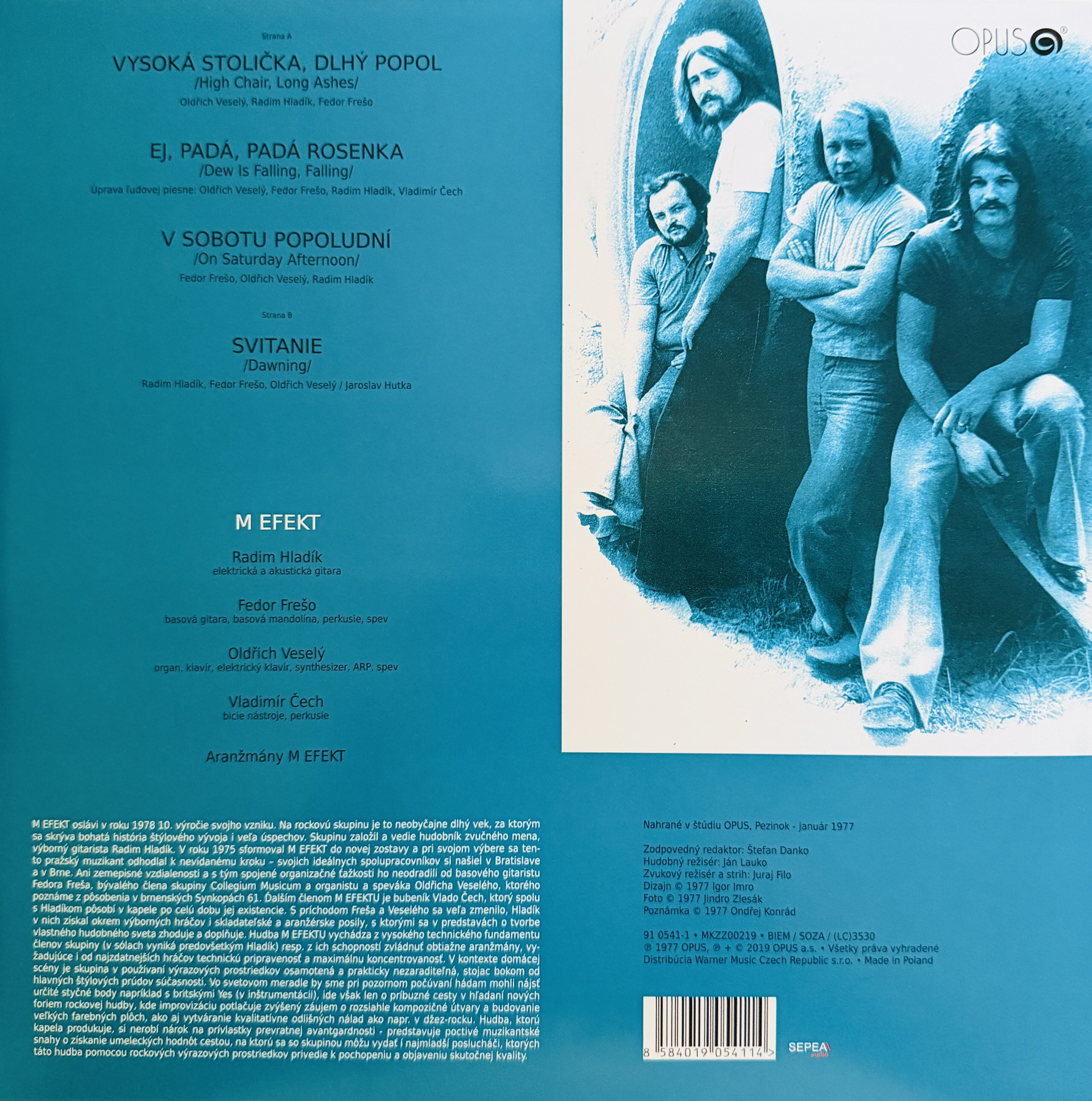
The lineup included Radim Hladík on electric and acoustic guitar, Vladimír Čech on drums and percussion, Fedor Frešo on bass and mandolin (former member of Collegium Musicum, a true institution of Slovak prog) and Oldřich Veselý on keyboards and vocals (from Synkopy 61).
Veselý’s arrival brought with it an avalanche of synthesizers, including ARP and string synths, Rhodes electric pianos and organs, shifting the band’s focus away from the orchestral arrangements and brass of the two Nová Syntéza toward a spacey symphonic prog, dominated by keyboards and inspired by the sound of groups like Yes, Emerson, Lake & Palmer and Focus.
“Svitanie” is a mainly instrumental album, with only a few moments where you hear the voice, and these are sung entirely in Slovak.
Even though Blue Effect were a Prague band, therefore Czech-speaking, the lyrics and titles on this album are in Slovak.
To avoid Prague’s strict censorship rules, the band moved to the less severe studios of the Slovak state label, Opus Records. However, the label imposed one key condition: song titles and sung parts had to be in Slovak. The final suite “Svitanie”, written by the famous folk singer-songwriter Jaroslav Hutka, is the only part of the album with real sung verses, performed in Slovak by Oldřich Veselý and Fedor Frešo.
Here is the complete tracklist of the album with the original Slovak titles, their literal translation and the meaning of the pieces:
Vysoká stolička, dlhý popol (High chair, long ash) is an evocative metaphor that represents the passing of time and reflection. Imagine someone sitting and smoking, the cigarette slowly burning down, leaving behind a long ash, while they are lost in their thoughts.
“Ej, padá, padá rosenka” (Hey, the dew is falling, falling) is the title of a famous traditional Moravian song about love and nature. The falling dew represents melancholy, the freshness of morning and the deep bond with the land.
“V sobotu popoludní” (On Saturday afternoon) is an apparently simple title, but it contains the album’s most dynamic, jazz-fusion track. It perfectly evokes the feeling of freedom, relaxation and motion that defines the weekend.
Svitanie (Dawn or Sunrise) is a monumental suite that gives its title to the whole LP. It represents the record’s central concept: the passage from the darkness of night to the light of morning, interpreted both in a natural sense and as a metaphor for hope and inner awakening.
Svitanie is the masterpiece of Eastern European symphonic progressive rock, with a strong jazz-rock/fusion influence and subtle hints of Slavic folk, with a spacey sound dominated by massive walls of keyboards and Radim Hladík’s versatile guitar, strongly recalling major Western names like Yes, Focus, King Crimson and Emerson, Lake & Palmer.
Keyboardist Oldřich Veselý expresses himself with a wide range of synthesizers (ARP, Moog, string machine) and the Rhodes electric piano, creating a futuristic atmosphere over which Hladík’s guitar can roam between sharp riffs and bluesy solos.
The rhythm section is simply stellar. Fedor Frešo’s virtuosic bass, a true local prog legend, blends with Vladimír Čech’s dynamic drumming, able to alternate odd prog time signatures with syncopated patterns close to Billy Cobham-style fusion, as you can clearly hear on “V sobotu popoludní”.
When it comes to this record, it’s hard to say what the real masterpiece is.
On one side, there is “Svitanie”, the title track, the band’s most ambitious work. This nearly twenty-minute suite never gets boring, thanks to its well-designed structure. It starts with an ambient, mysterious introduction, then grows with solemn organ movements and ends with a powerful, overwhelming rock jam session. In between, we find one of Radim Hladík’s most intense guitar performances, followed by a choral vocal section of rare beauty and epic scope, representing the very rising of the sun.
On the other side, there is “Ej, padá, padá rosenka”, a shorter but equally important piece, an art-rock masterpiece in which the band takes a traditional folk melody and turns it into an energetic progressive gallop. The melodic opening led by the guitar, reminiscent of Focus’ style, became one of the most famous and beloved themes in Czechoslovak rock, and has accompanied the band for decades in their concerts.
Radim Hladík’s guitar performance is simply outstanding. Hladík manages to combine rock energy, blues melody and fusion precision, putting himself on a par with great Western guitarists like Jan Akkerman of Focus and Steve Howe of Yes.
Another strength is the perfect balance among the various instruments. The album flows smoothly. Veselý’s keyboards never overpower Čech and Frešo’s rhythm section, but create symphonic atmospheres that enrich the long instrumental sections.
The album has a strong Slavic identity. It is not a simple imitation of British progressive, but incorporates elements of Moravian musical tradition and melancholy melodies that give it a unique, deep and dramatic soul.
The album leans more toward symphonic rock and space prog than true fusion, despite the brief funk-fusion foray of “V sobotu popoludní”.
A must-have album for anyone who wants to discover progressive rock outside the usual Anglo-American circuits. A technically impressive work. Essential.
My Copy
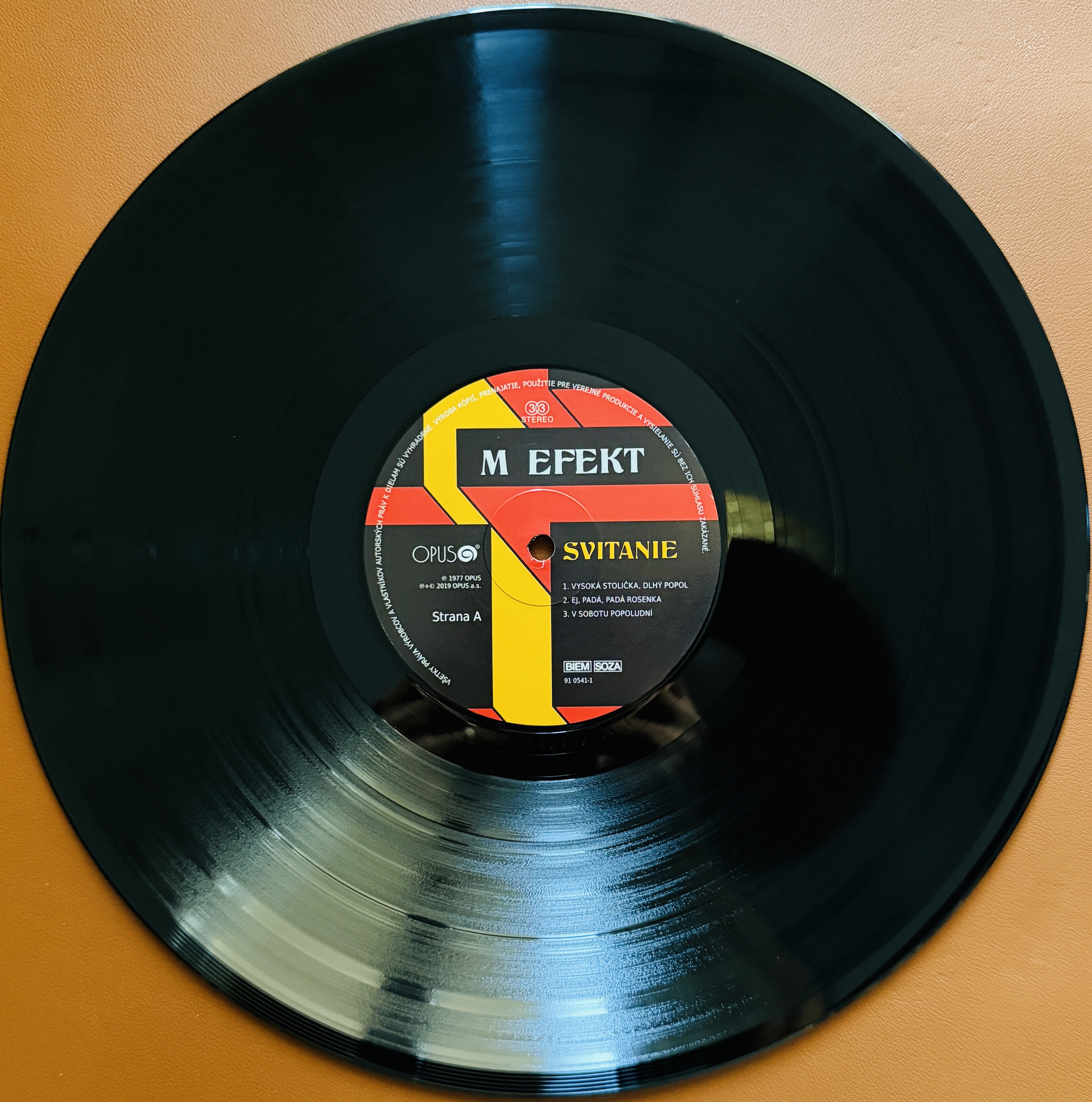
Label: Opus – 91 0541-1
Format: Vinyl, LP, Album, Reissue
Country: Slovakia
Released: 2019
Tracklist
A1 Vysoká Stolička Dlhý Popol 10:15
A2 Ej, Padá, Padá Rosenka 6:38
A3 V Sobotu Popoludní 4:13
B Svitanie 19:26
Lineup
Bass Guitar, Mandolin [Bass], Vocals, Percussion – Fedor Frešo
Drums, Percussion – Vladimír Čech
Electric Guitar, Acoustic Guitar – Radim Hladík
Organ, Piano, Electric Piano, Synthesizer [String, Arp], Vocals – Oldřich Veselý