Not Only Prog: At Fillmore East by The Allman Brothers Band, from 1971.
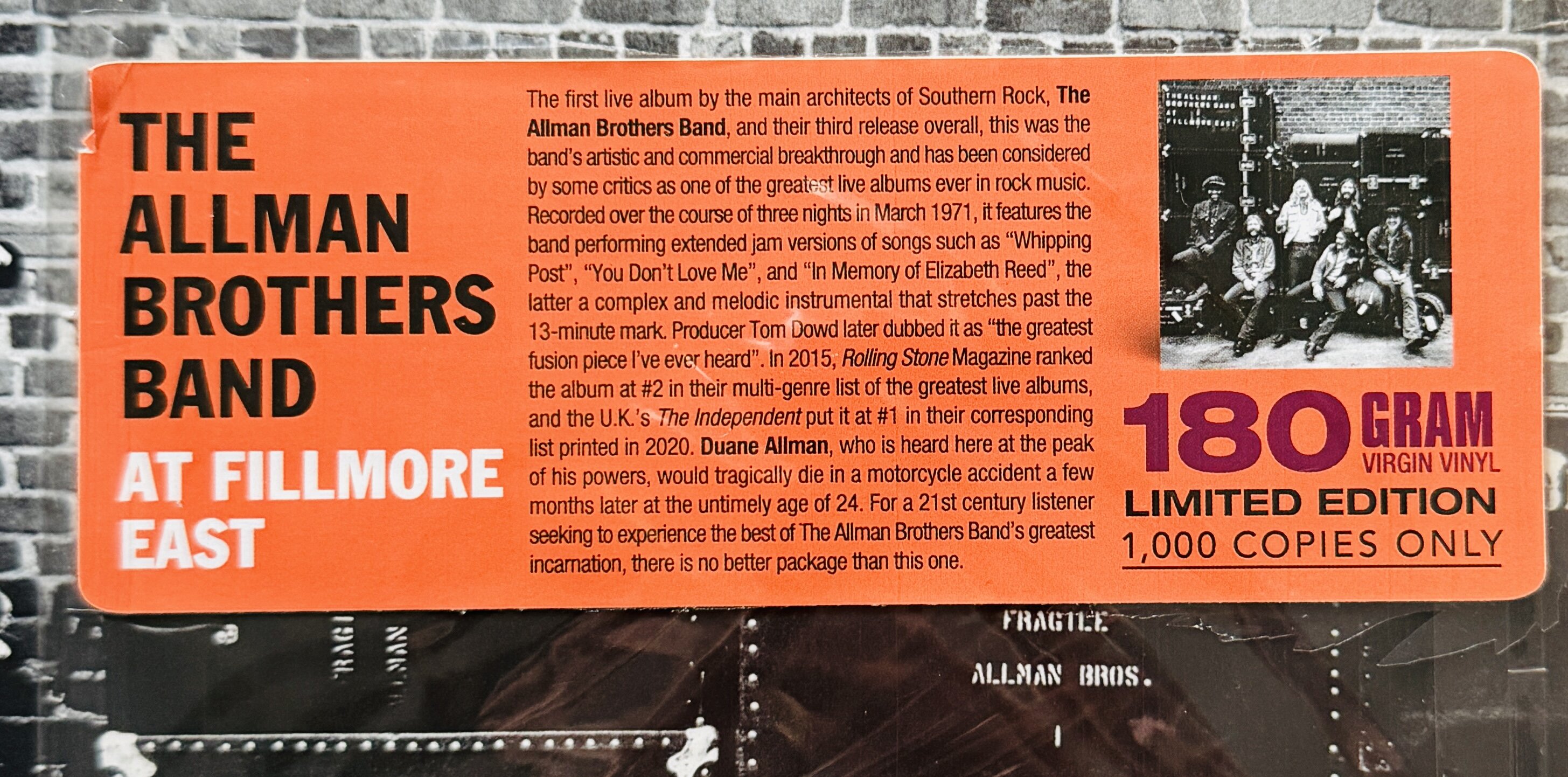
At Fillmore East is a true pillar of rock and the album that forever changed the way a live record is conceived. It captures the essence of a band playing in perfect sync, able to blend blues, rock, jazz and Latin American influences in a unique way.
Before 1971, brothers Duane and Gregg Allman had already released two studio albums with their band: “The Allman Brothers Band” in 1969 and “Idlewild South” in 1970. While they were records of great artistic quality, they hadn’t achieved major commercial success.
The group’s real strength, though, was live shows: their performances were long and intense, marked by complex improvisations and flawless technique. Together with their trusted producer, Tom Dowd, the band realized that the only way to best represent their music was to record a live album. Their manager too, Phil Walden, agreed with the idea, convinced that the rock audience of the time was ready for something more than simple three-minute songs.
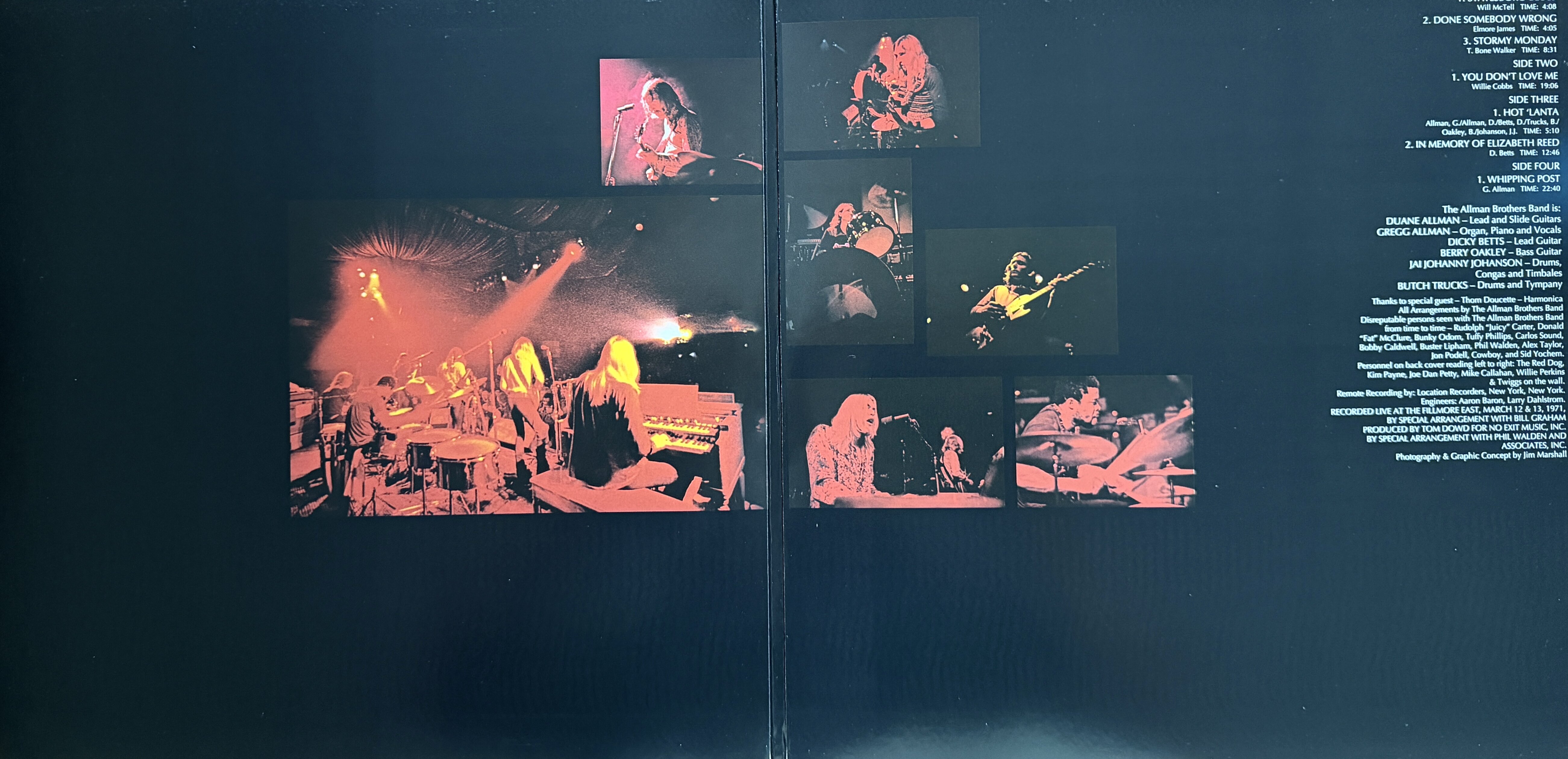
The Fillmore East in New York City, the legendary venue run by Bill Graham, was chosen as the location for the recordings. For Duane Allman and his bandmates, the Fillmore was a special place, almost a sanctuary, a second home, thanks to the always warm, knowledgeable, engaged crowd. The recordings took place during the concerts of March 12 and 13, 1971. The band played two sets per night (one afternoon/evening and one late-night), for a total of four shows carefully recorded by Tom Dowd using a mobile studio.
The album features the six-piece lineup, the band’s original and definitive formation. Duane Allman handles lead guitar and slide guitar, while Gregg Allman sings and plays Hammond B3 organ and piano. Dickey Betts contributes lead guitar and backing vocals, Berry Oakley electric bass. Jai Johanny “Jaimoe” Johanson plays drums, congas, and timbales, and Butch Trucks drums and timpani.
This album isn’t just a rock record, but a true manifesto of Southern Rock, thanks to its innovative blend of different genres. At its core are Electric Blues and R&B, which represent the band’s deep roots. The record reinterprets blues classics by masters like Blind Willie McTell, Elmore James, and T-Bone Walker, transforming them with a powerful, electric rock energy.
There’s Modal Jazz, which shapes the approach to improvisation, drawing on the late ’50s and ’60s style, especially that of Miles Davis and John Coltrane. The band doesn’t limit itself to virtuosic solos, but devotes itself to long improvisations based on precise scales and chords, where all the musicians interact continuously.
The sound is defined by the telepathic duel between the lead guitars of Duane Allman and Dickey Betts, who often play in harmonies and parallel thirds, and by the twin rhythmic engine of the two drum kits, able to alternate syncopated time and Latin accents.
Three tracks stand out among the highest points of those nights’ recordings.
“Statesboro Blues” opens the album with overwhelming energy. It’s the highlight of Duane Allman’s slide guitar, played with a Coricidin glass bottle. The opening riff is one of the most famous and recognizable in rock.
“Stormy Monday” is an extraordinary version of T-Bone Walker’s classic blues. The strong point is the dynamics: the band slows the tempo, turning it into a smoky, nocturnal blues, enriched by Gregg Allman’s exceptional Hammond B3 organ solo and Dickey Betts’s clean, precise runs.
“In Memory of Elizabeth Reed” is a 13-minute jazz-rock instrumental composed by Dickey Betts. It represents the high point of the rhythm section: the piece unfolds through constant shifts in time and mood, driven by Berry Oakley’s pulsing bass, up to a hypnotic percussion-and-drum solo.
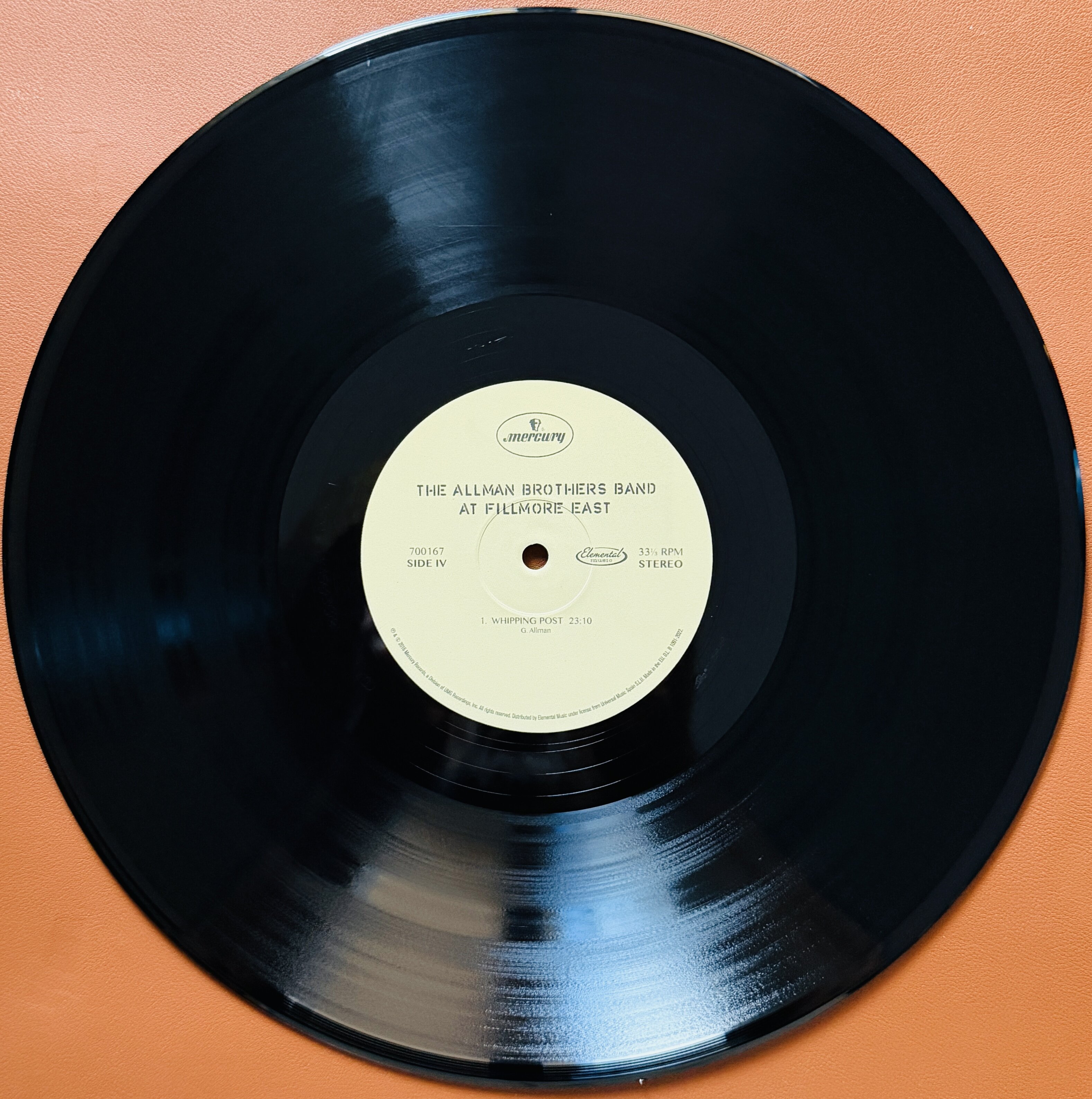
The album’s centerpiece (and one of rock’s greatest artistic statements) is the monumental version of “Whipping Post”, which takes up the entire fourth side of the original vinyl, reaching a full 23 minutes. A masterpiece without equal in its genre.
The piece begins with Berry Oakley’s famous bass figure in an unusual, complex meter, 11/8, creating magnetic tension and unease before flowing into the classic 6/8.
Gregg’s vocal performance is full of pain and anger, able to convey the lyric’s hurt (a metaphor for a tormented relationship), accompanied by the screams of his own keyboard.
Over its 23 minutes, the piece stops being a simple rock song and becomes an improvisational suite. Duane Allman and Dickey Betts create indescribable sonic textures, alternating moments of almost imperceptible silence with devastating sonic explosions. The band shows a dynamic control and cohesion that very few groups in the history of live music have ever managed to match.
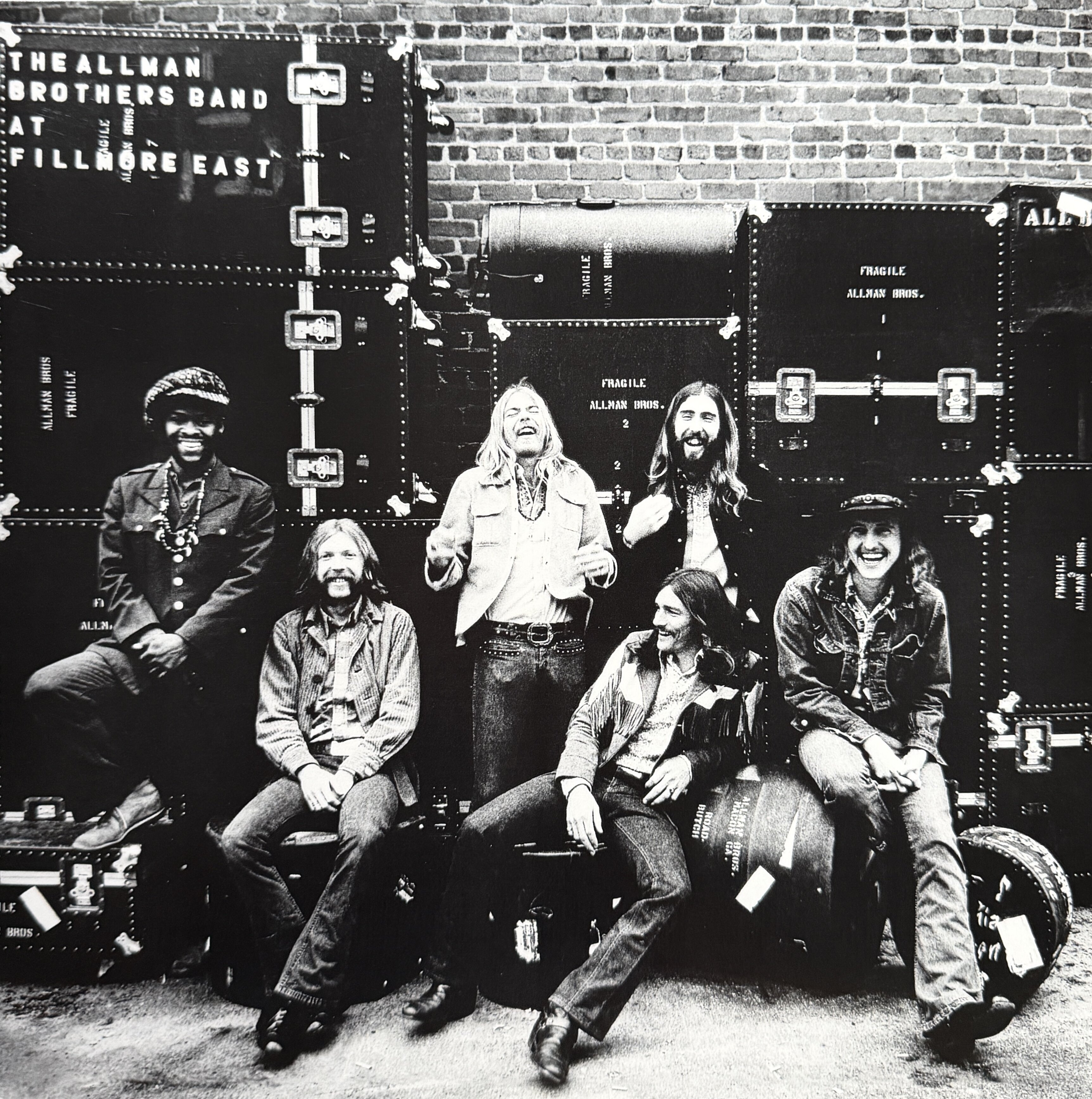
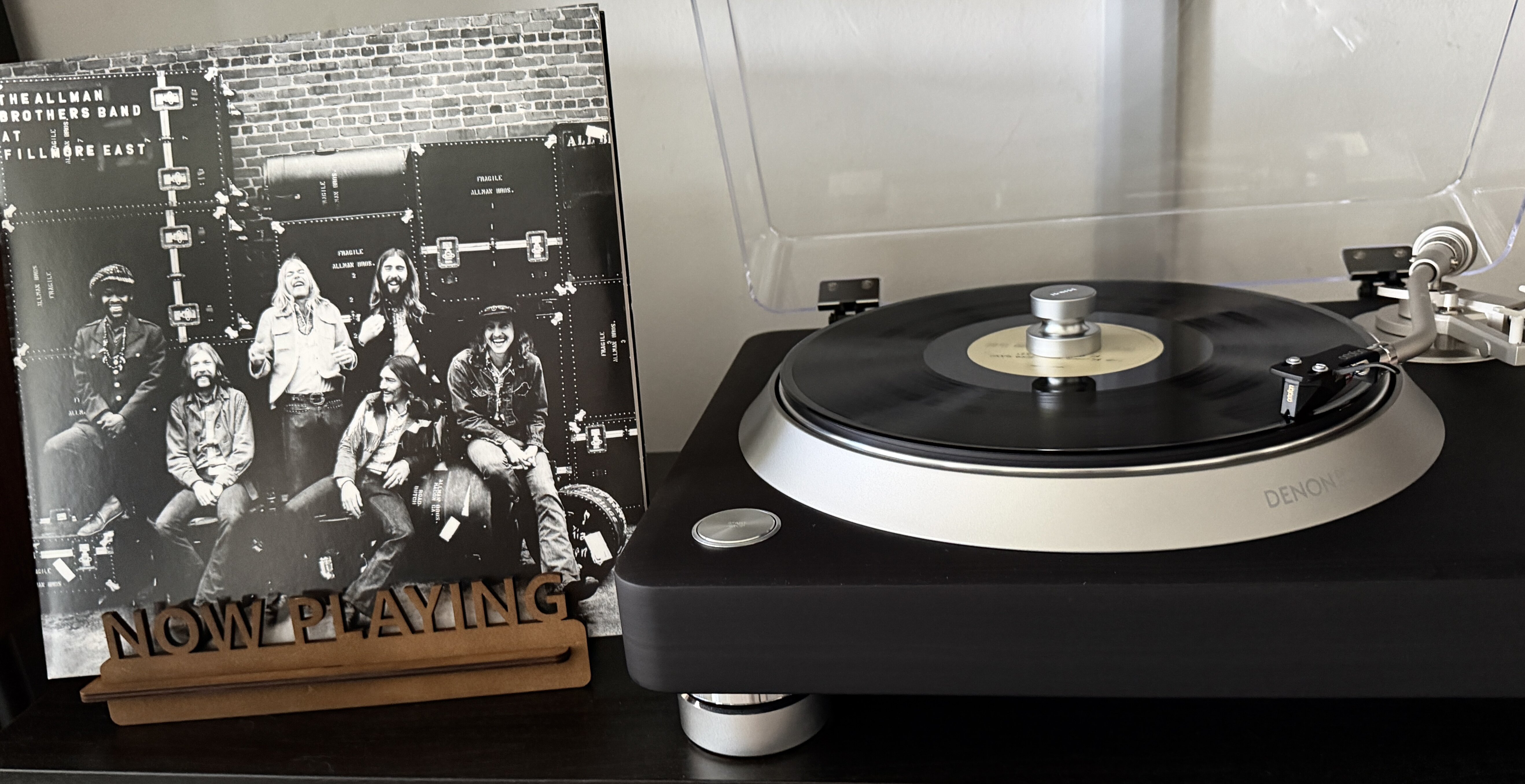
The cover of “At Fillmore East” is a classic-rock icon, perfectly capturing the band’s communal, genuine essence. The man who immortalized this moment was Jim Marshall, one of rock’s most celebrated photographers, known for his legendary portraits of Jimi Hendrix at Monterey and Johnny Cash at San Quentin.
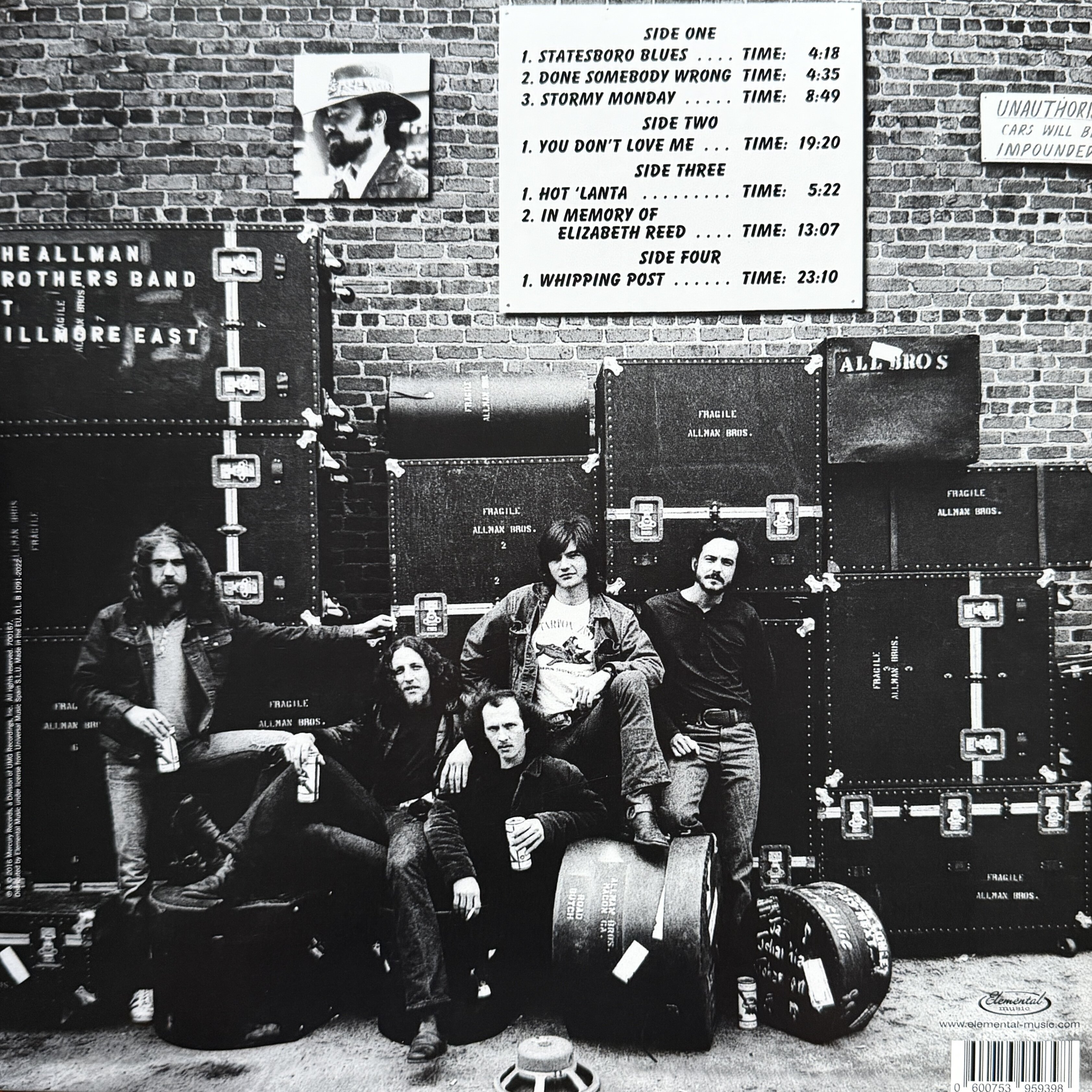
Although the album celebrates the New York concerts, the photo on the front wasn’t taken at the Fillmore East, but in Macon, Georgia, hometown of Capricorn Records and headquarters of the Allman Brothers Band. The image shows the group leaning against a bare brick wall in an alley near the insurance broker Fickling & Walker. The musicians, notoriously reluctant to pose, were rather tense during the shot. It was the sudden arrival of their dealer that triggered the group’s spontaneous laughter, especially Duane Allman, in the center, who was hiding the substances he had just bought. On the back cover, instead, there’s the band’s crew and the musicians set in a snowy New York street, surrounded by their famous black travel trunks with the group’s name stenciled on. The absence of flashy graphics or psychedelic lettering reflected the Allman brothers’ philosophy: no pop stardom, just the music at the center of everything.
More than fifty years after its release, “At Fillmore East” is a legendary album.
In 2004, it was added to the National Recording Registry of the United States Library of Congress, an honor reserved for recordings of particular cultural, historical, or aesthetic importance to American life.
The album is the starting point of Southern Rock, but at the same time it goes beyond it, proving that a rock band could compete with the great jazz groups in improvisation, dynamism, and technique, while still keeping the soul and warmth of rural blues.
It’s the album on which Duane Allman and Dickey Betts redefined the role of the lead guitar in rock, making it essential listening for anyone who studies the instrument.
An essential record in any collection.
My Version
Label: Mercury – 700167, Elemental Music – 700167
Format: 2 x Vinyl, LP, Album, Reissue, Stereo, 180 gr
Country: Europe
Released: 28 Oct 2022
Genre: Rock, Blues
Style: Blues Rock, Southern Rock
Tracklist
A1 Statesboro Blues 4:08
A2 Done Somebody Wrong 4:05
A3 Stormy Monday 8:31
B You Don't Love Me 19:06
C1 Hot 'Lanta 5:10
C2 In Memory Of Elizabeth Reed 12:46
D Whipping Post 22:40
Lineup
Bass Guitar – Berry Oakley
Drums, Congas, Timbales – Jai Johanny Johanson
Drums, Percussion [Tympani] – Butch Trucks
Harmonica, Other [Thanks To Special Guest] – Thom Doucette
Lead Guitar – Dicky Betts
Lead Guitar, Slide Guitar – Duane Allman
Organ, Piano, Vocals – Gregg Allman