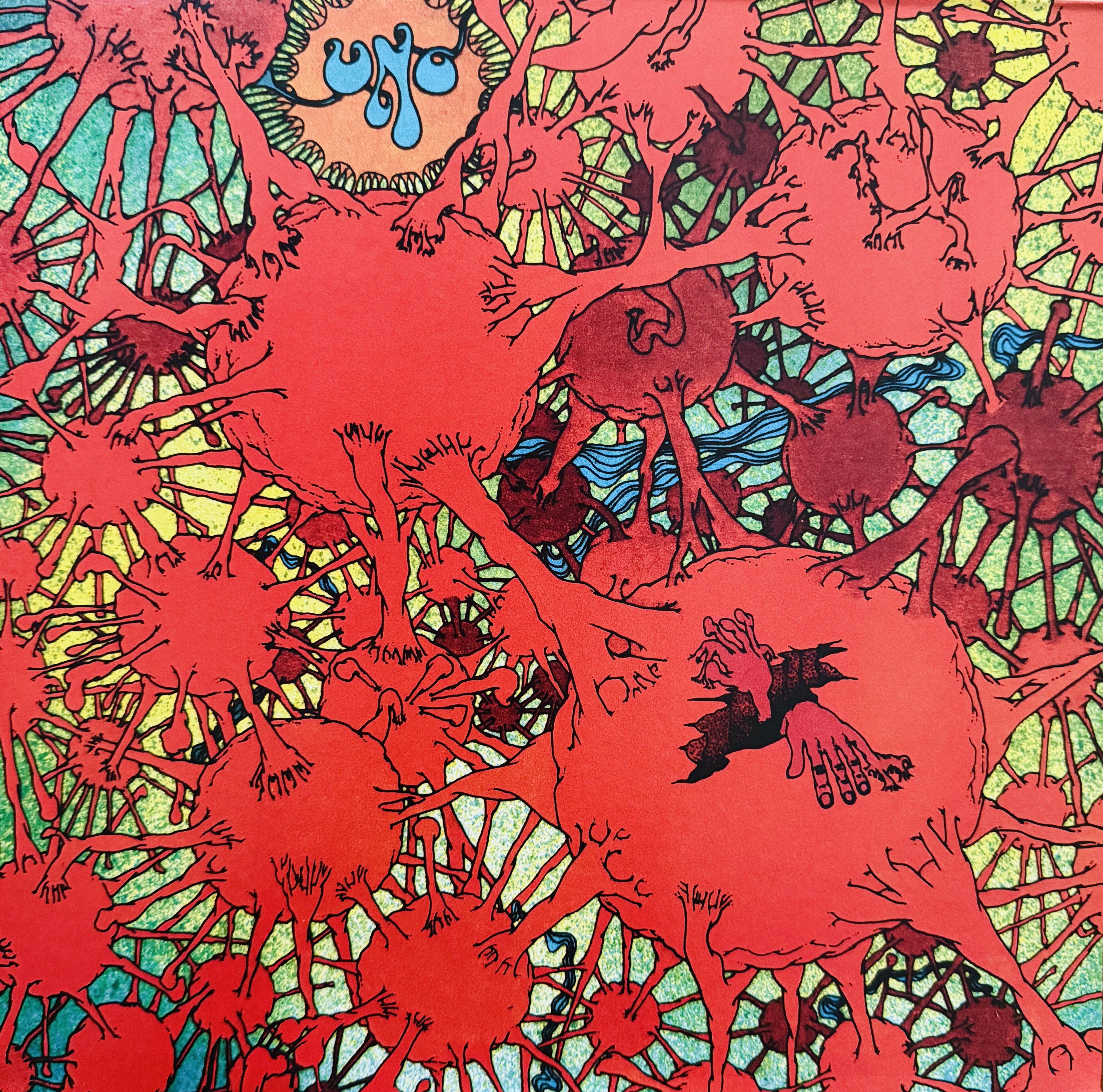
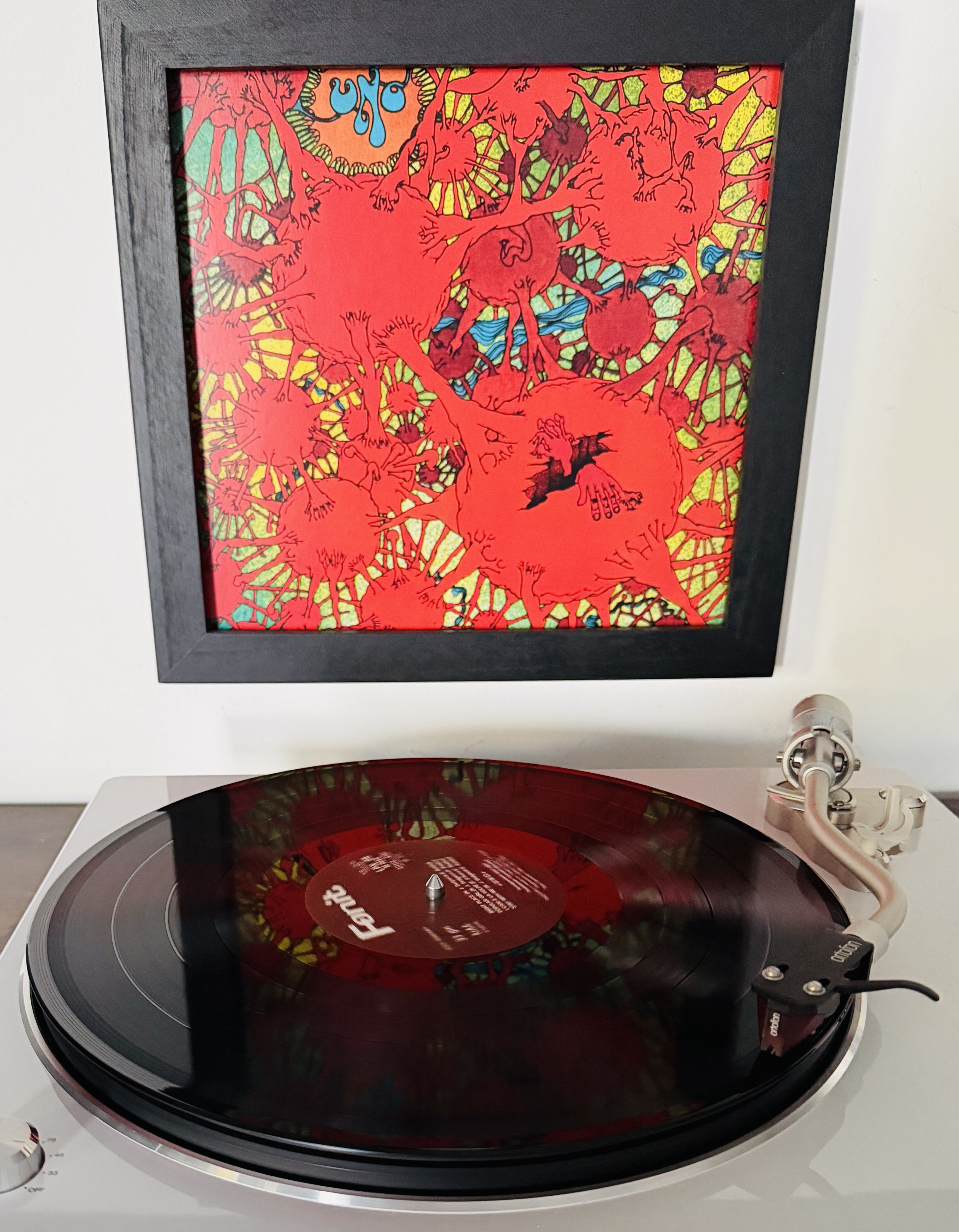
Uno, self-titled debut album, from 1974.
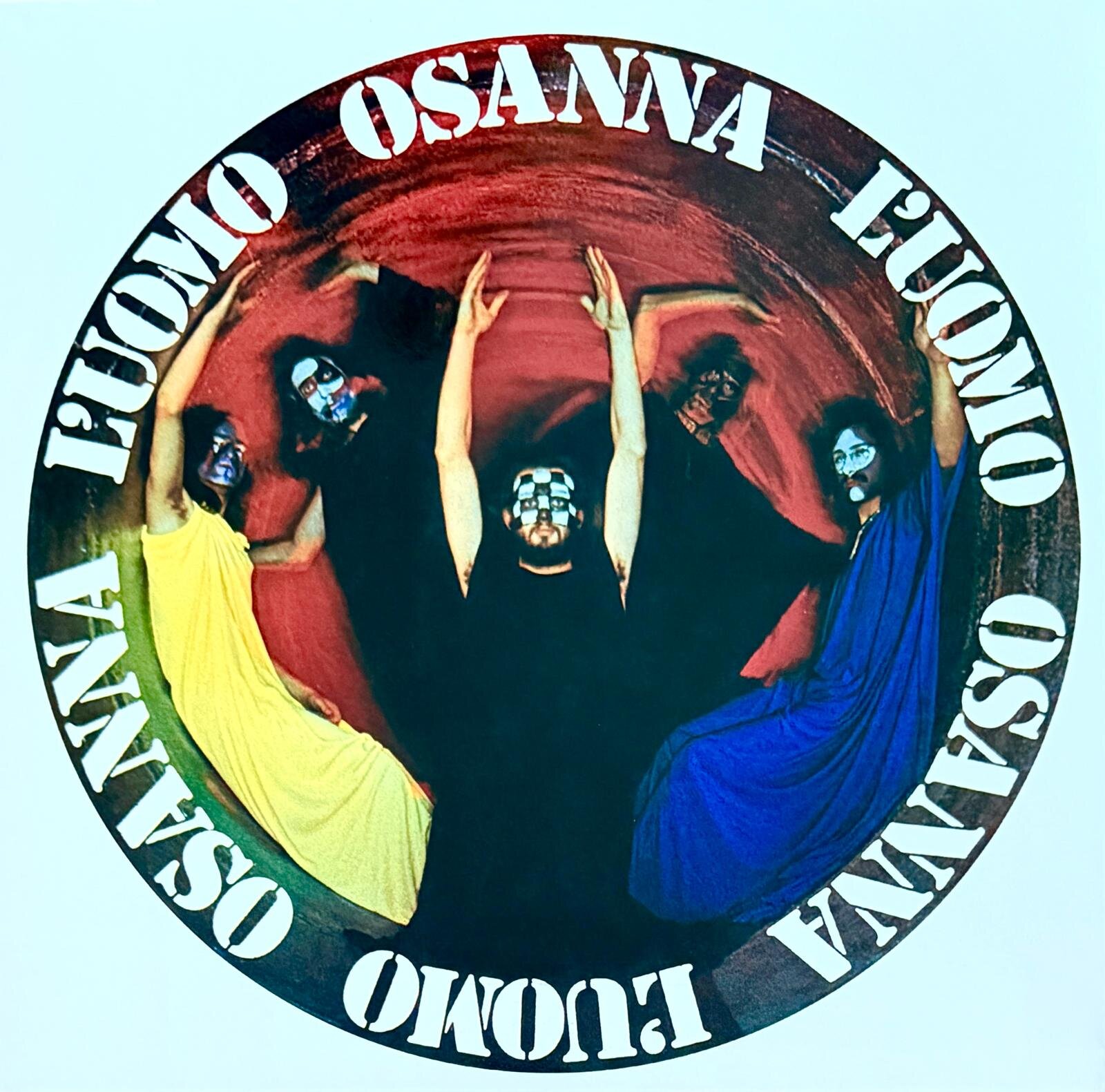
At the end of 1973, in Naples, from the temporary break-up of the Osanna, one of the most important Italian progressive rock groups, the band Uno was born. Due to strong internal tensions, the Osanna had split up, but two of the founding members, Elio D’Anna (sax and flute) and Danilo Rustici (guitar, keyboards and vocals), decided to join forces for a new project with international ambitions.
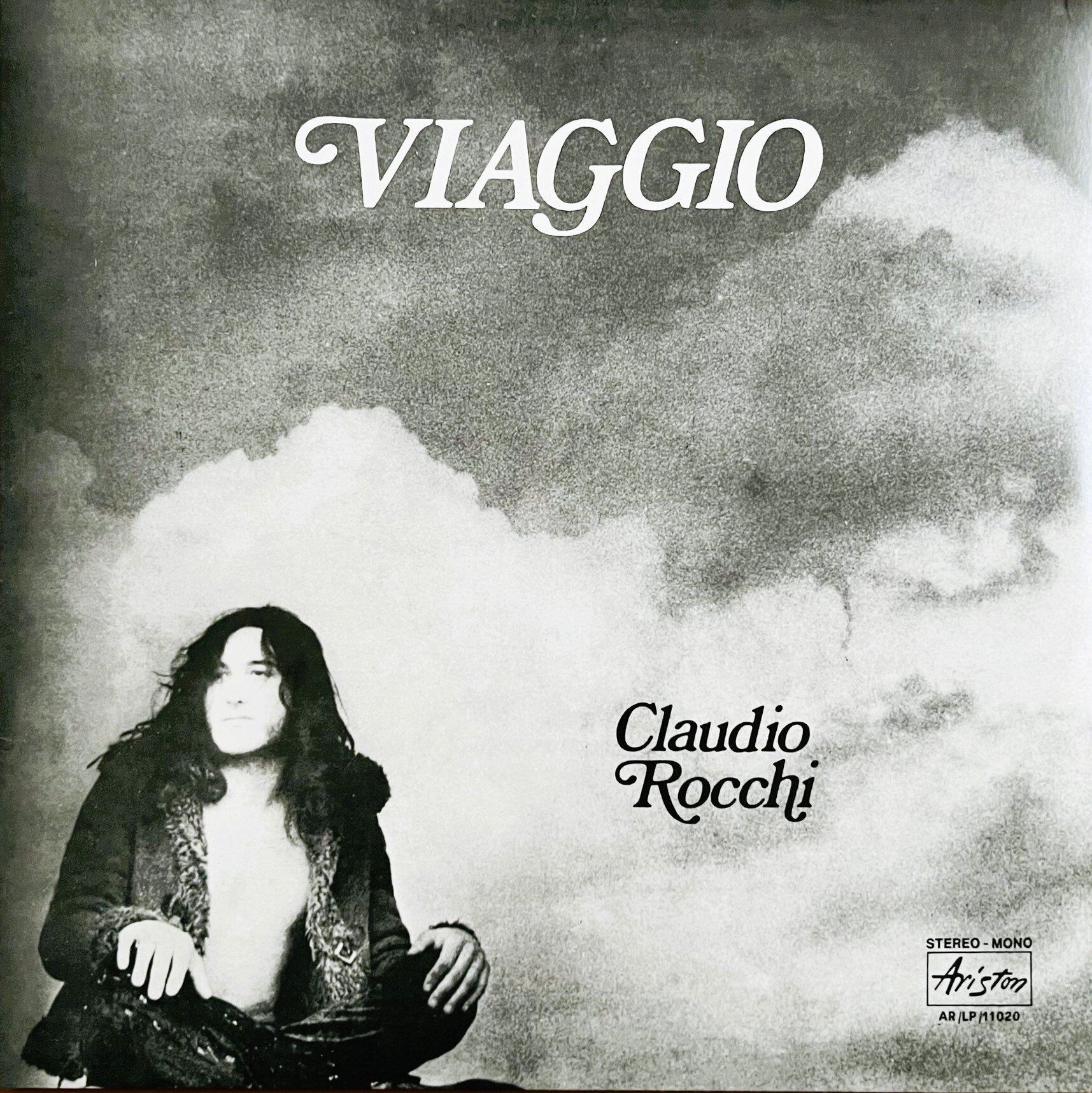
Initially, they had involved percussionist Toni Esposito, but the collaboration didn’t work out. So they recruited drummer Enzo Vallicelli, who had already played with Claudio Rocchi and Osage Tribe. The trio was born amid huge expectations from the music press, which presented them as a true super-band.
To record their album, the trio moved to London, to the prestigious Trident Studios.
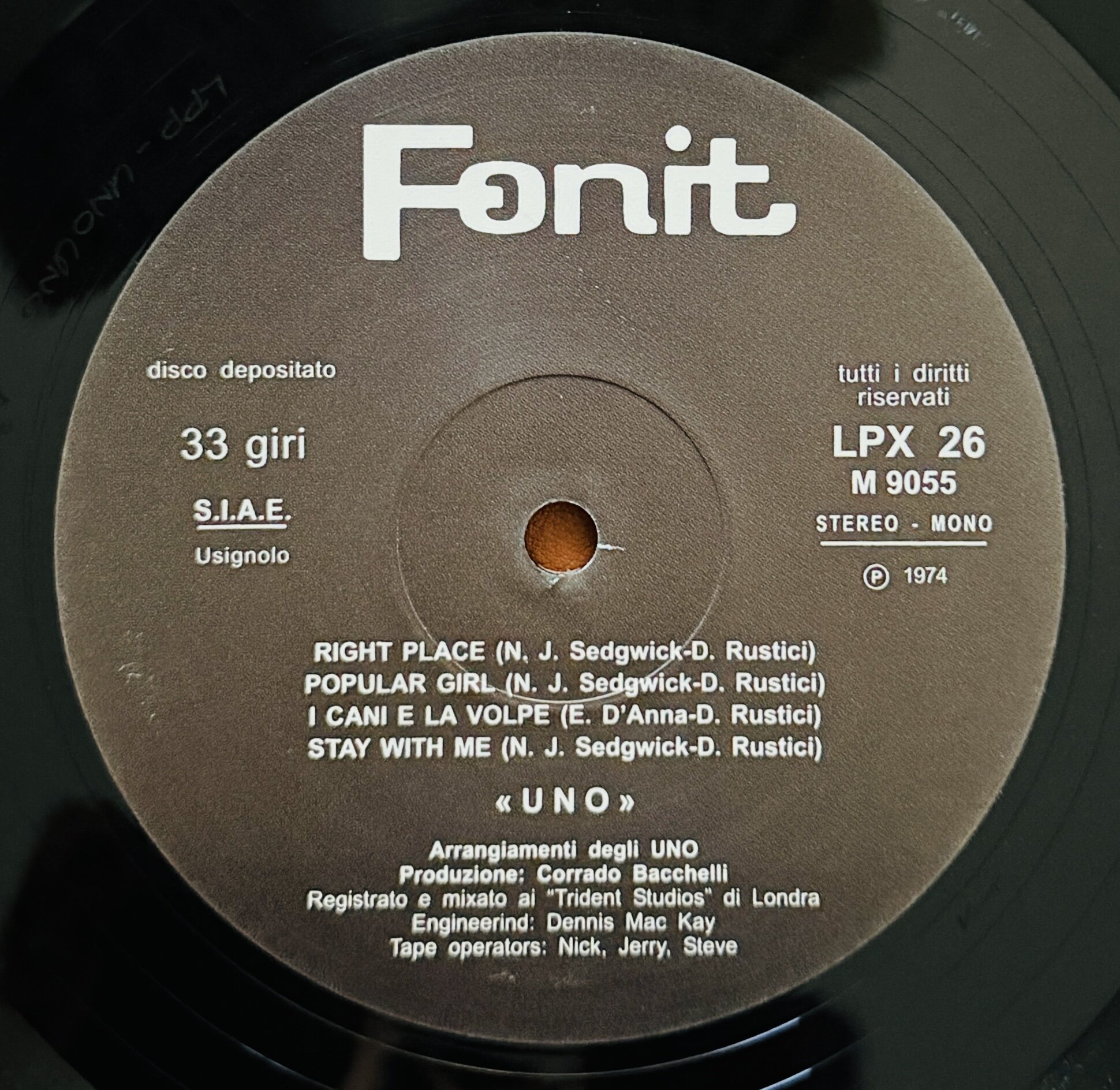
The album contains seven tracks, split in an experimental way: four songs sung in English (with lyrics written by Nick Sedgwick, collaborator of Pink Floyd) and three songs sung in Italian. The closing track, Goodbye Friend, featured the special participation of Liza Strike as backing vocalist, known for having sung the year before on The Dark Side of the Moon by Pink Floyd.
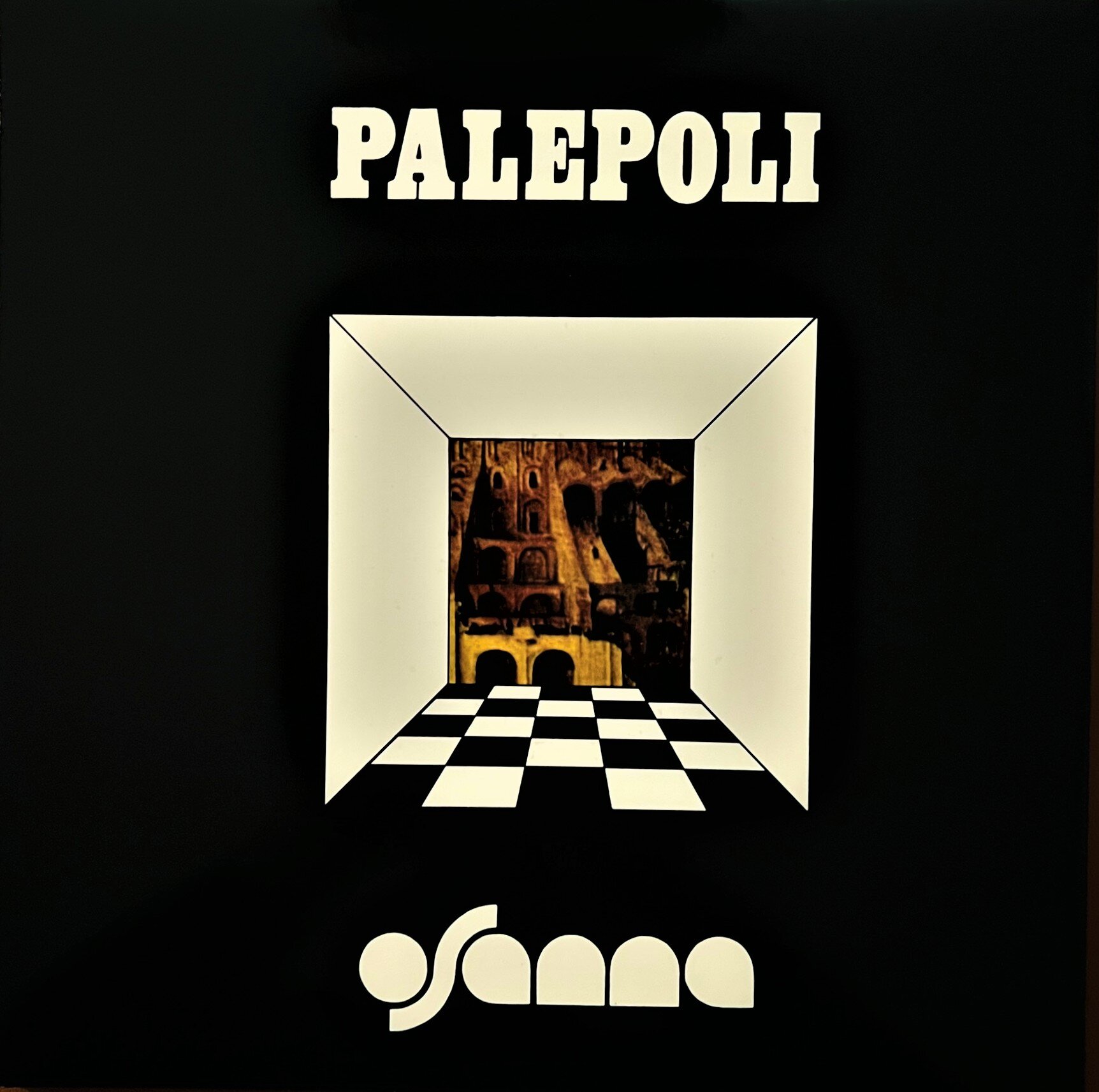
The album is one of the most ambitious, refined and expensive experiments in Italian 1970s progressive rock. The record was born with the explicit goal of conquering the international market, a factor that significantly influenced both the themes and the sound of the songs. Unlike many prog albums of the time, such as “Palepoli” by their mentors Osanna, “Uno” is not a concept album. Rather, it is a thematic concept that explores the human condition, alienation, and the dualism between the individual and modern society.
To give the project an international scope, the lyrics of the four English-language tracks were written by Nick Sedgwick, a British poet and writer, as well as a close friend of Roger Waters. Sedgwick contributed to the record with reflective, dark and psychedelic lyrics, very similar to the isolation themes typical of Pink Floyd of that period.
Despite the excellent blend of hard rock, progressive and jazz shades (thanks to D’Anna’s sax), the album did not achieve the hoped-for success. Live, the trio struggled to replicate the complexity of the studio arrangements. To remedy this, they added the young Corrado Rustici on guitar for the tours. However, shortly after, the band broke up for good to become Nova, shifting completely toward jazz-rock fusion.
“Uno” is a rich, elegant and accessible album, which moves away from Osanna’s theatricality to embrace a clean, typically “British” production. The prog influence is palpable in the frequent time changes, the elaborate song structures and the extensive use of keyboards. Danilo Rustici, besides guitar, plays Mellotron and Arp synthesizer, creating orchestral and spacey atmospheres that recall European prog.
Elio D’Anna is the true stylistic protagonist of the album. His saxophone (tenor and soprano) and transverse flute constantly push the music toward jazz-rock. The riffs are always original, and the dialogues between electric guitar and sax anticipate the fusion style the band would develop the following year as Nova.
There’s no shortage of moments of great rock energy, thanks to Enzo Vallicelli’s powerful drumming and Rustici’s biting guitars. The melodies, however, always remain carefully crafted, almost pop in the highest sense of the term. The imposing choirs, including Liza Strike’s, give songs like “Goodbye Friend” an enveloping, refined gospel-blues atmosphere.
Sound cleanliness was crucial: Dennis MacKay’s production removed the rough edges typical of Italian prog of the time, giving the tracks exceptional warmth and sonic definition for 1974.
Upon release, the album did not achieve the hoped-for commercial success, turning into a real flop compared to the sky-high expectations of labels and the specialized press. Fonit Cetra had presented the band as a “supergroup” and invested a considerable sum for the time. Unfortunately, sales were not enough to cover these heavy investments.
The album was also released abroad, in France and Germany, with a version sung entirely in English and an alternative cover made by the historic Hipgnosis photo studio. Despite this major marketing effort, the album went almost unnoticed outside Italy, since the Anglo-Saxon market was already saturated with similar music and the band had no solid live base abroad.
The mix of poor sales success and concert difficulties generated strong internal tensions, leading to the band’s breakup just a few months after the record’s release.
If in 1974 it was a failure from a commercial standpoint, as happened to many other albums in the prog world, especially those released between the mid and late ’70s, history has since rightly reappraised this record.
In recent decades, Uno has become a true cult item for progressive rock collectors worldwide. Today, the very rare copies on original 1974 vinyl have reached a very high monetary value on the music-collecting market, turning an old flop into a precious discographic rarity. Great album!
My Version
Label: Fonit – LPX 26
Series: Italian Prog Rock – 72
Format: Vinyl, LP, Album, Reissue, Gatefold, 180 grams
Country: Italy
Released: 6 Jul 2020
Tracklist
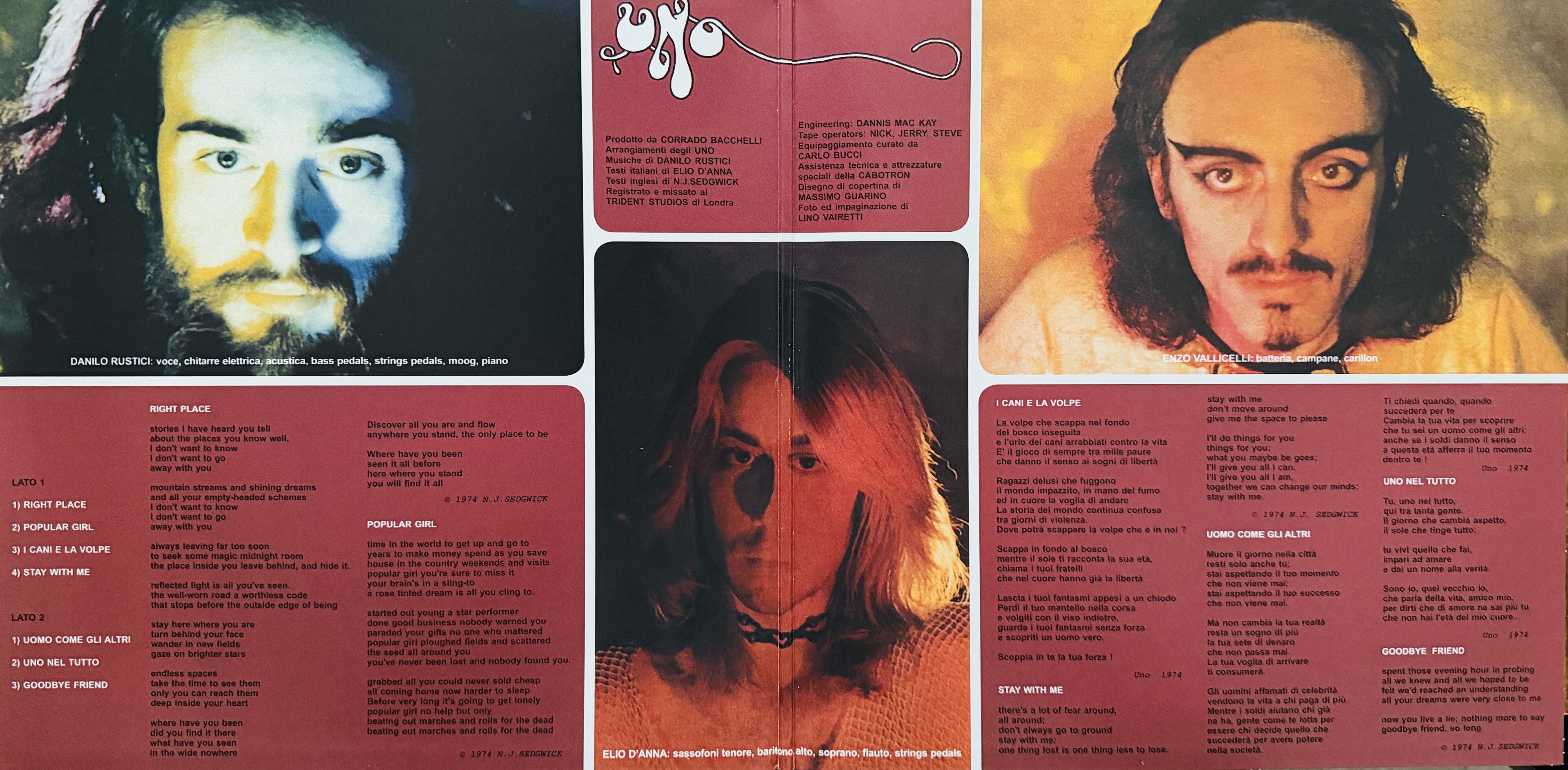
A1 Right Place
A2 Popular Girl
A3 I Cani E La Volpe
A4 Stay With Me
B1 Uomo Come Gli Altri
B2 Uno Nel Tutto
B3 Goodbye Friend
Lineup
Elio D'Anna: sax (tenor, baritone, alto, soprano), flute, string pedals
Danilo Rustici: vocals, guitars (electric and acoustic), mellotron, moog, piano, bass and string pedals
Enzo Vallicelli: drums, bell, music box
With
Liza Strike: backing vocals (backing vocals)
Nick Sedwick: lyrics (lyricist)