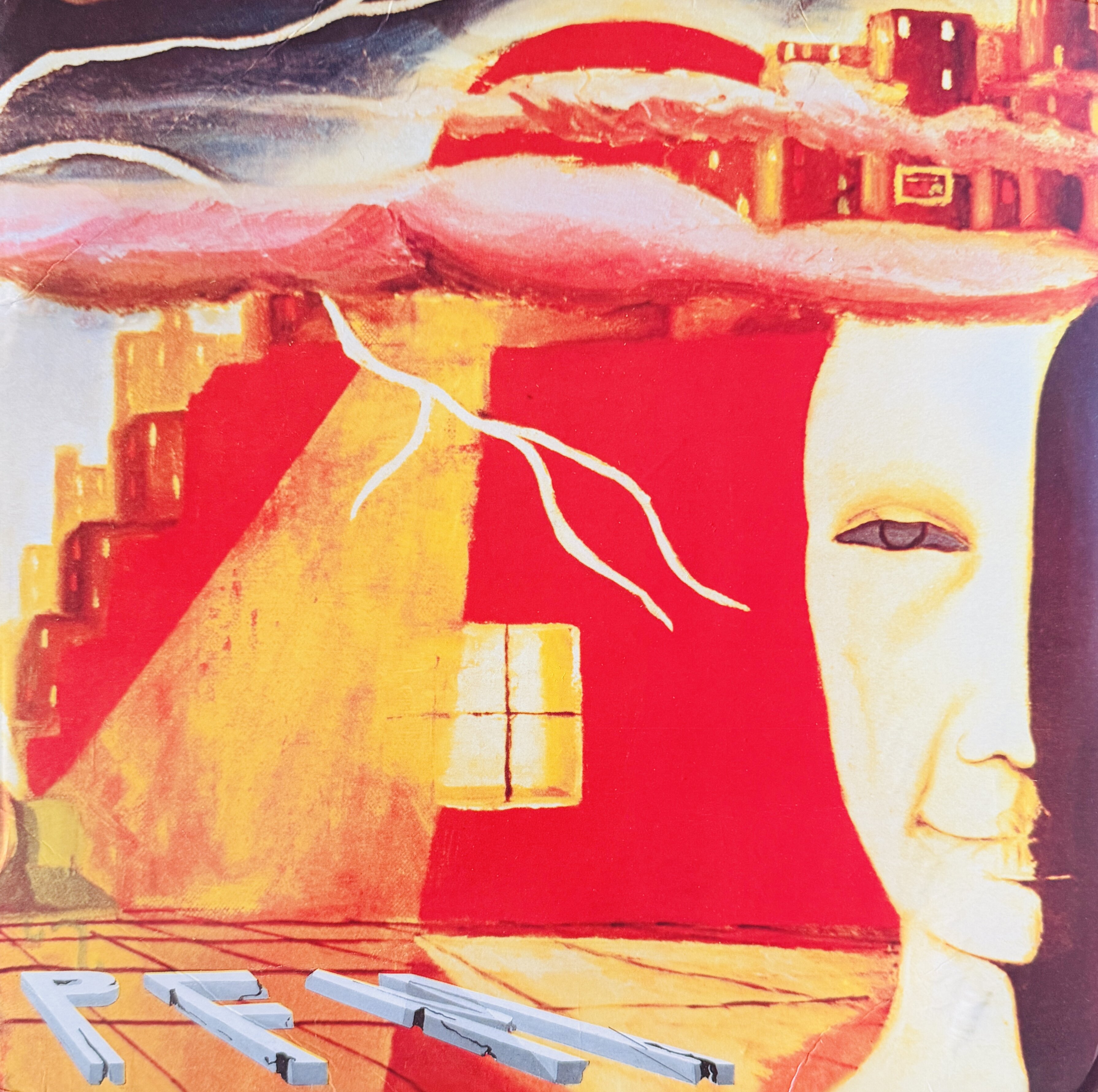
Napoli Centrale self-titled debut album, from 1975.
The album “Napoli Centrale” is a true masterpiece of Italian music. It marks the start of jazz-rock/fusion in Naples and stands as the foundation of what would later become Neapolitan Power.
The group rises from the ashes of Showmen, a very famous soul and R&B band in the ’60s. James Senese, a saxophonist, son of a Neapolitan woman and an African-American soldier, and drummer Franco Del Prete decide to create something completely new.
They want to blend the complexity of American electric jazz, drawing inspiration from musicians like Miles Davis and Weather Report, with the social reality of Naples and Southern Italy. The name “Napoli Centrale” was chosen precisely because it recalls the railway station, a symbolic place of departures, meetings, a mixing of cultures, and sadly tied to the emigration of workers to the North.
The lineup was completed by Mark Harris, an American pianist and keyboardist who, after moving to Italy, had become firmly integrated into the jazz-rock circuit, and Tony Walmsley, a British musician who, likewise, had made his way as a session player and in experimental projects in Italy in that period.
After the release of this LP, the band would undergo a radical change, with the (brief) entry of a very young Pino Daniele on bass.
The album is built on strong social criticism and denounces the exploitation of the weakest classes, using exclusively the Neapolitan dialect. It is in fact a sociopolitical concept album that explores the harsh reality of the South in the 1970s, focusing on themes such as the end of peasant civilization, the exploitation of the proletariat, and emigration with the alienation that follows.
The forced transition from rural life to industrial life is seen as a loss of identity rather than progress. Tracks like “Campagna” highlight the toil and meager wages of farm laborers, forced to submit to landowners with no protection at all. The Napoli Centrale station, which gives the band its name, symbolizes the departure point for thousands of southerners forced to emigrate to the North to work in factories, where they endure loneliness and marginalization.
The album’s lyrics are sung in strict Neapolitan dialect, a crucial artistic and ideological choice for two main reasons. First, the dialect was the language spoken by the people and workers whose stories the band wanted to tell, and using it made it possible to preserve a rawness and authenticity that would have been impossible to achieve in Italian. Second, the band uses Neapolitan to break completely with the tradition of the melodic Neapolitan song—made of love, sun, and sea—bending the language to harsh, syncopated, angry sounds, inherited from Afro-American jazz and funk.
These are the tracks
Campagna. The title, while referring to the rural world, takes on in the context of the song the meaning of exploitation in the fields and the hard life of farmhands.
'A gente 'e muorte (The people of the dead / The relatives of the deceased). It refers to a figure tied to ancient Neapolitan popular and religious traditions of the cult of the dead, representing a sharp critique of superstition.
Pensione Floridiana. The title is inspired by a real boarding house/hotel in the Vomero district of Naples, used in the lyrics as a symbol of transience and urban alienation.
Vico Primo Parise N. 8. It is an actual street address. The track is strongly autobiographical, since it speaks of James Senese’s birthplace in Naples.
'O lupo tosto (The strong wolf / The stubborn wolf). In Neapolitan, “tosto” describes someone tough, proud, or stubborn. It embodies the metaphor of the common man who faces hardships without ever giving up.
'A favola 'e Cerella (The tale of Cerella, Ciriella). “Cerella”, a diminutive of Cira, is a musical story that uses the structure of the folk tale to portray the harsh reality of everyday life and social submission.
The album has an innovative sound for the time, mixing overseas musical refinement with the expressive immediacy typical of Neapolitan alleyways. The main genre is jazz-rock / fusion, with a strong imprint from the American electric scene of the early ’70s, in particular from Miles Davis’s “Bitches Brew” and Joe Zawinul’s Weather Report.
The band, however, does not merely replicate these models, but integrates them into a completely new structure. The rhythm section builds hypnotic, obsessive, funk-flavored sound beds, stemming from Senese and Del Prete’s soul and R&B background. Mark Harris’s Fender Rhodes piano enriches everything with open chords and distorted sounds, creating dark, jazzy, sometimes progressive atmospheres. James Senese’s saxophone, instead of following the conventions of traditional jazz, is abrasive, distorted, shouted, and full of pain, turning into a second voice that expresses the anger of the proletariat.
Tony Walmsley, English bassist, and Franco Del Prete, with his tribal, broken-up percussion, create a driving, unstoppable rhythm. Even though the pieces run 7 minutes and up, the band manages to keep the energy extremely high, alternating pure instrumental moments with intense, emotion-laden vocal sections. The contrast between the modernity of the international arrangements and the raw authenticity of the dialect lyrics is truly striking.
Campagna is, in my opinion, the album’s standout track and the band’s manifesto. It is built on an unforgettable bass and Fender Rhodes riff and is divided into two main sections. The first, sung, is a cry of pain in which Senese denounces the exploitation of farm laborers and the false promise of the factory. The second, a jazz-fusion instrumental suite, is marked by a sax solo of extraordinary emotional and technical intensity, representing the toil and suffering of work in the fields. Despite its innovative character and political commitment, Campagna achieved remarkable radio and commercial success, proving that breakaway music could reach the wider public too.
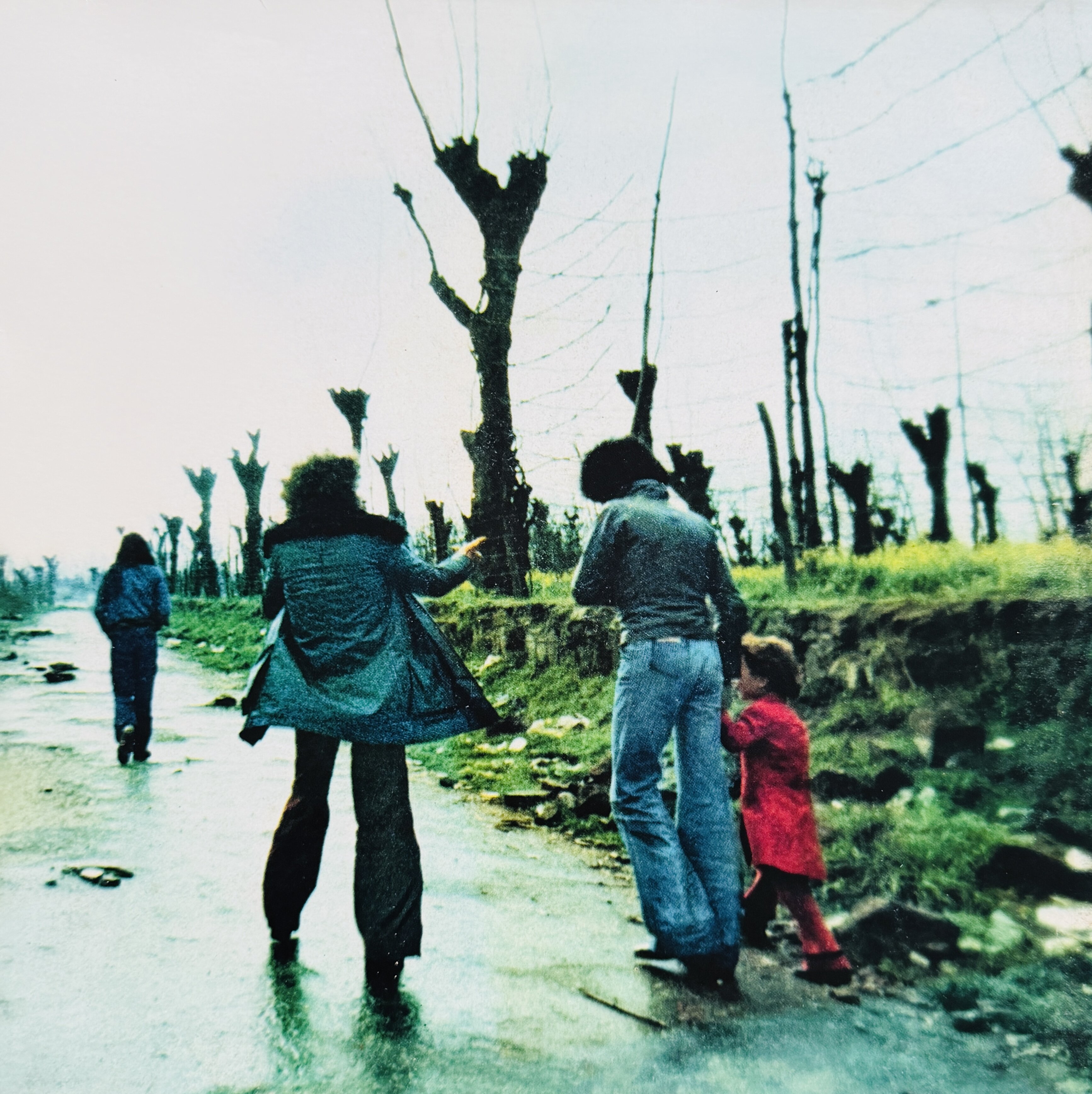
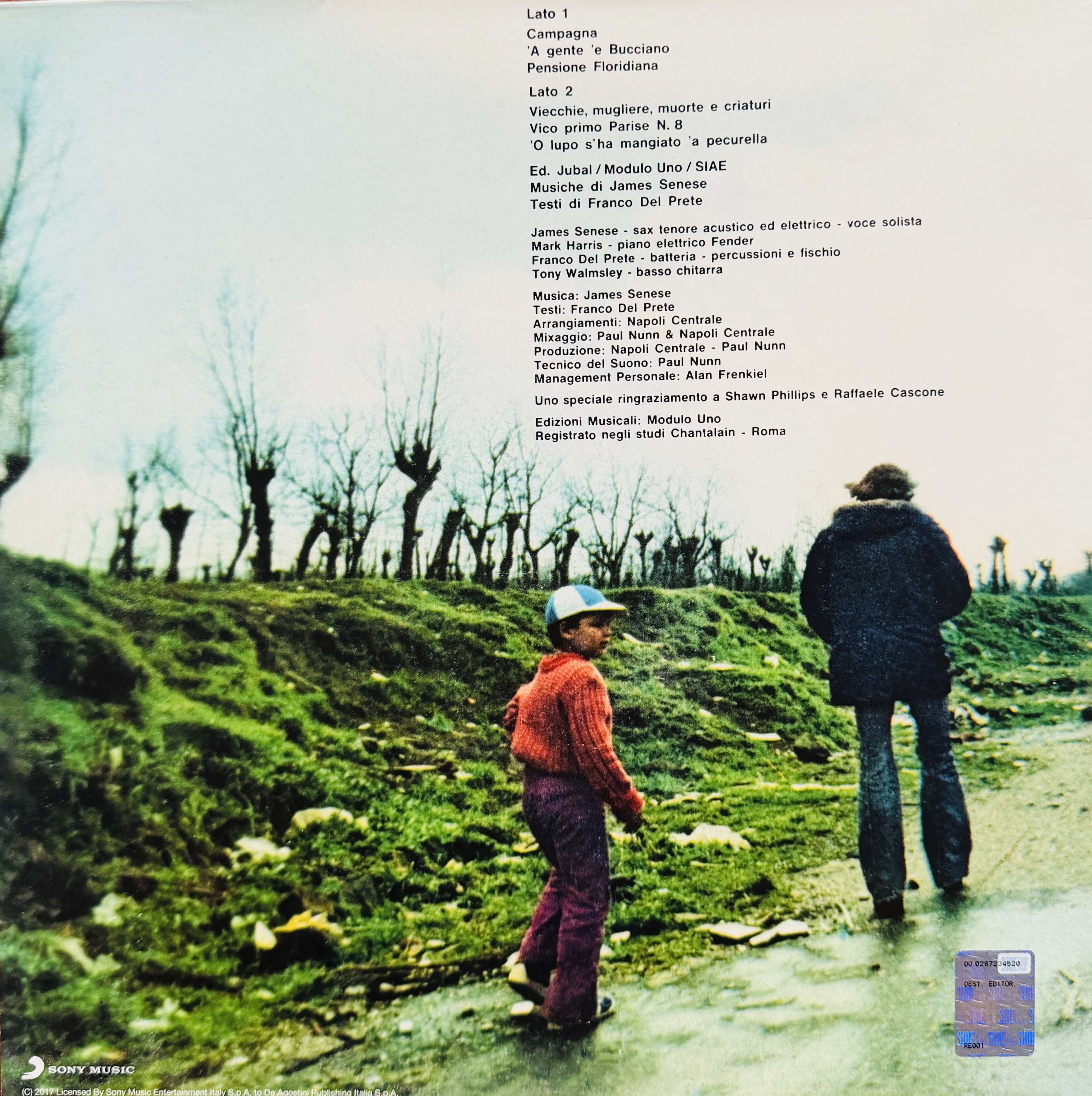
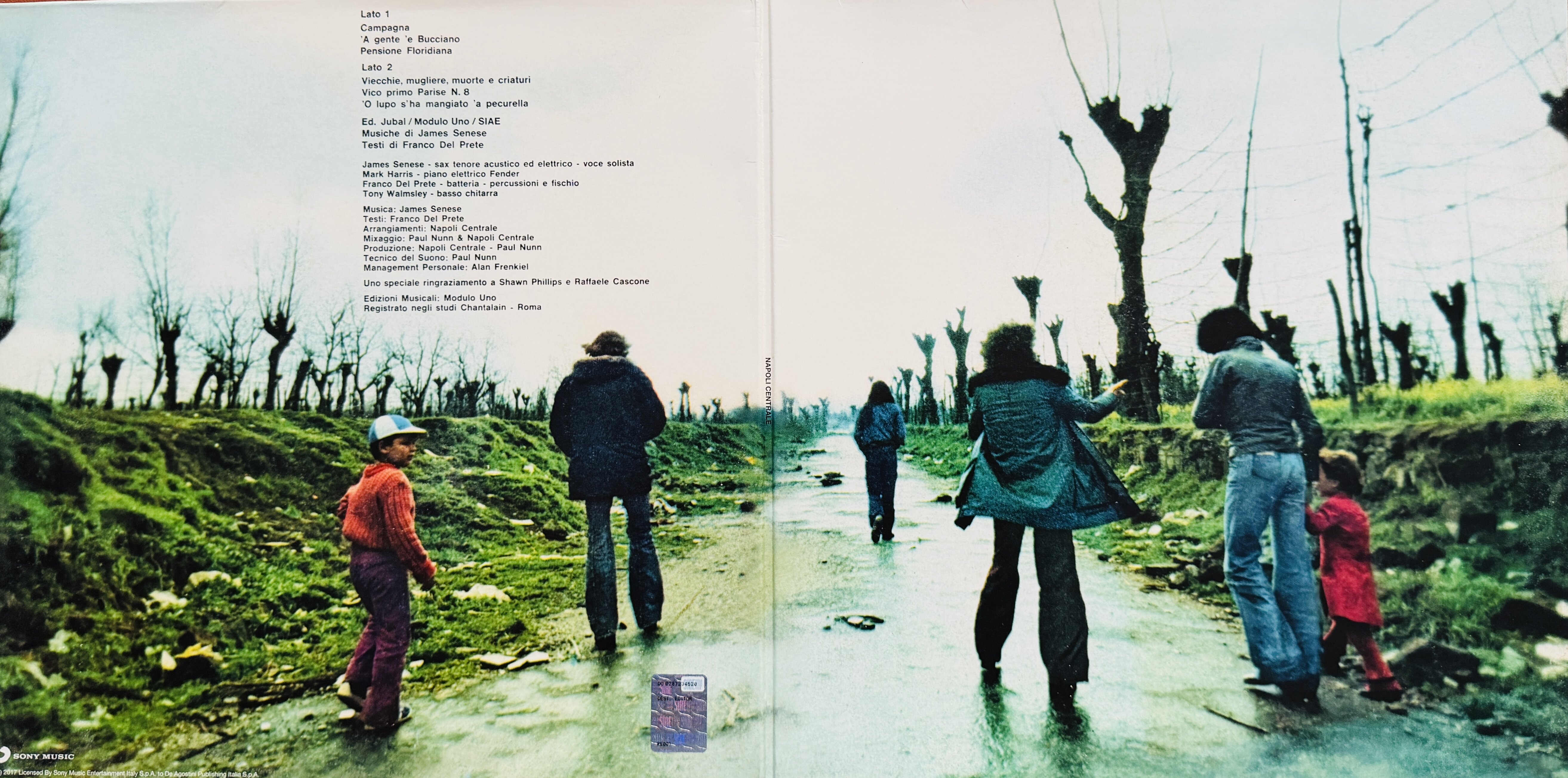
The album cover is one of the most emblematic and incisive images of the Italian progressive rock and fusion scene. The picture portrays the four members of the group—James Senese, Franco Del Prete, Mark Harris, and Tony Walmsley—from behind, as they walk together with two children along a bleak, gray, muddy dirt road in the countryside.
The photograph was taken in a rural area of the Neapolitan hinterland, precisely in the territory of Frattamaggiore, the hometown of drummer Franco Del Prete. This area, today, has been completely transformed by urbanization and the construction of the Asse Mediano.
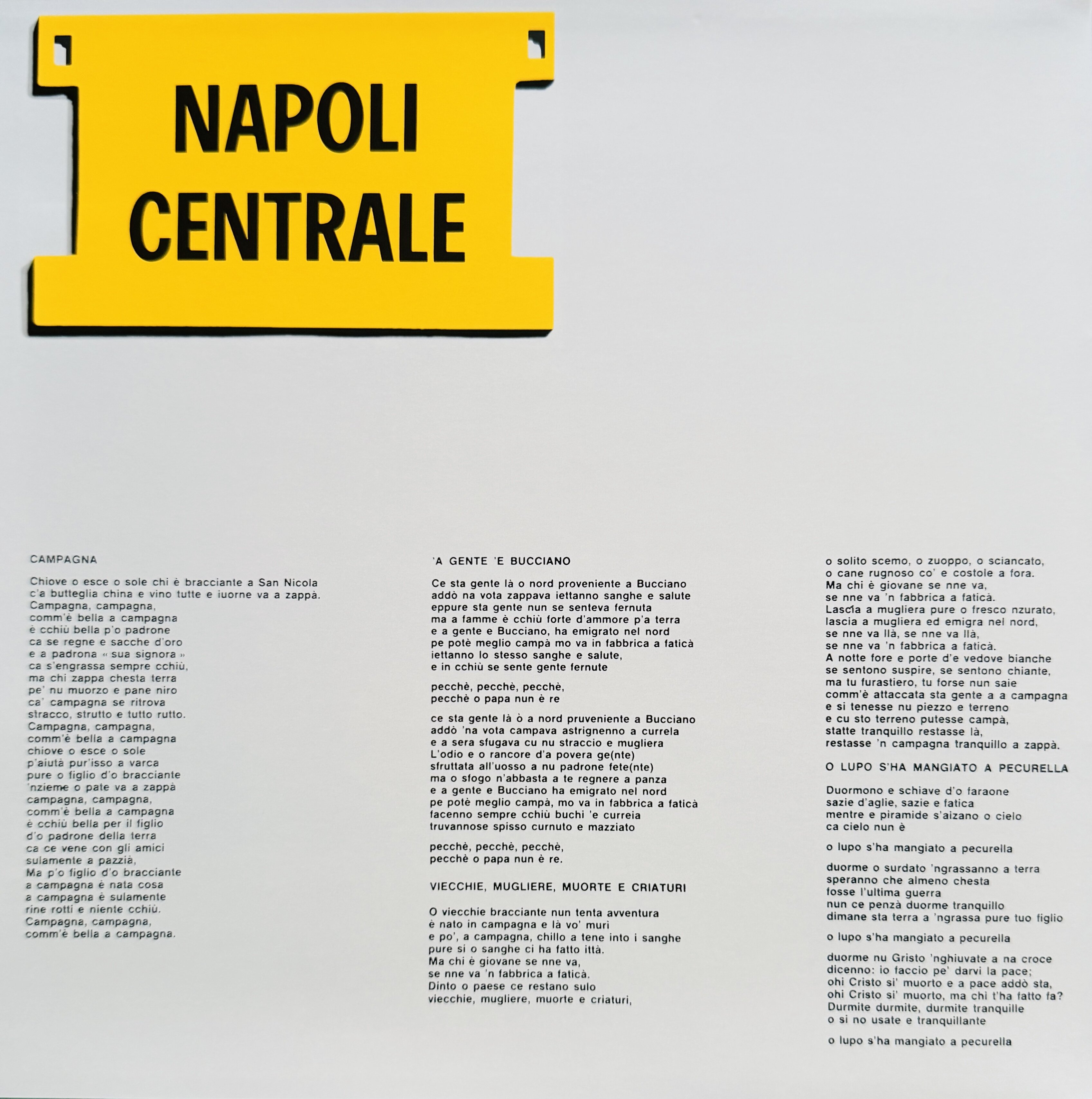
The image is a perfect visual preamble to the themes addressed on the record. It explicitly rejects the typical iconography of Naples—sea, Vesuvius, and sunny postcards—to show the raw reality of rural hamlets and the inland areas. The musicians, mixed in with local children, place themselves on the same level as the last and least, literally walking in the mud of the same exploited land they sing about in their lyrics. In the very first vinyl editions by Dischi Ricordi, the band’s name was not printed directly on the cover, but applied via a shaped yellow sticker in the form of a plaque.
It is a true masterpiece, a milestone of Italian music.
Historically, this record represents an epochal turning point, definitively breaking with the melodic and pop past of the traditional Neapolitan song. It showed that the Neapolitan dialect was not limited to love songs or the sceneggiata, but possessed an extraordinary rhythmic and phonetic power, perfect for merging with the odd meters of electric jazz and the force of Black funk.
Without it, the Neapolitan Power movement would never have been born. It laid the stylistic foundations for the first, crucial phase of Pino Daniele’s career, who in this very group played as bassist right after the record came out. It also influenced generations of fusion, hip-hop, and alternative rock musicians from Naples.
An extraordinary, visceral, and technically impeccable work, where social anger and instrumental complexity come together in a unique, unrepeatable experience in the history of our music.
My Version
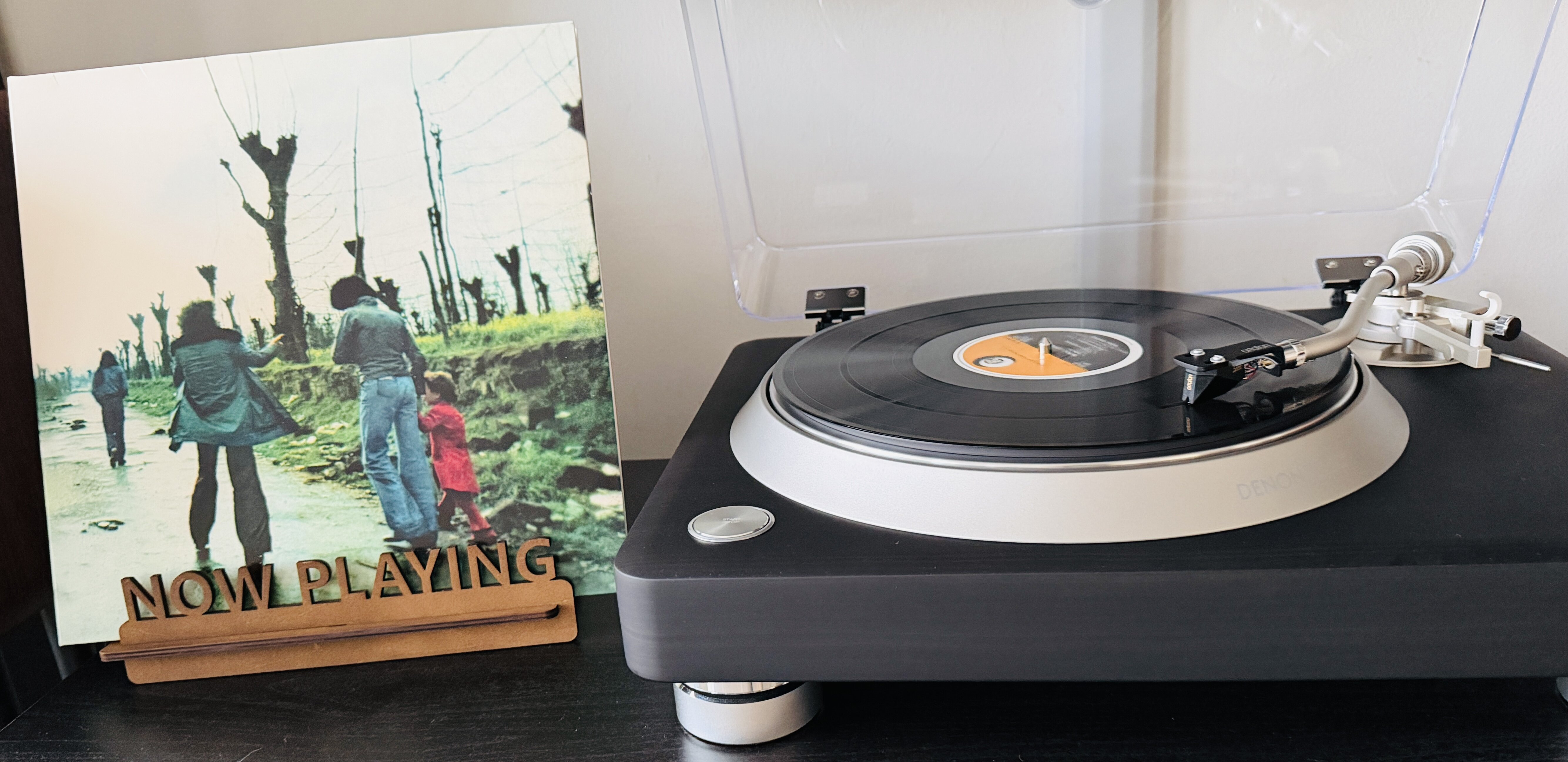
Label: Ricordi – SMRL 6159, Sony Music – none
Series: Prog Rock Italiano – 9
Format: Vinyl, LP, Album, Reissue, 180gr
Country: Italy
Released: 13 Jan 2018
Tracklist
A1 Campagna 8:00
A2 'A Gente 'E Bucciano 8:40
A3 Pensione Floridiana 3:30
B1 Viecchie, Mugliere, Muorte E Criaturi 9:55
B2 Vico Primo Parise N. 8 7:30
B3 'O Lupo S'Ha Mangiato 'A Pecurella 6:55
Lineup
Arranged By [Arrangements] – Napoli Centrale
Bass Guitar [Bass Guitar] – Tony Walmsley
Drums [Drums], Percussion [Percussion], Whistling [Whistling] – Franco Del Prete
Electric Piano [Fender Electric Piano] – Mark Harris
Engineer [Sound Engineer] – Paul Nunn
Management [Personal Management] – Alan Frenkiel
Mixed By [Mixing] – Napoli Centrale, Paul Nunn
Music By [Music By] – James Senese
Producer [Production] – Napoli Centrale, Paul Nunn
Tenor Saxophone [Acoustic and Electric Tenor Sax], Lead Vocals [Lead Voice] – James Senese
Words By [Lyrics By] – Franco Del Prete