Not Only Prog: Pearl by Janis Joplin, 1971 album.
“Pearl” is the second and last solo studio album by the immense Janis Joplin. The album was released three months after her sudden death from an overdose on October 4, 1970.
It is considered her masterpiece, highlighting her powerful, raw voice, her fragility, and her artistic growth.
Before starting to record “Pearl” in the fall of 1970, Janis Joplin had already lived an incredible, legendary career, becoming in just a few years the female icon of ’60s counterculture and the greatest white blues voice ever.
Born in Port Arthur, Texas, Janis felt out of place and had a wild passion for folk and blues music, with a soft spot for Bessie Smith and Odetta. She began playing in small Texas venues, recording a few songs on her own. In 1963 she took the big step and moved to San Francisco, where she dove into the beatnik lifestyle and first ran into problems with alcohol and drugs.
The real turning point came in 1966, when she returned to California to join as singer Big Brother and the Holding Company, one of the hottest bands in San Francisco psychedelic rock. With them, Janis took the world by storm.
At the 1967 Monterey Festival, her rendition of “Ball and Chain” (a Big Mama Thornton number) was so intense and moving that it left everyone speechless, crowning her a true rock star. The year after, in 1968, her album Cheap Thrills came out, one of the year’s best-sellers, thanks to unforgettable hits like “Piece of My Heart” and the famous blues cover of “Summertime”. The album immediately hit No. 1 on the U.S. charts.
Feeling technically and musically constrained by Big Brother, Janis decided to go solo to explore sounds closer to Stax Records soul and rhythm and blues, enriching the instrumental section with horns.
In August 1969, she took the stage at the legendary Woodstock Festival, sealing her status as an icon of her generation. Even though her voice was a bit worn from too many backstage excesses, her performance remained unforgettable.
Janis Joplin’s set has gone down in legend, but behind the scenes there was a psychological and physical odyssey of epic proportions.
Janis arrives at the festival by helicopter in the early afternoon, together with her new band, the Kozmic Blues Band. But instead of going straight onstage, she ends up stuck backstage for more than ten hours, a victim of organizational chaos, bad weather, and delays piled up by other artists, like the Incredible String Band and Canned Heat. A draining wait that would test anyone’s nerves.
To cope with the rising anxiety and the nerve-racking wait, Janis retreats into excess. She abuses alcohol—especially her beloved Southern Comfort—and drugs, in the company of her friend Joan Baez and other musicians. A real trap, pushing her to stagger on the edge of collapse.
When she finally, around 2:00 a.m., manages to get onstage, Janis is visibly altered. Her voice is tired, scraped raw, at times out of control. Yet, despite everything, her performance is an explosion of charisma, magnetism, and wild energy. Songs like “Work Me, Lord” and “Ball and Chain” turn into desperate prayers that hypnotize the 400,000 spectators present.
But Janis isn’t satisfied with her vocal performance. She’s so hard on herself that she forbids the producers to include her footage and audio tracks in the festival’s official documentary, released in 1970. Her material would be recovered and released only many years later, in the special editions for Woodstock’s 30th anniversary. Further proof of her incredible artistic sensitivity and inner struggle.
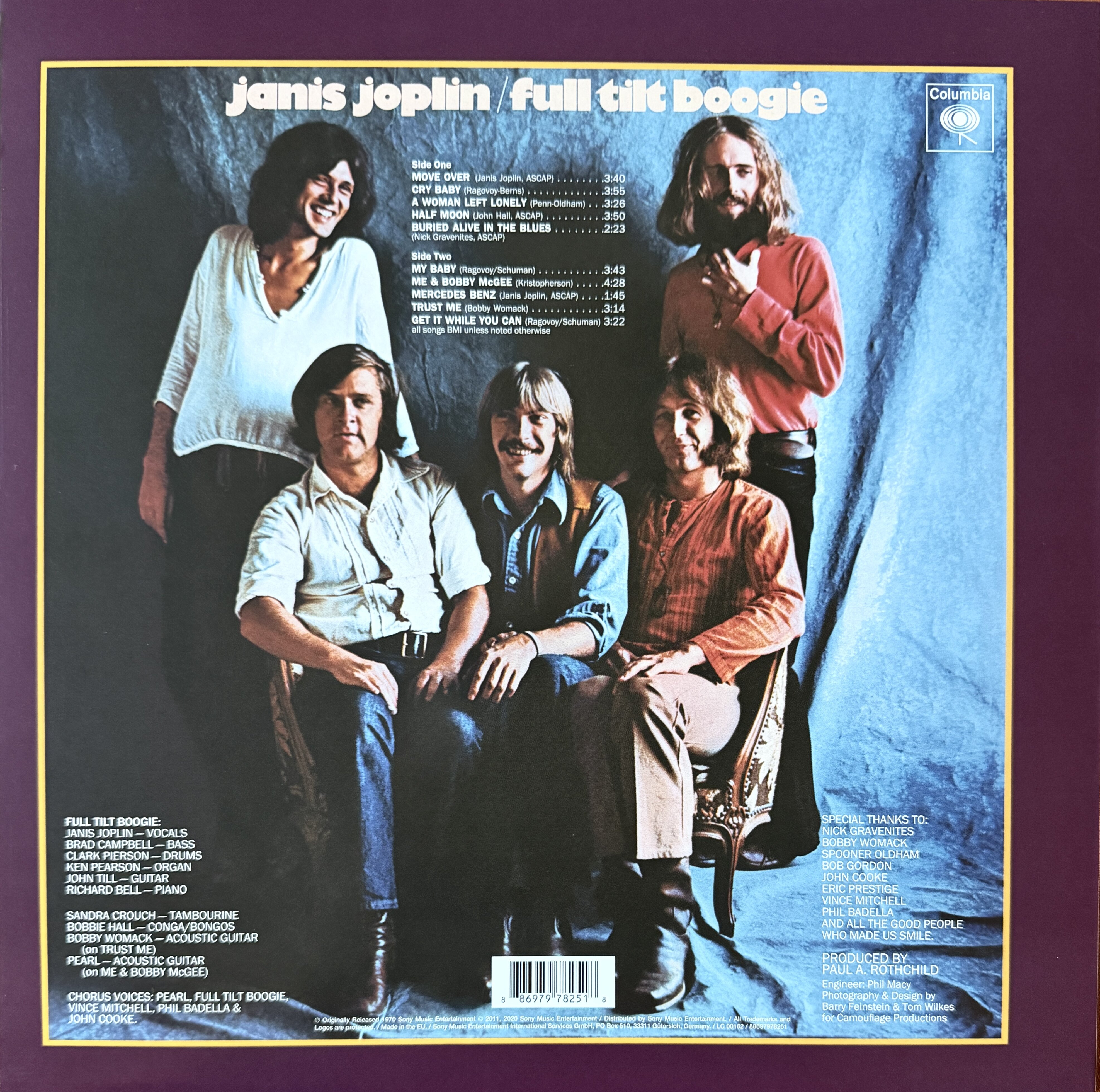
Back to the record: after leaving the Kozmic Blues Band in April 1970, Janis Joplin put together a new touring lineup, the Full Tilt Boogie Band. Unlike the previous groups, this band was made up of very tight Canadian musicians, who could give her songs a solid, clean rhythmic structure, decidedly more geared toward soul and modern blues. For the first time, Janis felt truly valued and musically supported.
In September 1970, the band moved to the famous Sunset Sound Recorders in Hollywood to start recording the tracks. Leading the studio sessions was Paul A. Rothchild, longtime producer for The Doors. Rothchild built a special relationship with Janis, encouraging her to shape her voice without losing its gritty energy, while better balancing the emotional shades. The studio vibe was incredibly relaxed, joyful, and creative.
Among the key tracks recorded in this period, “Me and Bobby McGee” has a particular story. It was Kris Kristofferson, then Janis’s boyfriend and friend, who played her the song. Rothchild convinced her to record an acoustic, intimate version, yet powerful at the same time. Kristofferson didn’t even know Janis had cut it until the day after her death, and he was deeply moved.
Another important song is “Mercedes Benz”, born almost by accident. Written by Janis together with poet Bob Neuwirth in a Port Chester bar, the track was recorded in the studio a cappella on October 1, 1970, in a single final take. It would be the very last piece she ever recorded in her life.
The album title “Pearl” has a very personal meaning and is closely tied to Janis Joplin’s complex psychology.
“Pearl” was the nickname Janis gave herself and used only with her closest friends and the members of the Full Tilt Boogie Band. It was a second identity, a kind of armor.
Janis Joplin suffered greatly from loneliness and the pressure of fame. She often said a famous line: “On stage I make love to 25,000 people, then I go home alone.” Creating the alter ego “Pearl” allowed her to separate the vulnerable Texas girl from the aggressive, sexualized rockstar the audience wanted to see onstage.
The nickname also referred to her flamboyant, luxurious way of dressing, with colorful feather boas, giant round glasses, jangling bracelets and, of course, long strings of pearls and beads. “Pearl” perfectly embodied her public persona: eccentric, charismatic, and regal.
When Janis suddenly died in October 1970, producer Paul Rothchild, the managers, and the band decided that naming the posthumous record with her most intimate name was the most sincere and affectionate way to pay tribute to her, showing the world the true soul behind the legend.
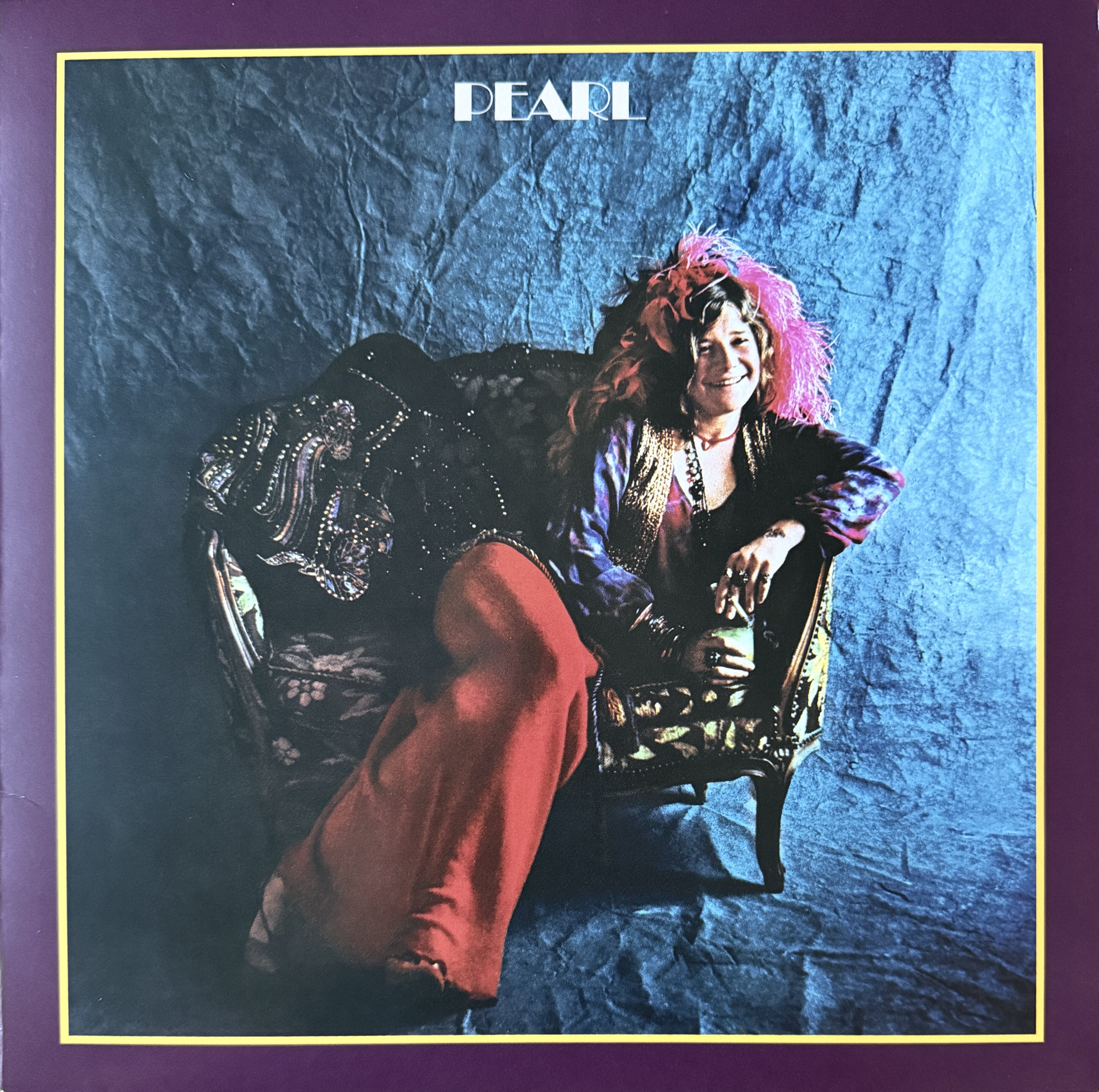
The album cover, shot by legendary rock photographer Barry Feinstein, is an icon by now. Feinstein, famous for his intimate, spontaneous style, had already captured iconic moments like the cover of Bob Dylan’s “The Times They Are a-Changin’” and George Harrison’s “All Things Must Pass”. With Janis, though, there was a special bond of trust and friendship, which allowed him to capture a rare authenticity, far from the usual promotional poses.
The session took place in Hollywood in October 1970, just days before Janis’s sudden passing. The atmosphere was intimate and subdued, perfect for telling her bohemian soul. Janis is stretched out on a sumptuous Victorian black-velvet sofa, with wood carvings that add a touch of regal decadence. The late-19th-century, slightly eccentric décor perfectly mirrors her unique style.
She wears the clothes of her alter ego “Pearl”: a flashy purple satin shirt, bright orange pants, and a pink feather boa in her hair, giving her a majestic, extravagant air. In her hands she holds a glass (with her ever-present Southern Comfort) and wears her signature rigid bangles.
But what makes this image truly iconic is Janis’s gaze. She looks into the lens with a calm, relaxed, proud smile. No anger or suffering, like in her concerts; only the peace of a woman who finally felt in control of her music and her life, surrounded by the ideal band. An image that holds all her strength and her sweetness.
When Janis left us on October 4, the record was still in progress and there hadn’t been time to take other photos. That Feinstein shot, which at first was only a test, turned out perfect—almost as if he had seen the future.
The photograph was framed in a simple box, with the title “Pearl” printed at the top. That image on the vinyl immediately became the symbol of her cultural legacy: the perfect portrait of a blues queen caught at her finest moment, an instant before the curtain fell forever.
Recording stopped abruptly on the night of October 4, 1970. The day before, the band had finished tracking the music for “Buried Alive in the Blues”. Janis was supposed to record her vocal part the next day, but sadly she never showed up at the studio. She was found dead in room 105 of the Landmark Motor Hotel, due to a heroin overdose.
Rothchild and the band decided not to have anyone else sing and to include the track on the album as an instrumental, turning it into a touching, silent farewell. The album was then released after her passing in January 1971.
Janis Joplin changed forever the role of women in music, becoming one of the most revolutionary and influential figures in rock and blues. Even though her career lasted only four years, her cultural and artistic impact broke down social barriers and paved the way for generations of musicians.
Before Janis, in the ’60s, women in the record industry were almost always reassuring pop singers or backing vocalists who followed a male aesthetic. Janis shattered the traditional standards of beauty and behavior of the time:
She went onstage without makeup, with wild hair and flamboyant clothes.
She expressed a free, aggressive, proud sexuality and magnetism, stealing the spotlight from male colleagues in a genre dominated by them.
Influenced by great pioneers of African-American blues, Janis brought into rock a visceral vocal style never before heard from a white singer. Her unique technique combined volcanic power with the ability to rasp and break her voice to convey vulnerability, pain, and loneliness.
Having become the female face of the hippie movement and San Francisco’s Summer of Love, Janis was a pioneer of women’s liberation. Her nonconformist lifestyle and total artistic independence proved that a woman could lead a rock band on her own terms, rejecting any form of censorship or commercial submission.
Without the path she blazed, we wouldn’t have seen the same kind of evolution for so many artists who came after. I’ve said it before and I’ll say it again: immense.
My Version
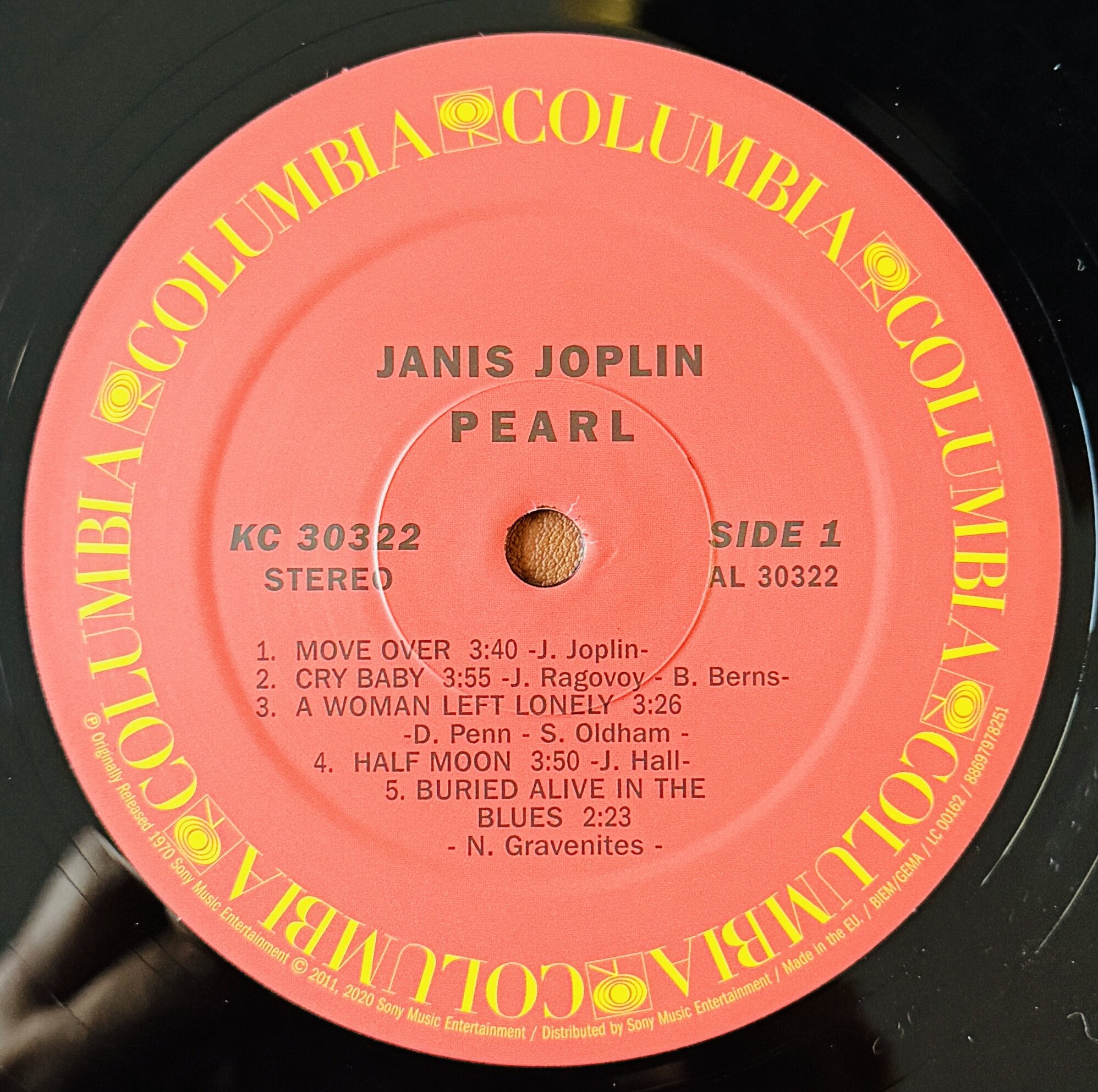
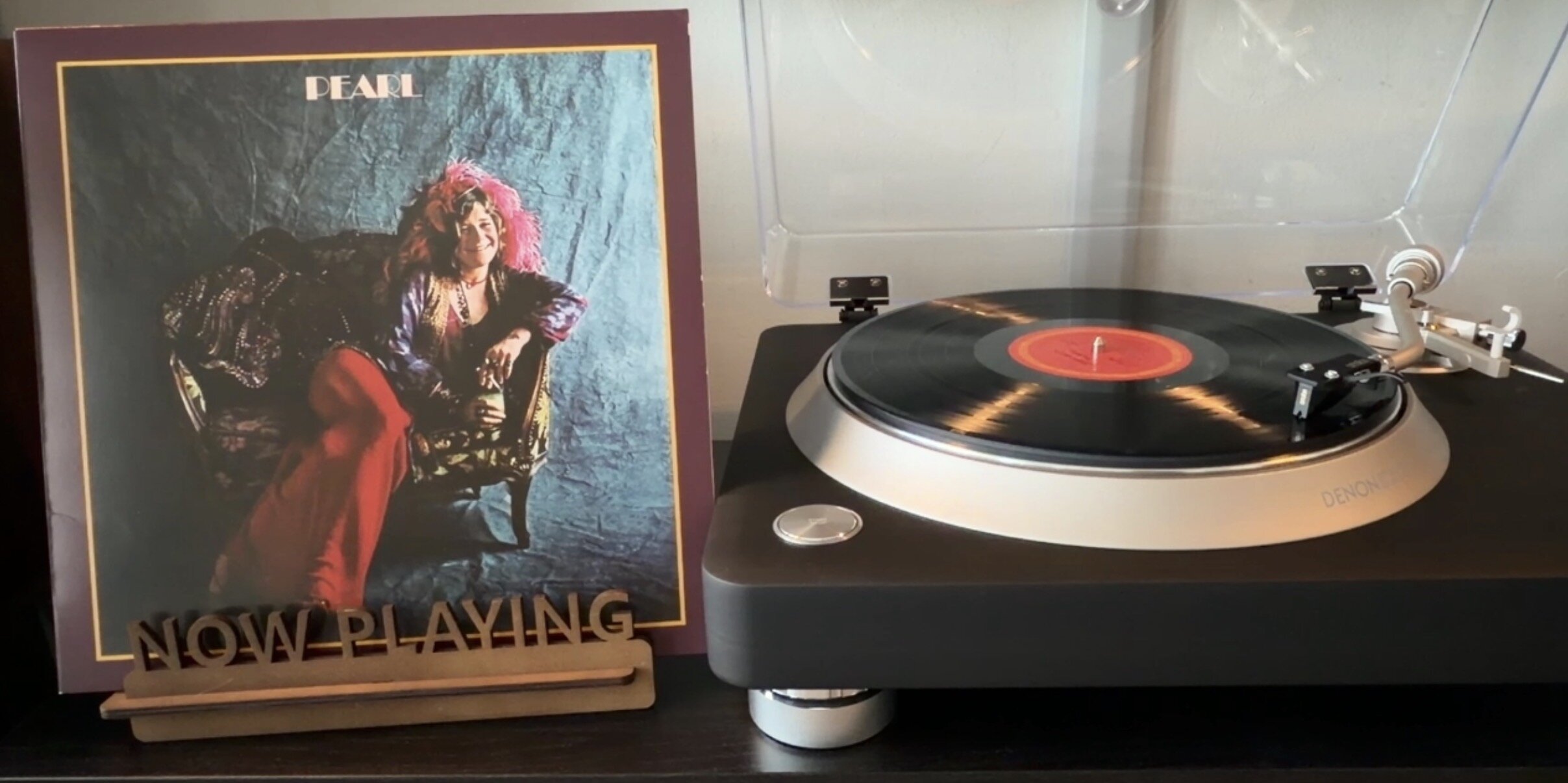
Label: Columbia – 88697978251
Format: Vinyl, LP, Album, Reissue
Country: Europe
Released: 12 Jun 2020
Genre: Rock, Funk / Soul
Style: Blues Rock, Soul
Tracklist
A1 Move Over 3:40
A2 Cry Baby 3:55
A3 A Woman Left Lonely 3:26
A4 Half Moon 3:50
A5 Buried Alive In The Blues 2:23
B1 My Baby 3:43
B2 Me & Bobby McGee 4:28
B3 Mercedes Benz 1:45
B4 Trust Me 3:14
B5 Get It While You Can 3:22
Lineup
Bass – Brad Campbell
Congas, Bongos – Bobbie Hall
Drums – Clark Pierson
Guitar – John Till
Organ – Ken Pearson
Piano – Richard Bell (4)
Producer – Paul A. Rothchild
Tambourine – Sandra Crouch